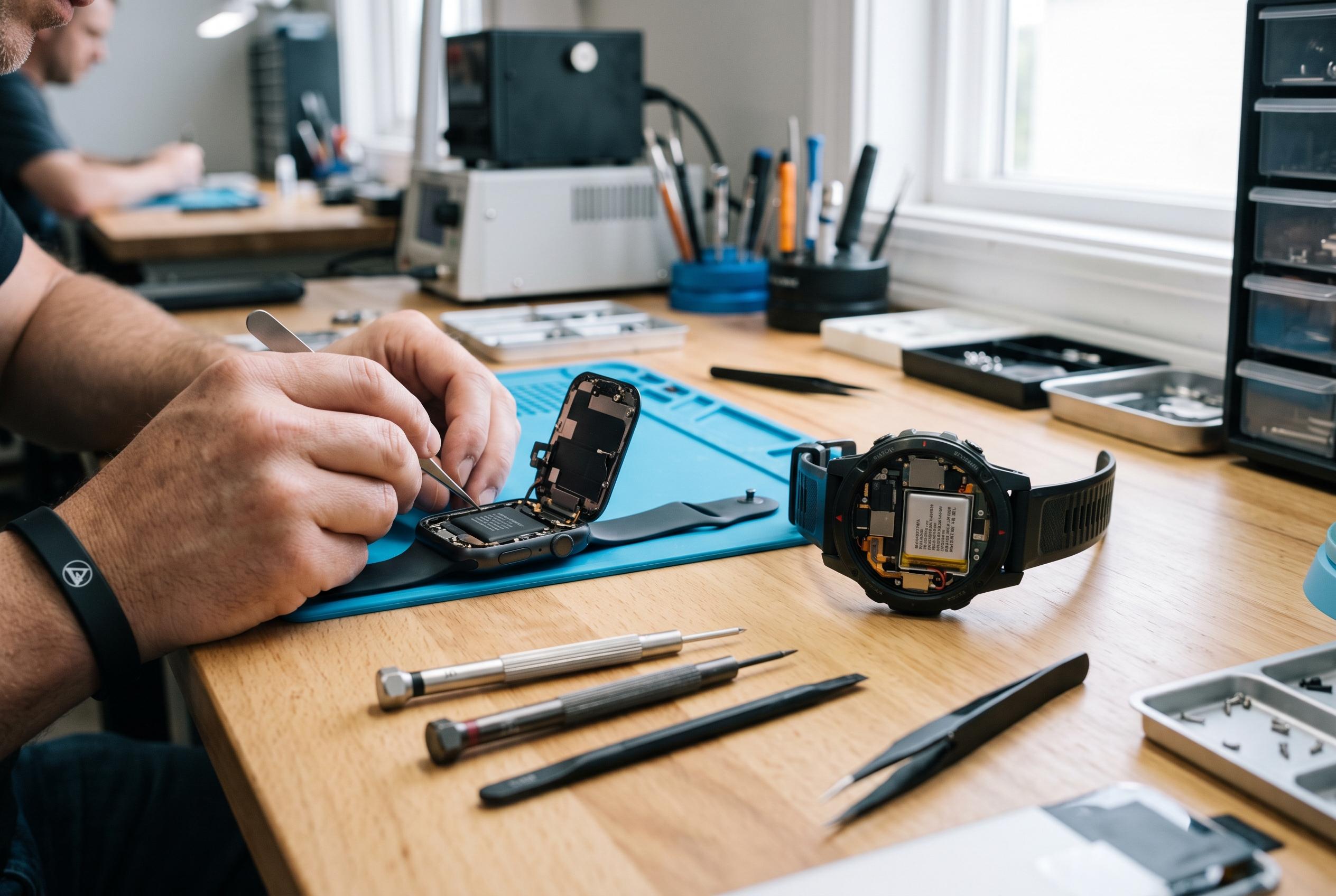

iFixit gives Apple Watch Series 12 and Ultra 4 repairability scores of 4 out of 10, highlighting the risks of replacing batteries compared with Google’s more accessible Pixel Watch 5 design.
A new smartwatch can be an easy sell. Faster chips, better health sensors and brighter displays are all visible upgrades. The harder question is what happens when the battery begins to fade after a few years, because that is when a device’s real lifespan is tested.
That issue came into focus in iFixit’s recent teardown coverage of Apple’s latest watches. The repair specialist gave both the Apple Watch Series 12 and Apple Watch Ultra 4 a repairability score of 4 out of 10. According to iFixit, the watches remain difficult to open, with internal access constrained by tight seams and adhesive rather than simple fasteners. The company says the Series 12 does include some improvement for battery removal, including adhesive pull tabs and a simpler display connection, but the battery is still reached through the screen. The Ultra 4 also has to be opened that way, which leaves an expensive component directly in the path of a repair.
That matters because battery replacement is among the most common end-of-life fixes for wearables. If the display must be removed first, any mistake can turn a routine service into a costly failure. iFixit also notes the lack of official repair parts and instructions for these models, a gap that limits practical right-to-repair access even where the hardware itself might otherwise be serviceable.
Not every smartwatch follows that pattern. iFixit rates the Google Pixel Watch 5 at 9 out of 10, describing a design that uses screws and a gasket to make internal access much simpler. The contrast is stark: one approach treats repair as part of the product’s lifecycle, while the other still appears to prioritise sealing and compactness over serviceability. iFixit has also published a replacement guide for the Pixel Watch 5 vibration motor, underscoring that the device is built with repair in mind.
For buyers, repairability should sit alongside battery life, software support and feature set, not replace them. A watch that works well today may still become inconvenient if the battery weakens and the only practical solution is a full replacement. That is especially relevant in markets such as India, where parts availability, service networks and repair costs can vary widely even when a device is technically fixable.
The broader lesson is that smartwatch reviews often focus on launch-day specifications while ignoring what happens years later. Yet a watch that still suits its owner, apart from dwindling charge capacity, is not obsolete. Whether a battery can be replaced cleanly, where the repair can be done and how much it is likely to cost are all part of the real value of the device. Those questions may not help sell a new model, but they are often the ones that matter most after the excitement has faded.
Disclaimer: This content is intended for informational purposes only. Readers are advised to exercise their own judgement, conduct due diligence, or consult a qualified expert before acting on any information provided.