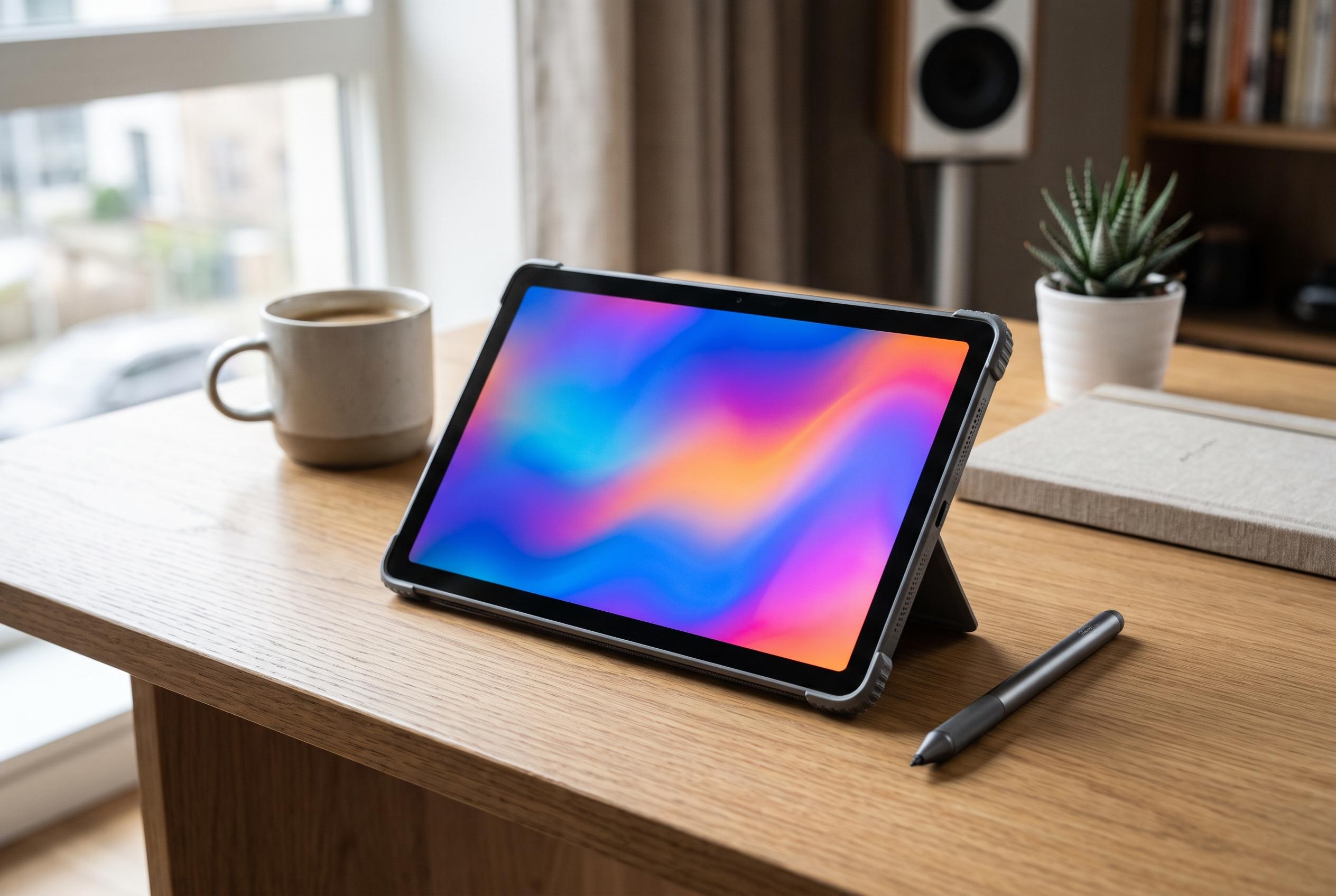

A brighter OLED screen, faster A20 Pro chip and tougher design make Apple’s smallest tablet a more capable device. But its sharp price rise puts the premium compact iPad under new scrutiny.
Apple has given the iPad mini its most substantial redesign yet, turning the compact tablet into a far more premium device while also pushing it into a much higher price bracket. According to Apple’s launch material, the new model is thinner and lighter than before, gains an 8.5-inch OLED display, and moves to the A20 Pro chip, the same processor family used in the company’s latest high-end phones and foldable devices. Review coverage from Tom’s Guide and Digital Trends suggests the update is not merely cosmetic: the new mini is materially faster, brighter and more refined in daily use.
The most visible change is the screen. Apple says the new OLED panel delivers deeper blacks, richer colour and more than twice the peak brightness of the previous model, while also allowing the minimum brightness to fall to just one nit for low-light reading. That matches hands-on impressions from Tom’s Guide, which described the display as one of the strongest parts of the update. The trade-off is that the refresh rate remains capped at 60Hz, leaving the mini behind Apple’s ProMotion devices, which use 120Hz panels for smoother scrolling and animation. In practice, that limitation is most noticeable in interface motion rather than in video playback or reading.
The tablet’s industrial design has also been tightened up. Apple’s specifications show a slimmer and lighter chassis than before, while the company says the device now carries IP67 protection against dust and water, allowing short immersion in water under the relevant standard. Digital Trends reported that Apple has also removed the conventional side-mounted speaker arrangement, replacing it with an Acoustic Display system that places sound hardware behind the screen. That is an elegant engineering change, although first reviews suggest audio quality is serviceable rather than exceptional and can distort at higher volumes.
The front camera has been moved to the long edge, which makes landscape video calls more natural. Apple’s announcement says the 12-megapixel Center Stage camera is designed to improve conferencing and scanning documents, and Tom’s Guide’s hands-on report indicated that this orientation change is one of the most practical updates in the new model. The company has also added faster wireless and cellular connectivity, along with support for faster charging, reinforcing the sense that this is now a more complete premium tablet rather than a simple compact companion device.
Performance is another area where the new mini makes a clear leap. Apple says the A20 Pro delivers large gains in graphics and general processing, and the company has also highlighted a sizeable uplift in on-device artificial intelligence tasks. Tom’s Guide’s testing broadly backed up those claims, with the reviewer finding the tablet responsive in gaming, image editing, video calls and document handling. That kind of performance matters because the iPad mini has often been used as a portable reading device or lightweight work tool; with this generation, it is better suited to heavier creative and productivity tasks as well.
Yet the biggest story may be the price. Apple has set the starting figure far above the previous generation, and review coverage places the base model at a level that moves it out of impulse-buy territory and closer to the mainstream iPad Pro and Air conversation. Tom’s Guide noted that higher-spec configurations quickly become expensive once storage, the nano-texture display option and mobile connectivity are added. For buyers who value portability above all else, the device now asks for a serious commitment.
That creates a sharper question than on earlier iPad mini models: whether the compact form remains enough to justify the cost. For some users, the answer will still be yes. The new mini combines a genuinely improved display, a much faster chip, a more usable camera position and stronger durability in a body that is still easy to hold with one hand and slip into a bag. But Apple has also removed the entry-level feel that once defined the product line. This generation looks less like a small iPad and more like a miniature flagship, and that is both its achievement and its risk.
Disclaimer: This content is intended for informational purposes only. Readers are advised to exercise their own judgement, conduct due diligence, or consult a qualified expert before acting on any information provided.