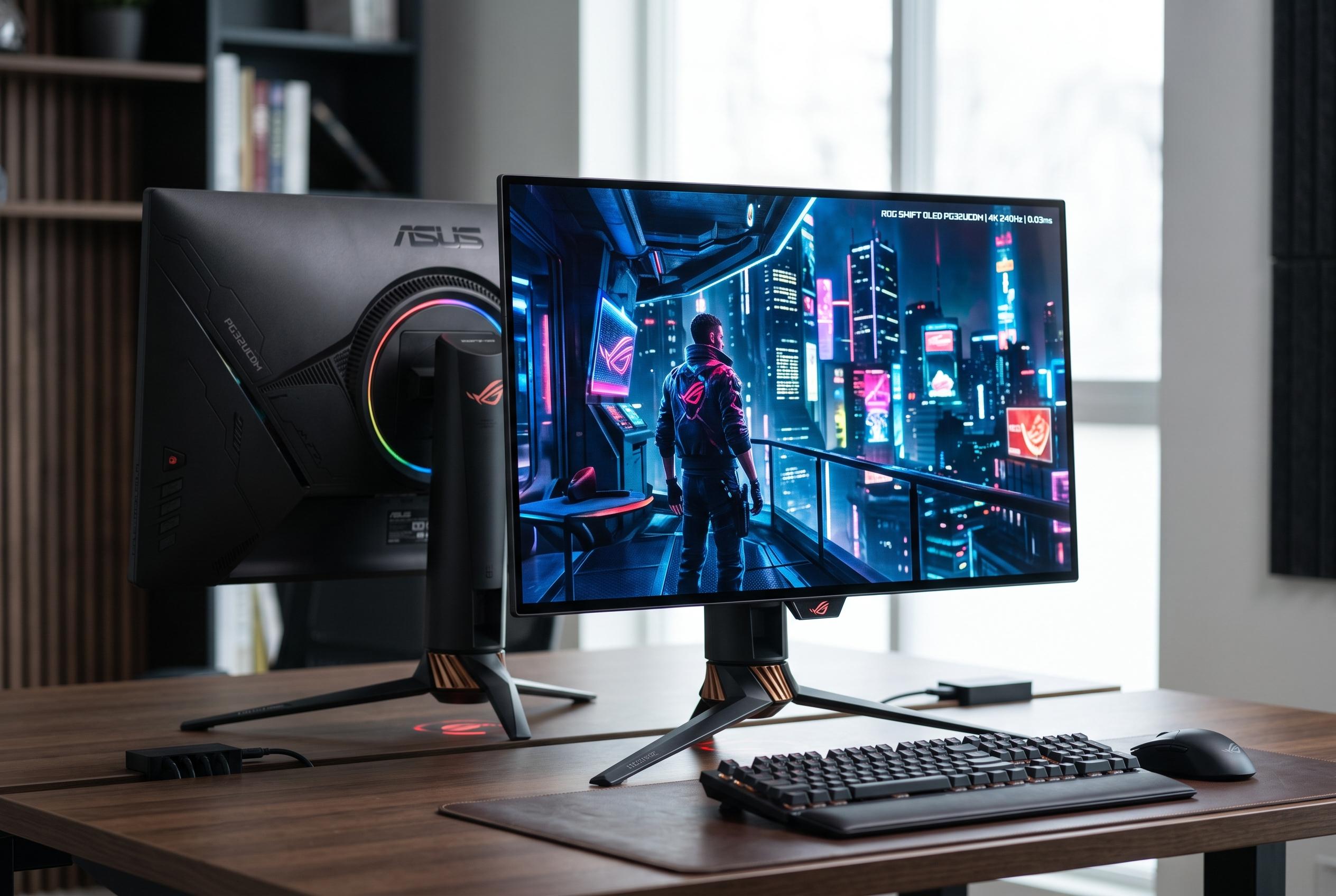

ASUS’s latest ROG Swift OLED PG32UCDM Gen3 emerges as the leading all-round 4K gaming monitor in 2026, combining premium features with evolving durability enhancements, but pricing and practical concerns remain key considerations.
ASUS’s ROG Swift OLED PG32UCDM Gen3 stands out as the leading all-round 4K gaming monitor for 2026 if the goal is a premium 32-inch-class screen for both PC and console play. The appeal is straightforward: a 4K QD-OLED panel, 240Hz refresh, HDMI 2.1, DisplayPort 2.1a, USB-C charging and a set of desk-friendly extras that make it more than a pure gaming panel. Tom’s Hardware’s review of the PG32UCDM3 variant also found excellent motion handling, deep contrast and vivid HDR performance, although it noted the asking price remains high.
That said, the ASUS is not the best fit for everyone. In bright rooms, QD-OLED’s black levels can look less convincing than they do in controlled lighting, and repeated static desktop use still raises the familiar burn-in concern. There is also a practical ownership issue: Tom’s Hardware reported complaints from some buyers about cracked panels arriving in damaged packaging, a reminder that premium displays are not immune to poor shipping protection.
For buyers who want the same broad class of performance but with a different emphasis, the Dell Alienware AW2725Q remains the strongest compact OLED option, while the Acer Nitro XV275K P5biipruzx is the better non-OLED choice for users wary of burn-in. The Dell S2725QS is the sensible budget pick for 4K at 120Hz, especially for current consoles, and the MSI MPG 322URX QD-OLED is the specialist alternative for PC users who want full-bandwidth DisplayPort 2.1 and a feature set built around desktop flexibility.
The ASUS also appears to be evolving. Tom’s Hardware reported on a forthcoming BlackShield coating for the PG32UCDM3, which is said to improve perceived black levels and scratch resistance, alongside support for HDR10, Dolby Vision and DisplayHDR 500 True Black. If those claims hold up in retail units, they would strengthen an already capable monitor for buyers who want OLED contrast with a little more durability and less glare.
In practical terms, the right choice depends less on headline refresh rate than on how the monitor will actually be used. A 4K/240Hz OLED is most persuasive for a powerful gaming PC in a dim room. A 4K/120Hz IPS monitor is often the better value for console users and mixed work-play desks. And for anyone weighing an OLED purchase, the real question is not just image quality, but whether the room, the desk and the workload suit the technology.
Disclaimer: This content is intended for informational purposes only. Readers are advised to exercise their own judgement, conduct due diligence, or consult a qualified expert before acting on any information provided.