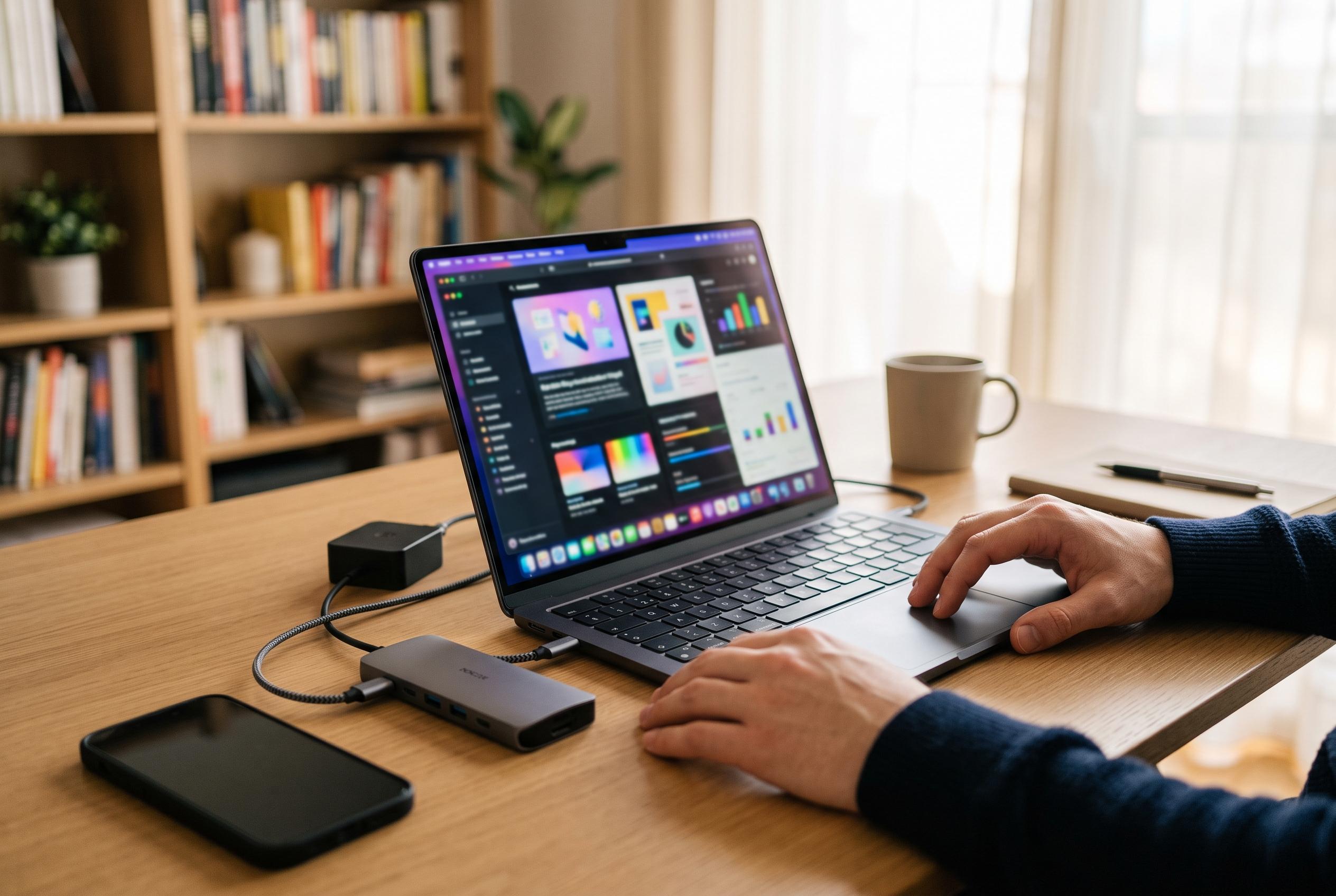

Asus’s latest 14-inch Zenbook combines premium design and OLED display with Snapdragon silicon at a sub-€1,000 price, offering a stylish alternative to MacBooks but with some limitations in performance and features.
Asus’s latest 14-inch Zenbook aims squarely at the wave of low-cost MacBook alternatives, combining a premium chassis, OLED screen and Snapdragon silicon at a price that, in its best-known configuration, remains just under the psychologically important €1,000 mark. The appeal is obvious: a light, polished Windows machine that looks far more expensive than it is. But the compromise is equally clear. In a market where memory prices have become a constraint, Asus has kept the entry price down by making some carefully judged cuts. According to the French review by Frandroid, the result is a laptop with solid foundations, but one that is not quite as complete as the spec sheet first suggests. Frandroid’s hands-on assessment is reinforced by recent English-language reviews from TechRadar, Windows Central and PCWorld, all of which place the Zenbook 14 in the same broad category: stylish, portable and well suited to everyday work, but not without limits.
The design remains one of the machine’s strongest arguments. Frandroid describes an aluminium chassis with a Ceraluminum lid, a material blend that Asus says is intended to improve durability and resistance to scratches. The overall impression is of a firm, well-finished body with little flex, while the glacier-blue finish gives the machine a more distinctive appearance than many rivals in the same price band. At 1.1kg, it is also properly portable, even if it is not the lightest 14-inch notebook on the market. TechRadar’s separate review of the 2026 Zenbook 14 reached a similar conclusion, noting the sturdy build and slim profile, while Windows Central also highlighted the premium feel of the chassis.
Input quality is broadly strong. Frandroid says the keyboard is one of the best aspects of the device, with a quiet action, a pleasant surface and useful backlighting. The trackpad is large enough for normal use, although it lacks haptic feedback, which is increasingly common on more expensive ultraportables. Connectivity is respectable for the class, with two USB-C ports, a full-size HDMI 2.1 port, a headphone jack and a single USB-A port. Wi-Fi 6E and Bluetooth 5.3 are also included. The camera, however, is more ordinary: Frandroid found the 1080p webcam usable for video calls but soft and noisy by modern standards. TechRadar likewise praised the keyboard on its review model, while PCWorld and Windows Central both noted the absence of an SD card reader as one of the few practical omissions.
The display is where Asus’s cost discipline becomes most visible. The 14-inch OLED panel uses a 1,920 x 1,200 resolution and a 16:10 aspect ratio, which suits productivity work, and it covers the full DCI-P3 colour gamut. Frandroid measured brightness at around 300cd/m², which is adequate indoors but leaves the glossy panel vulnerable to reflections. More importantly, the screen is limited to 60Hz and does not support HDR, which means it cannot fully exploit the contrast benefits of OLED in the way higher-end panels can. That stands in contrast to the more capable screens on some rival Zenbook variants and to models such as HP’s OmniBook X 14, which TechRadar said offers a sharper 2,240 x 1,400 display and exceptional battery life. Frandroid also points out that Apple’s 13-inch MacBook Neo, while using an LCD panel rather than OLED, offers higher claimed brightness and sharper resolution, which helps explain why Asus has had to balance its strengths carefully.
Performance is the most obvious trade-off. The reviewed model uses Qualcomm’s Snapdragon X X1-26-100 rather than the more powerful Snapdragon X Elite or X Plus chips, and Frandroid’s benchmarks place it behind some larger laptops with Intel Core Ultra and AMD Ryzen AI processors. Single-core performance is particularly weak by the standards of the wider market, which affects responsiveness in the very tasks this kind of laptop is supposed to do well: browsing, office work and media playback. Graphics performance is modest as well, so light gaming and creative work are limited. That said, the machine remains quiet in normal use and only becomes noticeably noisy under sustained load. Battery life is the area where Qualcomm still excels: Frandroid recorded around 17 to 18 hours in office-style use, while other recent reviews have reported anything from more than 12 hours to well beyond a full working day, depending on workload and panel settings.
The larger context matters here. Asus has broadened the Zenbook range in 2026, with different versions of the 14-inch model appearing alongside Intel and AMD variants that offer larger batteries, faster screens and stronger overall specifications, albeit at much higher prices. Tom’s Hardware reported that Asus’s refreshed line-up spans Zenbook S, A and Duo models, with the 14-inch family positioned as the more affordable option in that portfolio. In practice, that makes the Snapdragon version a deliberate value play rather than the definitive Zenbook 14. Frandroid’s conclusion is therefore measured rather than dismissive: this is a well-made, attractive ultraportable that can be compelling at its entry price of €799, but the 16GB review configuration at €999 sits in a difficult middle ground, where the excellent design and battery life are offset by a weaker processor, a limited screen and soldered memory that cannot be expanded later.
Disclaimer: This content is intended for informational purposes only. Readers are advised to exercise their own judgement, conduct due diligence, or consult a qualified expert before acting on any information provided.