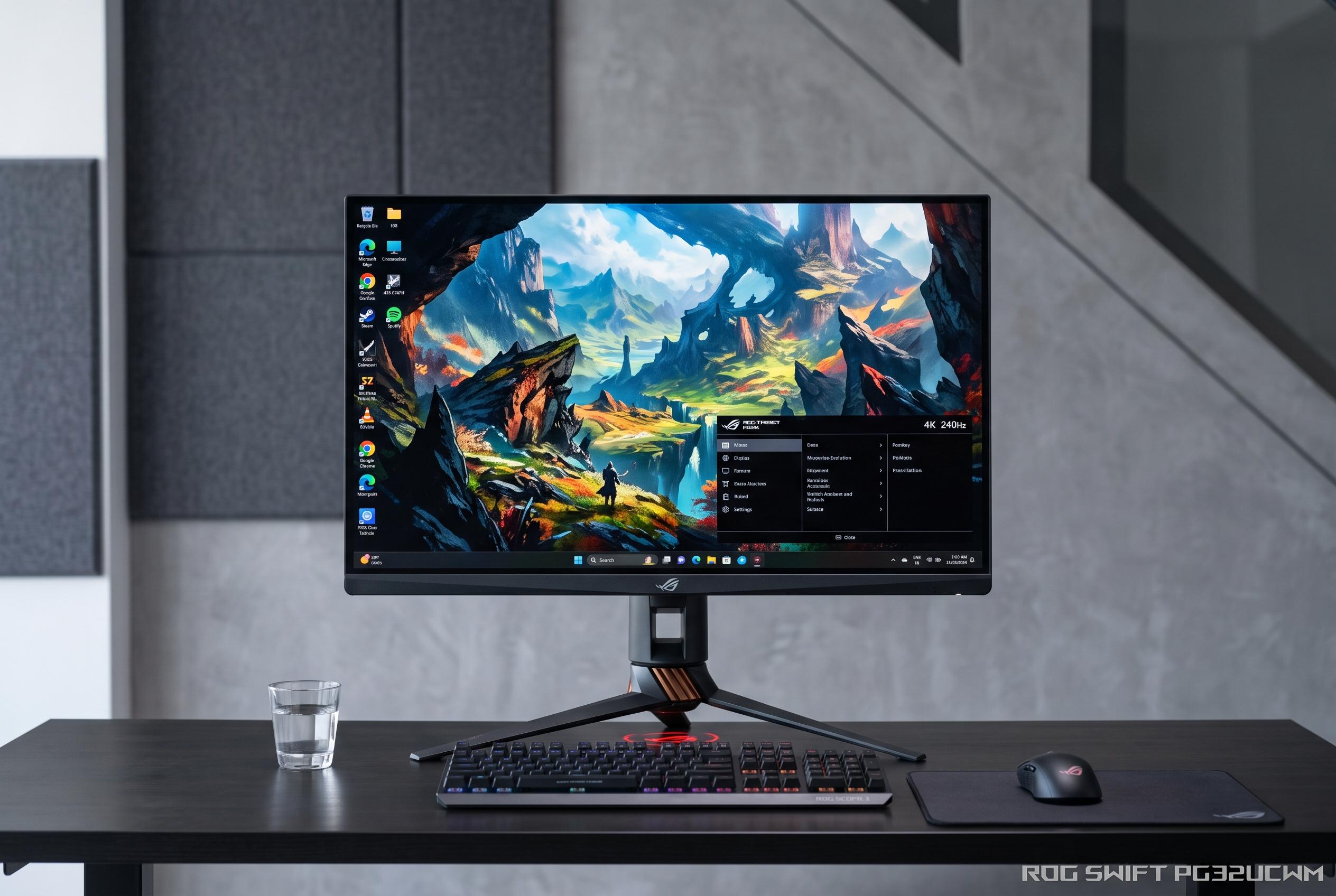

Asus launches the ROG Swift PG32UCWM, a 32-inch 4K OLED gaming monitor featuring LG’s latest Tandem WOLED panel with an RGB-stripe layout, offering sharper text and improved colours but with brightness limitations and a premium price tag.
Asus has pushed its 32-inch 4K gaming monitor line into a new phase with the ROG Swift OLED PG32UCWM, a display built around LG’s latest Tandem WOLED panel but with an RGB-stripe layout rather than the older white-subpixel design. In PC Gamer’s review, the change is presented as meaningful rather than cosmetic: the panel delivers sharper text, cleaner colour handling and a more neutral image than earlier LG-based OLED monitors, while still preserving the near-instant response times and per-pixel light control that make OLED attractive for games.
The panel choice, however, comes with a trade-off. According to Asus’s product information, the screen runs at 240Hz in its native 4K mode and can switch to 480Hz at 1080p, with DisplayPort 2.1, HDMI 2.1 and USB-C charging rated at 90W. Yet the RGB-stripe layout lowers the monitor’s brightness ratings compared with Asus’s earlier RGWB version of the same general panel class, which helps explain why this model is certified only for DisplayHDR True Black 400 rather than a higher tier. PC Gamer said the result is a display that looks excellent in dark and mixed content, but can feel less forceful across bright full-screen scenes than some rivals.
That puts the PG32UCWM into a tighter contest with Samsung-based QD-OLED alternatives. Tom’s Hardware and Windows Central have both been positive on Asus’s 32-inch 4K OLED monitors using that competing panel family, praising their image quality while noting price remains a limiting factor. PC Gamer’s review suggests the new LG RGB-stripe panel narrows the gap substantially, especially for desktop use where the sharper subpixel arrangement improves fonts and interface elements. Still, QD-OLED models can retain an edge in perceived punch in some brighter scenes, even if they bring their own quirks, including colour shifts in certain lighting conditions.
Asus has also packed the Swift model with a premium feature set aimed at users who want a monitor to do more than play games. The screen supports G-Sync compatibility, AMD FreeSync Premium Pro, Dolby Vision, VRR anti-flicker and motion-blur reduction, while the chassis adds height, tilt and swivel adjustment, RGB lighting and a semi-transparent rear cover. That positions it as a more fully featured product than the company’s more mainstream gaming panels, but also as an expensive one. At $1,299 in the United States and £1,099 in the UK, it sits well above many first-generation 32-inch 4K OLED competitors.
The bigger question is whether the improvements justify the premium. PC Gamer concluded that Asus has come very close to the long-promised idea of an OLED monitor that does almost everything well, but not quite enough to call it finished. Brightness limitations remain, and the value case is complicated by cheaper OLED options already on sale, as well as upcoming alternatives such as Alienware’s larger ultrawide panel. For buyers who prioritise text clarity, colour purity and top-tier motion performance in a 32-inch 4K format, the PG32UCWM looks highly accomplished. For everyone else, it may be a little too costly for what is still, in the review’s view, an imperfect near-final answer.
Disclaimer: This content is intended for informational purposes only. Readers are advised to exercise their own judgement, conduct due diligence, or consult a qualified expert before acting on any information provided.