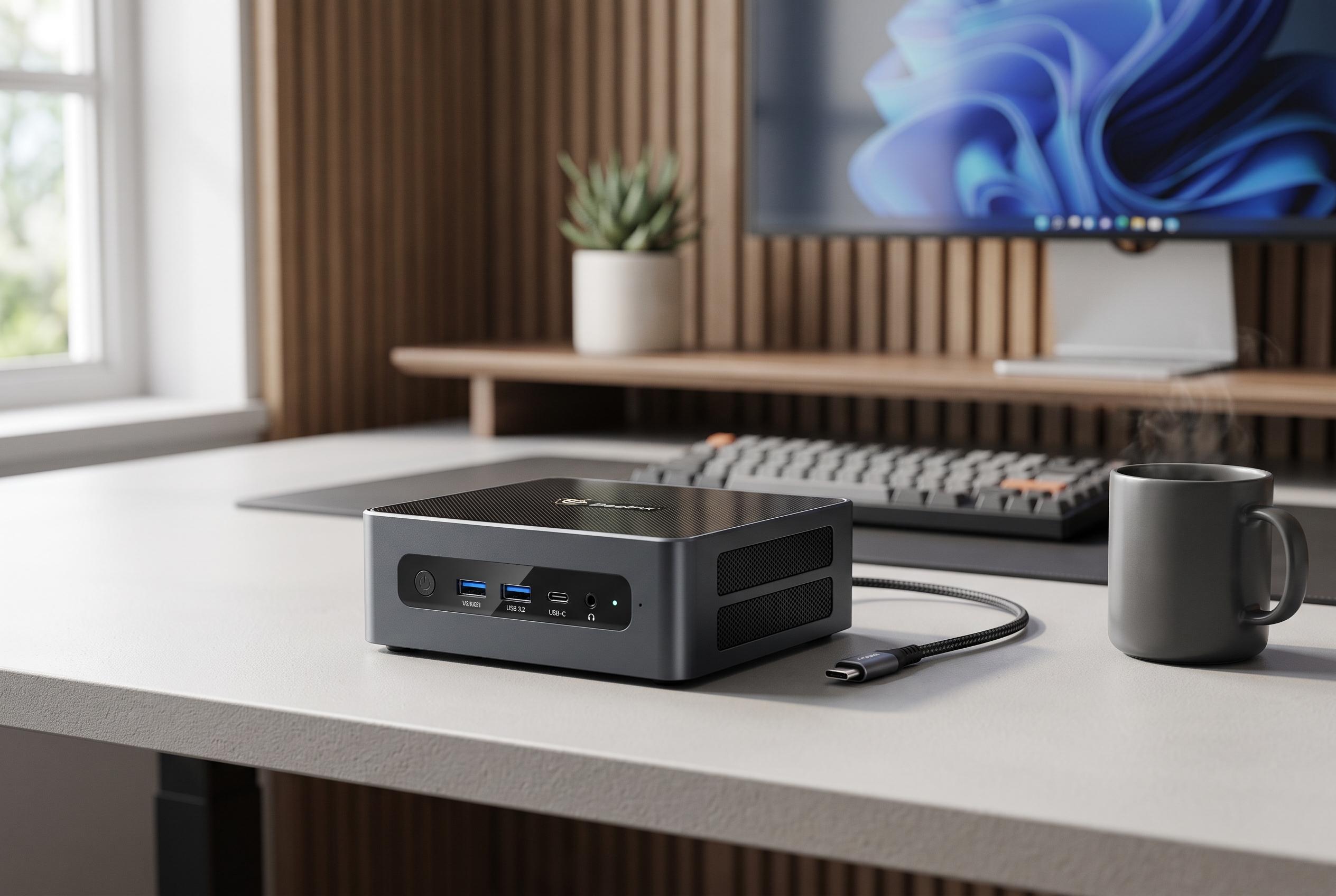

The Beelink SER10 Max stands out in the mini PC market by offering pre-installed Windows 11 and Ubuntu, alongside Beelink’s OpenClaw software and a local AI model, targeting users seeking a versatile compact workstation.
Tom’s Hardware says the Beelink SER10 Max is an unusual entry in the mini PC market because it arrives with both Windows 11 and Ubuntu already installed, alongside Beelink’s OpenClaw software and a local AI model on the Linux side. That makes setup more ambitious than on a typical small desktop, but it also gives the machine a distinctive pitch: a compact computer aimed at users who want a ready-made bridge between everyday productivity, Linux tinkering and light local AI work. The review also notes that the unit tested cost $1,649 and was based on AMD’s Ryzen AI 9 HX 470, a chip that improves modestly on its predecessor but is still constrained by memory bandwidth when pushed into heavier AI tasks.
The hardware itself is close to a Mac mini-like design, with machined aluminium around most of the chassis, plastic on the underside and rear, and a red anodised finish for the OpenClaw edition. Tom’s Hardware found the external power supply a little awkward, but praised the quiet cooling setup, which combines a vapor chamber with a single fan that stays restrained under load. The machine’s rear and front ports are practical rather than lavish, though 10Gbps Ethernet, USB4 and LAN wake support help position it as a small, always-on workstation. The publication also pointed out that the internals are relatively easy to reach, with user-replaceable memory, storage and wireless components.
That upgradeability is backed up by the broader launch specifications reported elsewhere. Gizmochina and Notebookcheck said the SER10 Max uses dual M.2 2280 SSD slots, dual SODIMM slots and support for up to 256GB of DDR5 memory, while TechRadar described the system as part of Beelink’s wider push into higher-end Gorgon Point mini PCs with Radeon 890M graphics and 10Gbps networking. Those reports reinforce the impression that Beelink is targeting buyers who want far more flexibility than the average sealed mini PC offers, even if the review unit itself came configured with 64GB of DDR5-5600 memory and 2TB of storage.
In day-to-day use, Tom’s Hardware found the SER10 Max comfortably capable of office work, multitasking and light content creation. Its 12-core, 24-thread processor placed it in the middle of the pack in the site’s benchmark suite, which is still respectable for a machine of this size. The review said CapCut video editing felt smooth and that the system rarely became noisy, with the fan only briefly ramping up during a synthetic test. That makes the SER10 Max sound less like a specialist workstation and more like a compact all-rounder that should satisfy most mainstream users.
Gaming, however, revealed the limits of the platform. The integrated Radeon 890M handled lighter games well enough, with titles such as Hollow Knight: Silksong and Stardew Valley running smoothly, but heavier 3D games exposed the bottleneck created by the default 4GB VRAM allocation and the chip’s limited memory bandwidth. Tom’s Hardware said Cyberpunk 2077 was playable only at reduced settings, while more demanding modern games required significant compromises. The same constraints carried over to local AI work, where the preloaded Qwen 3.5-9B model ran slowly and made clear that the OpenClaw branding is more of an entry point than a substitute for a serious AI rig. Even so, for buyers who want a quiet desktop with Linux support, decent productivity performance and some experimental AI capability, the SER10 Max appears well judged, provided expectations stay realistic.
Disclaimer: This content is intended for informational purposes only. Readers are advised to exercise their own judgement, conduct due diligence, or consult a qualified expert before acting on any information provided.