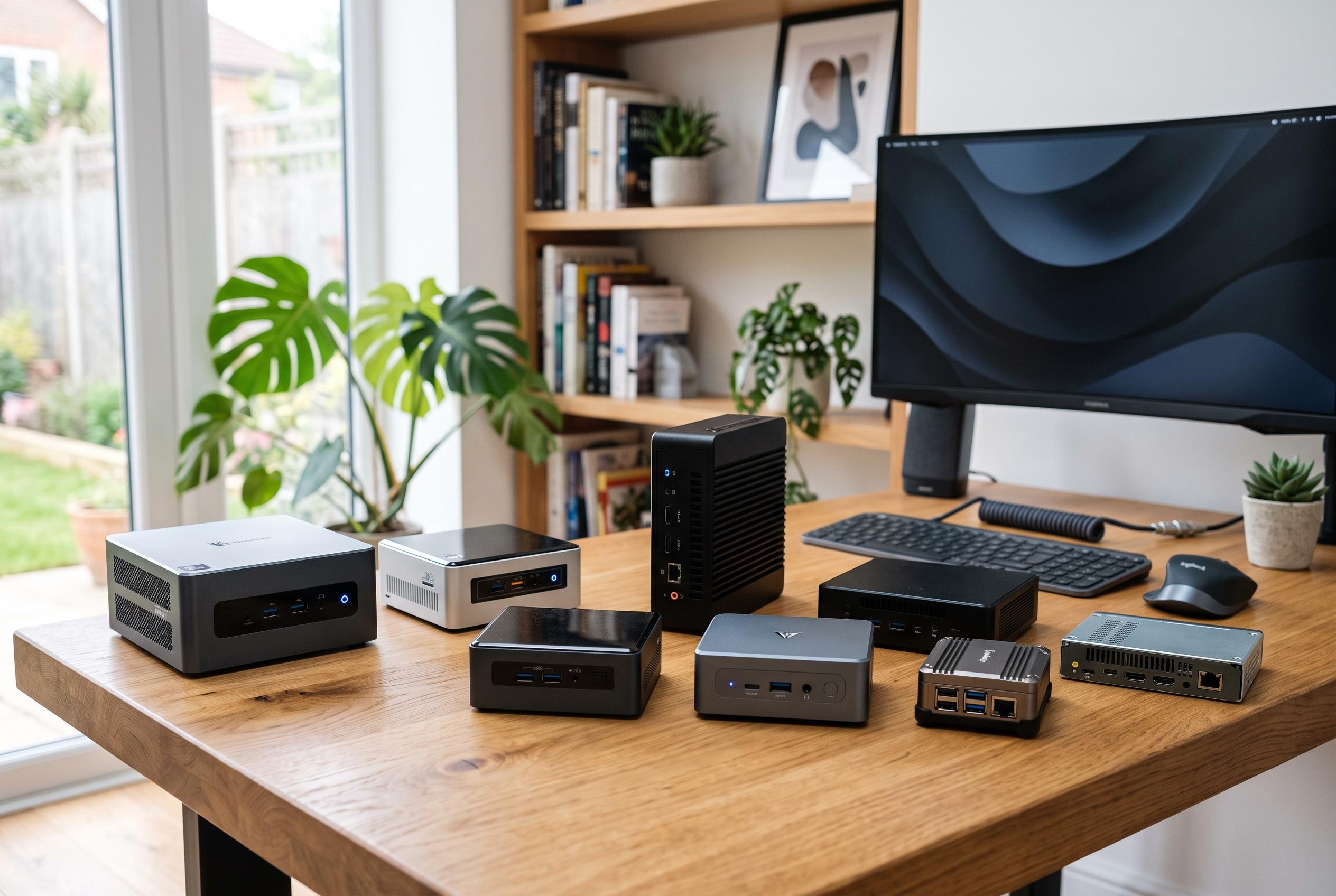

As Apple’s pricing limits options for upgrades and storage, buyers turn to a broad range of Windows and Linux mini PCs , offering greater flexibility, specialised features, and evolving capabilities for various uses from home servers to media boxes.
A Mac mini is a tidy machine, but Apple’s pricing for usable memory and storage can quickly make the value argument less convincing. That has driven buyers towards compact Windows and Linux mini PCs, where the range stretches from silent network boxes to small desktop systems with upgrade paths Apple does not offer. The selection here focuses on models that can plausibly substitute for a Mac mini in everyday use, a home server role, or a more specialised network setup.
For a router or firewall, TOPTON’s fanless box is the clearest specialist choice. According to TOPTON, it uses a passive aluminium chassis, four Intel i226-V 2.5G Ethernet ports and processor options from the Intel N150 up to the Core i5-8250U, with support for pfSense, OPNsense or Proxmox. It is not really a desk computer; it is a silent appliance for always-on network duties.
Beelink’s SER5 Max is closer in spirit to the Mac mini. It is a compact desktop box with 16GB of memory, a 500GB SSD and enough I/O to sit beside a monitor rather than under a desk. Beelink’s own product pages and retailer listings do, however, need checking carefully, because the processor naming can differ between versions, with some listings referring to Ryzen 7 6800U and others to Ryzen 7 5800H.
GenMachine’s Ryzen 7 5800H model is the more aggressively priced choice. It offers eight cores and 16 threads, support for three displays and a mounting plate for the back of a monitor or wall. The trade-off is simple: the brand is less established, and buyers have to pay close attention to whether they are ordering a barebone unit or a complete system with memory and storage included.
For a quieter office machine, Beelink’s Mini S13 is a sensible low-power option. It is built around Intel’s N150, a very modest chip designed for light workloads, and Beelink says the front panel includes USB ports and a headphone jack for easier access. That makes it a practical fit for web browsing, email, documents and media playback rather than heavier creative work.
CHUWI’s LarkBox X moves the conversation towards expandability. The company positions it as a small cube built around a Core i3-1220P with support for three 4K displays, plus room for up to 64GB of memory and two storage devices. That makes it more flexible than Apple’s base Mac mini, especially for users who want to grow the machine over time.
If the brief is a cheap media box or spare Windows PC, Chatreey’s T9 is the budget end of the field. It is built around Intel’s ageing Celeron N3150, yet still offers dual-monitor output and a tiny footprint suitable for a television cabinet. The limitations are obvious in the specification: slow USB-C, older Bluetooth and storage that is far less modern than the pricier alternatives.
At the other end, MINISFORUM’s MS-01 is not really a Mac mini rival at all; it is a compact workstation and server platform. It adds features associated with far larger systems, including a PCIe slot for a graphics card, 10-gigabit SFP+ networking, multiple M.2 drive bays and support for much larger memory capacities. For a home lab or small studio, that makes it unusually capable, even if the price puts it into another category entirely.
The most interesting point is that the best replacement depends on the job. A silent firewall, a living-room media box, a small office desktop and a home server all call for different trade-offs in cooling, networking, upgradability and processor class. That is the main advantage of the mini-PC market over Apple’s sealed approach: it is messy, but it gives buyers genuine choice.
Disclaimer: This content is intended for informational purposes only. Readers are advised to exercise their own judgement, conduct due diligence, or consult a qualified expert before acting on any information provided.