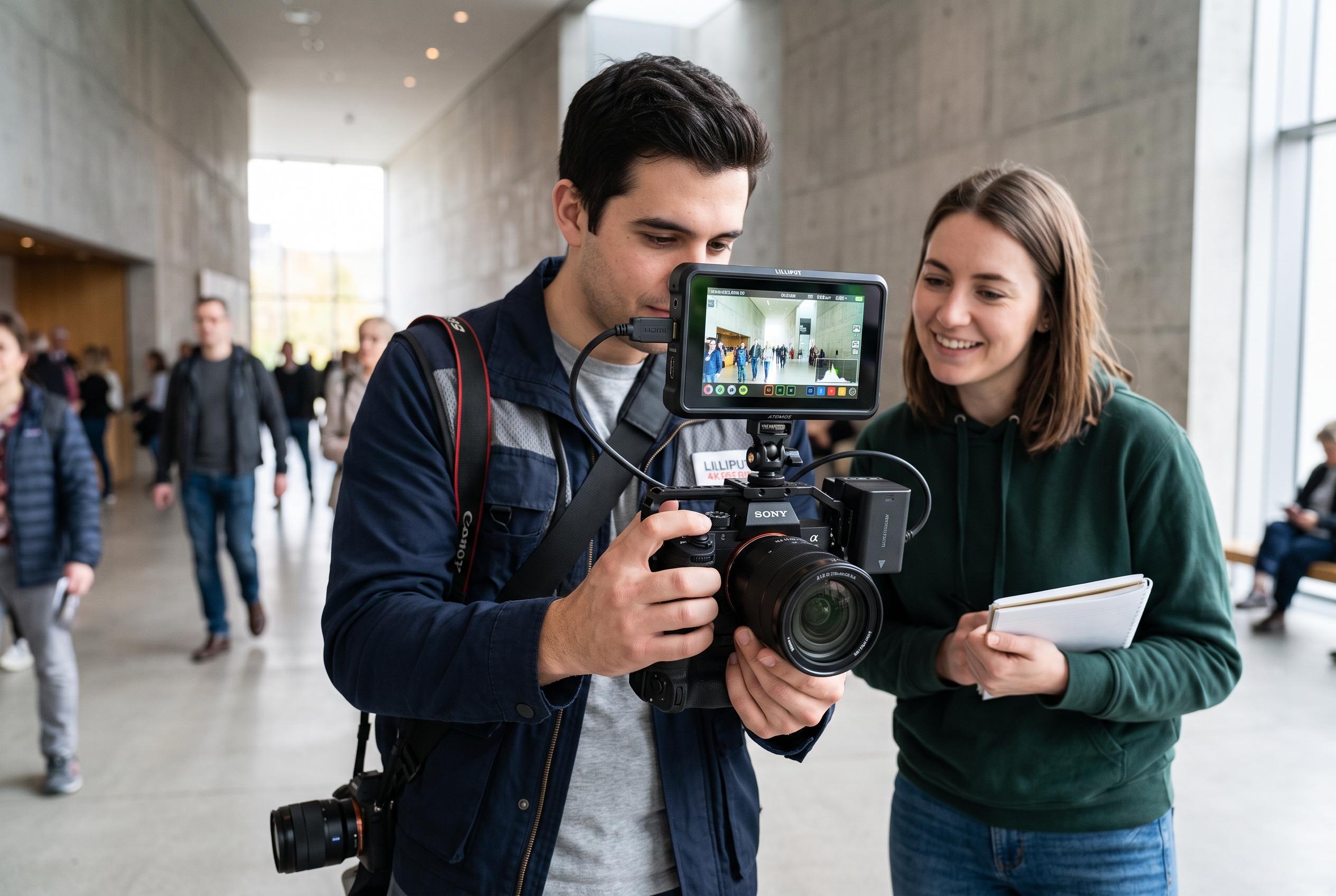

A new guide highlights affordable external monitors and recorders that improve focus, exposure, and workflow for filmmakers working with mirrorless cameras, emphasising brightness, portability, and practical features for diverse shooting environments.
For filmmakers working with mirrorless cameras, the problem is often not capture quality but visibility. Small rear displays can be hard to read outdoors, and focus errors or exposure mistakes may not be obvious until post-production. A recent guide from Short Film Central argues that an external monitor can solve that by adding a larger, brighter display and tools such as focus peaking, waveform and false colour, all of which help crews make better decisions on set. Its roundup of seven sub-$600 options is aimed at shooters who want practical monitoring without moving into high-end professional pricing.
The strongest overall recommendation in the guide is the FEELWORLD F5 Pro V4, which it describes as a feature-rich entry-level option for indoor or controlled-light work. The same guide says the F5 Prox is the better choice for most users because its 1600-nit panel is much easier to use in direct sunlight and it arrives as a more complete starter kit. That emphasis on brightness tracks with broader buying advice from Digital Camera World, which also places display visibility, connectivity and practical tooling among the main factors filmmakers should weigh when choosing an on-camera monitor.
For users who need more flexibility, the VILTROX DC-550 stands out for its mixed power options, 1200-nit display and 4K HDMI support. The Short Film Central review says that makes it a strong fit for hybrid shoots where power sources vary from batteries to wall power. It also highlights the FEELWORLD P6XL as a lighter alternative with a built-in battery, and the LUT7 as the brightest screen in the group at 2200 nits, a specification that matters most for outdoor documentary, travel and gimbal work. Those recommendations reflect a wider market trend towards lighter rigs and brighter panels for field use, which other 2026 buying guides also stress.
The article is careful to distinguish between monitors and true monitor-recorders. Most of the products it covers are monitoring tools only, while the FEELWORLD CUT6 and the Atomos Ninja add recording functions. Short Film Central treats the CUT6 cautiously because of reported reliability and fan-noise problems, but presents the Ninja as the most credible option for serious recording work thanks to ProRes, DNxHD and H.265 support. That mirrors the position taken in other recorder-focused roundups, which continue to frame Atomos as the safer route for filmmakers who need external capture rather than just an external display.
What the guide does well is treat specification sheets as only part of the decision. It gives more weight to brightness, screen size, battery system and total rig weight than to headline features alone. That is useful because many buyers underestimate how quickly a monitor can become cumbersome once a battery plate, cables and mounting hardware are added. Its practical advice is simple: choose a monitor around your shooting environment, not around the longest feature list. For indoor work, a lower-cost screen may be enough. For outdoor use, brightness should come first. For recording, the buyer should decide whether internal camera files are sufficient or whether external capture is worth the extra cost.
Overall, the piece argues that budget monitor recorders can make a genuine difference to 4K filmmaking if they are matched carefully to the job. Its top picks reflect three different needs: low-cost monitoring, daylight visibility and professional recording. That makes the guide most useful as a buying framework rather than a simple ranking. In practice, the best choice is the one that improves focus, exposure and workflow without adding avoidable weight or complexity to the camera build.
Disclaimer: This content is intended for informational purposes only. Readers are advised to exercise their own judgement, conduct due diligence, or consult a qualified expert before acting on any information provided.