
Modern cinema cameras increasingly adopt built-in ND filters, offering faster workflows and greater control in changing light conditions, with new models pushing the boundaries of quality and flexibility for filmmakers and broadcasters.
Built-in ND filters have become one of the most practical features in modern cinema cameras, chiefly because they let operators control exposure without changing aperture or shutter angle. That matters most outdoors, where maintaining a 180-degree shutter can preserve natural motion blur while light levels shift. The core trade-off is simple: internal systems are fast and always available, while external screw-on filters offer more range and flexibility. Reuters-style product testing and buying guides make the same point across camera and filter coverage, with built-in solutions prized for workflow speed and repeatability.
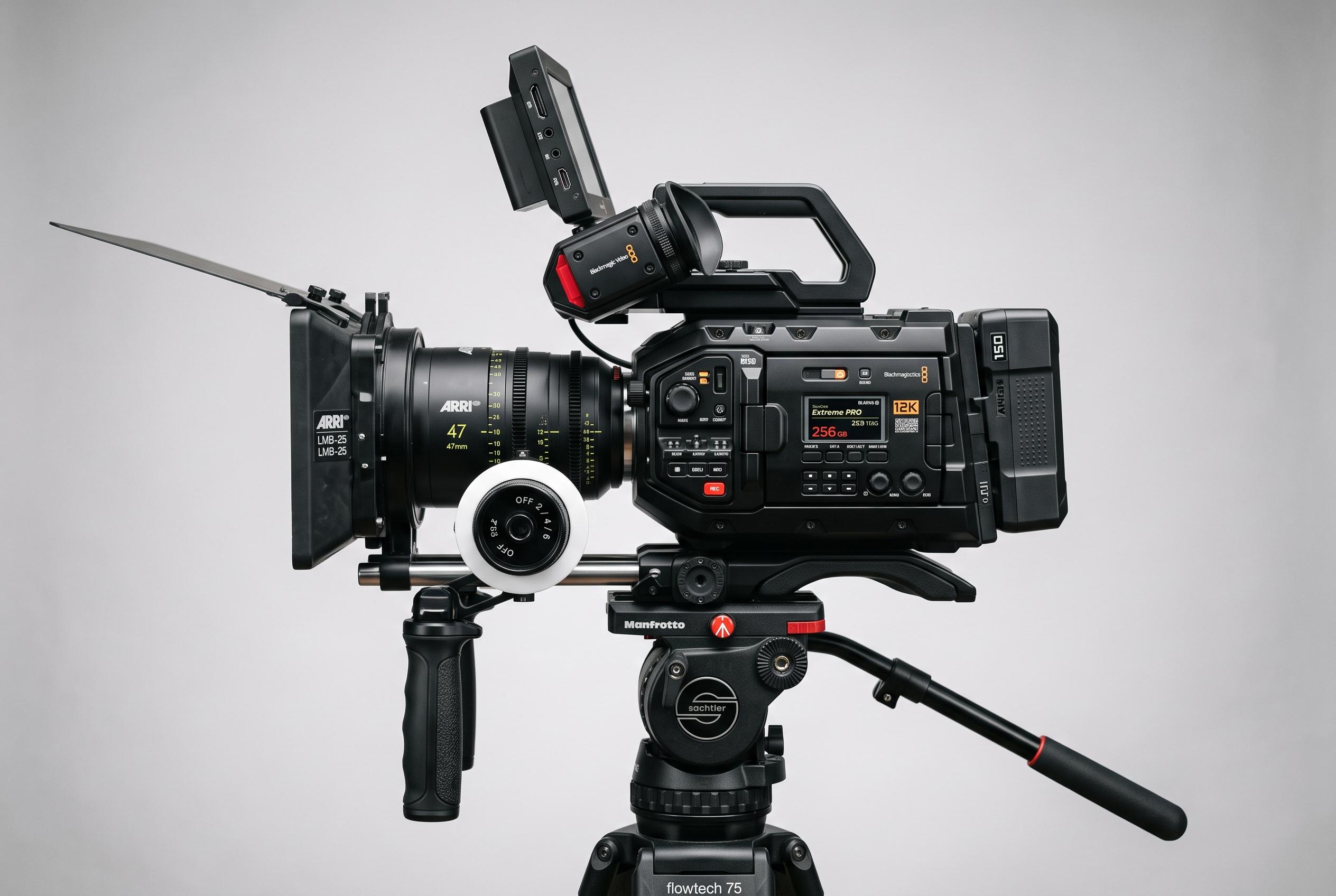
Among the most accessible options, the Blackmagic Pocket Cinema Camera 6K Pro remains the strongest all-round choice for many filmmakers. Its 2, 4 and 6-stop internal ND system makes it easier to work in changing daylight, while the camera’s Cinema quality image, RAW recording and Resolve Studio bundle keep it attractive for independent production. Blackmagic’s URSA Mini Pro line extends that appeal into larger, more production-oriented bodies, and the 4.6K model is still notable for its fixed ND wheel and professional build. The company’s 12K version pushes resolution much further for visual-effects and re-framing work, though at the cost of heavier files and more demanding workflows.
Canon’s cinema range takes a different approach, with built-in ND filters paired to a broader professional feature set. The C70, C80, C300 Mark III and C400 all target crews that need dependable on-set controls, stronger connectivity and established broadcast-style workflows. Canon’s newer compact bodies are aimed at smaller teams that still want internal ND, while the higher-end models add modularity, full-frame sensors and more extensive I/O for studio and feature work. For buyers weighing whether to spend more, the main question is not only image quality but how much native connectivity and system flexibility they need.
Sony’s FX6 and PXW-Z200 stand out because they use electronic variable ND rather than fixed mechanical steps. That design allows smooth exposure changes during a shot, which is especially useful for documentary, event and broadcast work where lighting can change quickly. The FX6 is the more cinematic of the two, with a full-frame sensor and strong autofocus, while the Z200 is built around live production, streaming and zoom range. In practice, Sony’s variable ND system is best understood as a tool for operators who value seamless exposure control more than discrete filter stops.
The most specialised option in the field is the DJI Ronin 4D-8K, which combines a cinema camera, integrated 4-axis stabilisation and internal ND in one body. That makes it unusually well suited to handheld and run-and-gun work, particularly when smooth motion is more important than traditional rigging. For buyers choosing among these cameras, the decision usually comes down to workflow rather than image quality alone: internal ND is most valuable when it is matched to the way the camera will actually be used, whether that means documentary speed, broadcast reliability, feature-film grading headroom or stabilised mobile shooting.
Disclaimer: This content is intended for informational purposes only. Readers are advised to exercise their own judgement, conduct due diligence, or consult a qualified expert before acting on any information provided.