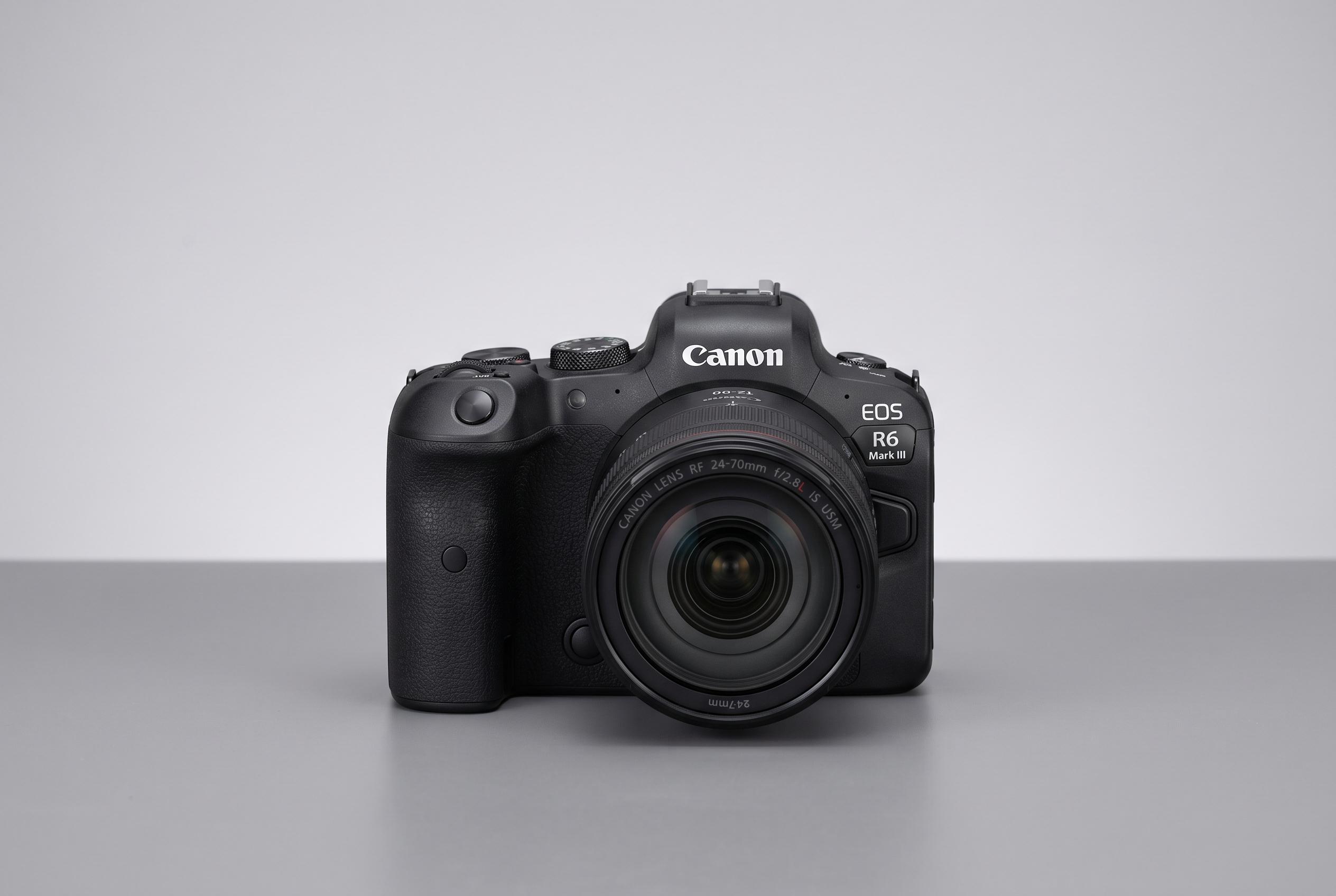

Canon’s latest EOS R6 Mark III aims to redefine the mid-range mirrorless camera with a 32.5-megapixel sensor, enhanced autofocus, and powerful video capabilities, positioning itself as a versatile choice for both photographers and videographers.
Canon’s EOS R6 Mark III is a clear attempt to turn the mid-range full-frame mirrorless body into a more capable all-rounder. The new 32.5-megapixel sensor lifts resolution well beyond the 24.2-megapixel level of the previous model, while the company has also pushed harder on video, buffer depth and autofocus behaviour. Official Canon specifications confirm the camera keeps the RF mount, uses the DIGIC X processor and pairs a full-frame CMOS sensor with Dual Pixel CMOS AF.
In practice, the body remains very close to the EOS R6 Mark II. That is not necessarily a weakness, because Canon’s grip shape and control layout already worked well. The camera keeps the vari-angle touchscreen and the 3.69-million-dot OLED electronic viewfinder noted by B&H Photo Video, but the rear display still trails the larger, denser panels now found on some rivals. The design also adds a full-size HDMI port and a CFexpress Type B slot alongside SD UHS-II support, which makes the body more suitable for serious video work than its predecessor.
The most meaningful change is not simply more pixels, but the way Canon has balanced those pixels against speed. The camera can shoot at up to 40 frames per second electronically and, according to Canon and Digital Camera World, the enlarged buffer is a major step forward for action and press work. Canon says the body now supports a much broader mix of stills formats, while third-party reviews highlight a new Registered People Priority mode that helps the autofocus system favour specific faces in busy scenes.
That autofocus system is one of the camera’s strongest arguments. Canon has kept Dual Pixel CMOS AF as the foundation, but the behaviour has been refined to feel more like the company’s higher-end bodies. Tom’s Guide reports that the camera offers 6,097 selectable points, and the Registered People Priority feature should be genuinely useful for weddings, events and editorial work where a particular subject must remain central. According to the review material, subject recognition covers people, animals and vehicles, which makes the camera broadly competent rather than narrowly specialised.
Video is where Canon has made the boldest pitch. The R6 Mark III supports internal 7K RAW capture, open gate 7K recording and 4K at very high frame rates, with Digital Camera World and Tom’s Guide both describing it as a serious hybrid body. In principle, that gives creators a great deal of flexibility for cropping, reframing and output to multiple aspect ratios. The addition of the CFexpress slot and full-size HDMI output also matters here, because they reduce the number of bottlenecks between capture and monitoring.
There are, however, clear practical limits. Review coverage notes that the camera lacks active cooling, so long-form recording remains constrained by heat, especially in the most demanding modes. That means some of the headline specifications are best understood as short-burst capabilities rather than tools for uninterrupted documentary work. The result is a camera that is highly ambitious on paper, but still asks the user to manage duration, card speed and thermal conditions carefully.
Taken as a whole, the EOS R6 Mark III is a stronger statement about Canon’s direction than a simple update. It is more capable for stills, much more convincing for hybrid use and better prepared for modern creator workflows than the model it replaces. The trade-offs are familiar: a body that looks conservative, a display and viewfinder package that no longer lead the class, and video features whose usefulness depends heavily on heat management. Even so, Canon has made the R6 line more technically serious without abandoning the approachable handling that helped define it in the first place.
Disclaimer: This content is intended for informational purposes only. Readers are advised to exercise their own judgement, conduct due diligence, or consult a qualified expert before acting on any information provided.