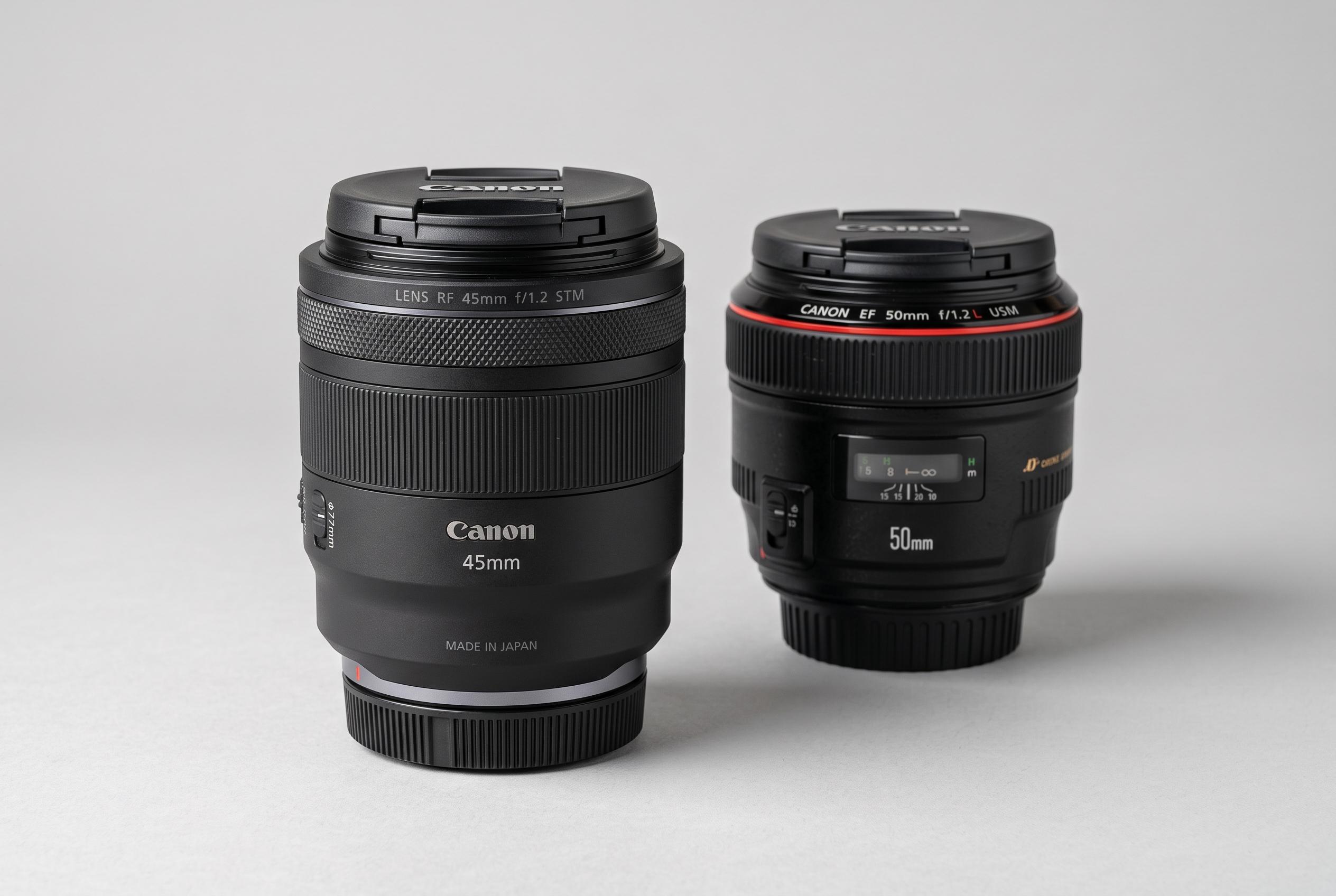

Canon’s RF 45mm f/1.2 STM now competes directly with a used EF 50mm f/1.2L USM in pricing, reshaping the choice for photographers between vintage allure and modern portability.
Canon’s RF 45mm f/1.2 STM has created an unusual buying problem: it now sits close in price to a used EF 50mm f/1.2L USM, a lens that was once a premium choice for DSLR users. That price overlap has made the decision less about new versus old and more about which compromises matter most to the photographer, as Gordon Laing showed in a direct comparison shot on a Canon EOS R5 Mark II.
The newer RF lens is the lighter, simpler option. At about half the weight of the EF lens with an adapter attached, it is easier to balance on smaller mirrorless bodies such as the EOS R8. It also adds a customisable control ring and uses 67mm filters, which are usually cheaper and easier to find. By contrast, the older L-series lens is larger, weather-sealed and supplied with a hood, while its EF mount gives it a wider compatibility story because it can be adapted to Canon mirrorless bodies and, more broadly, used in more mixed systems than an RF-only lens.
Optically, the two lenses split opinion rather than producing a clear winner. Laing found that the EF 50mm f/1.2L has a slight edge in central sharpness at f/1.2 and a marginally smoother background rendering, while the RF 45mm f/1.2 STM performs better towards the edges and resolves closer subjects more cleanly. Stopped down to around f/5.6 to f/8, the difference narrows substantially. CanonRumors and TechRadar have likewise described the RF lens as a distinctive but imperfect optic, with a rendering style that prioritises character as much as outright correction.
That is why the comparison is not just technical but practical. The EF 50mm f/1.2L is the older, heavier lens with the classic full-frame DSLR look built into its design. The RF 45mm f/1.2 STM is the more convenient modern purchase, especially for photographers who value lower weight, current native support and a lower entry price. Both are manual choices as much as optical ones, and that is exactly what makes this pairing interesting: one lens offers a revived vintage feel at bargain-market levels, while the other offers a cleaner, more portable route into fast-aperture shooting.
Disclaimer: This content is intended for informational purposes only. Readers are advised to exercise their own judgement, conduct due diligence, or consult a qualified expert before acting on any information provided.