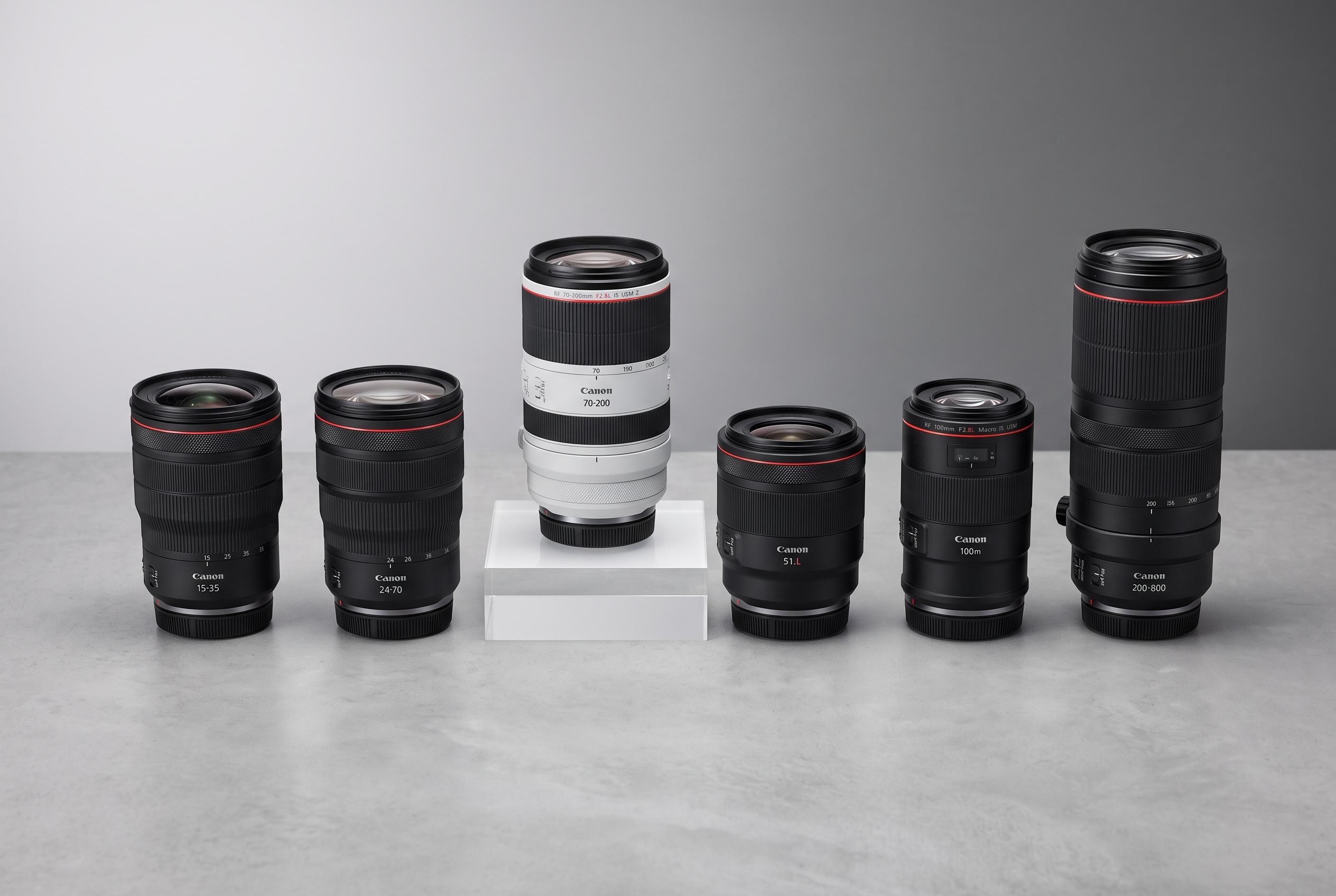

Canon’s RF lens line continues to evolve as the latest models integrate silent autofocus, stabilisation, and cinematic features, solidifying their position as essential tools for both hybrid and professional video production in 2026.
Canon RF lenses have become a serious option for video shooters because the mount now offers a mix of quiet autofocus, optical stabilisation and fast apertures that suit both hybrid work and more deliberate cinematic production. In a hands-on guide published by Short Film Central, the RF range is judged not just on sharpness but on practical video traits such as breathing, balance on a gimbal and how well the lens works with in-body stabilisation on bodies such as the EOS R5.
For most creators, the RF 24-70mm f/2.8L IS USM stands out as the safest first buy. Short Film Central describes it as the most versatile standard zoom for event, interview and documentary work, while Digital Camera World’s August 5, 2026 guide to lenses for the EOS R6 V also highlights newer RF glass with video-first design cues, including aperture control rings and silent focusing systems. That broader trend points to the same conclusion: Canon is steadily moving its RF line towards tools that are meant to be used during motion, not just for stills.
If low-light performance and shallow depth of field matter most, the RF 28-70mm f/2L USM remains the most ambitious standard zoom in the system. Short Film Central praises its constant f/2 aperture for keeping exposure steady through a zoom and for producing a distinctly cinematic look. The trade-off is obvious: it is heavy, expensive and better suited to tripod, monopod or supported rig work than to long handheld days.
At the telephoto end, the RF 70-200mm f/2.8L IS USM continues to be one of the most practical professional options. Digital Camera World’s 2026 telephoto round-up again places Canon’s RF version at the top of the mount for its compact design and image quality, while noting that the lens is strong across events, sports and portraiture. For video, that combination of reach, stabilisation and a constant aperture makes it especially useful for ceremonies and observation work where the camera must stay out of the way.
Wide-angle shooters have two clear paths. The RF 15-35mm f/2.8L IS USM is the more capable all-round choice for real estate, travel and narrative establishing shots, while the lighter RF 14-35mm f/4L IS USM is easier to live with on extended handheld shoots and gimbals. Short Film Central argues that the f/4 lens makes sense when portability matters more than maximum light gathering, especially as modern Canon bodies can handle higher ISO settings more comfortably than older systems.
Among primes, the most video-focused option is the RF 35mm f/1.4L VCM. Short Film Central singles it out for its iris ring and reduced focus breathing, two features that matter in professional video because they let the operator change exposure smoothly and pull focus without the frame visibly shifting. PhotoWorkout, in its March 8, 2026 comparison of Canon video lenses, also points to the newer VCM designs as the clearest sign that Canon is building primes with motion work in mind.
The older fast primes still have a role, but they are more specialised. The RF 50mm f/1.2L USM offers a classic natural perspective and striking background blur, while the RF 85mm f/1.2L USM is the stronger portrait lens for interviews and beauty work. Short Film Central notes that both are excellent optically, but neither is as video-friendly as the newer 35mm VCM lens because they lack stabilisation and show more obvious focus breathing, making them less forgiving for handheld work or rack-focus-heavy scenes.
Taken together, the RF system now covers most video needs without forcing users into adapted EF glass. The strongest standard recommendation remains the RF 24-70mm f/2.8L IS USM, the most cinematic zoom is still the RF 28-70mm f/2L USM, and the most obvious hybrid prime is the RF 35mm f/1.4L VCM. For buyers building a kit in 2026, the key decision is less about image quality, which is high across the range, and more about matching weight, stabilisation and autofocus behaviour to the way the camera will actually be used.
Disclaimer: This content is intended for informational purposes only. Readers are advised to exercise their own judgement, conduct due diligence, or consult a qualified expert before acting on any information provided.