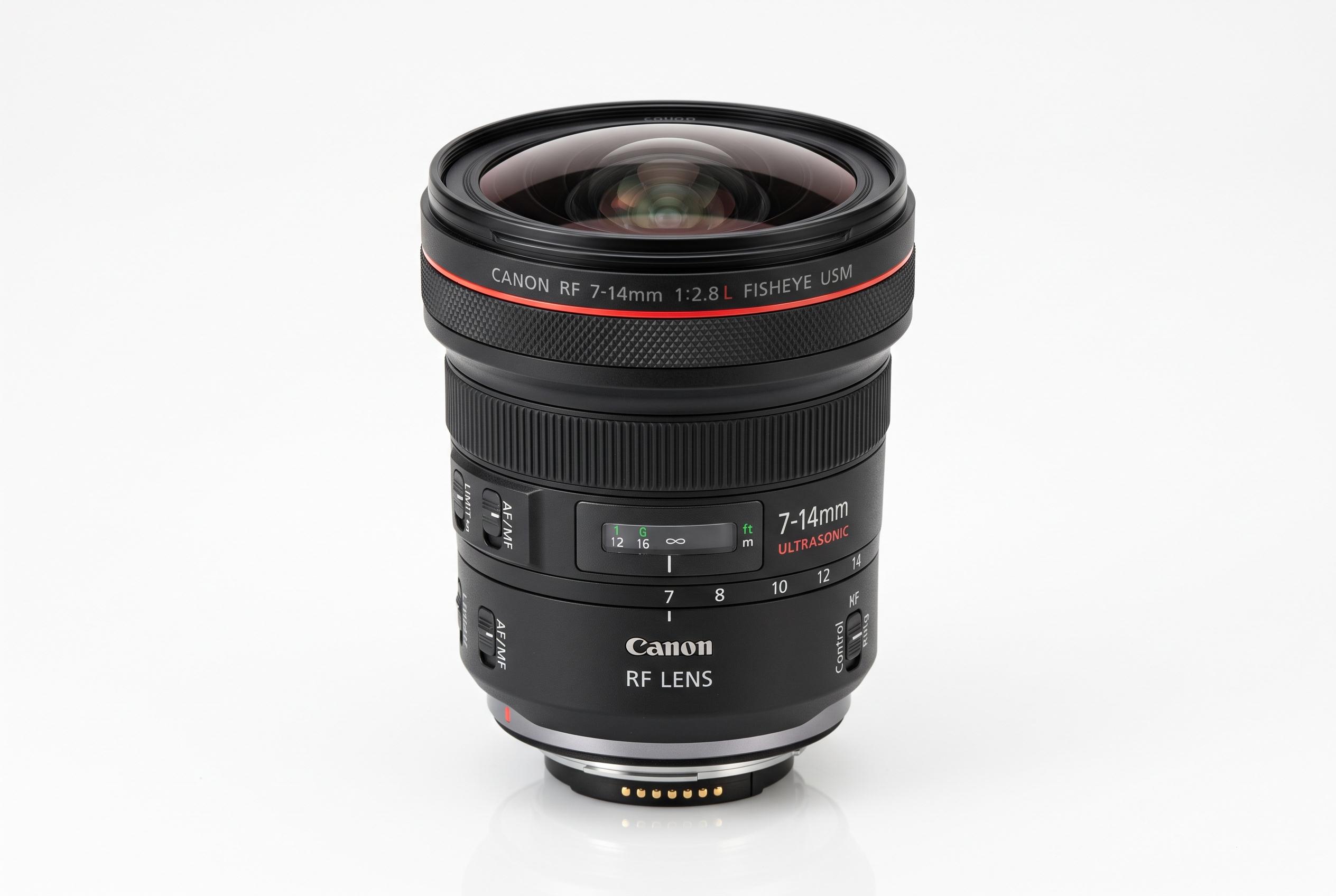

Canon launches a professional-grade RF 7-14mm fisheye lens offering unprecedented 190-degree views, versatile applications, and advanced features, at a premium price point for expert users seeking new creative horizons.
Canon’s new RF 7-14mm f/2.8-3.5 L Fisheye STM is not a mainstream zoom, but it is a serious one. At 7mm on a full-frame body, it delivers a 190-degree circular fisheye view, wide enough to include parts of a scene that sit almost behind the photographer. Canon lists the lens at $1,899, placing it squarely in specialist territory for users who know exactly why they need a fisheye rather than an ordinary ultra-wide lens.
The optic is designed for Canon’s RF-mount full-frame mirrorless cameras and pairs an f/2.8 maximum aperture at the wide end with a 15 cm minimum focus distance. That combination makes it useful in low light and for extreme close-up work, where a subject can be placed very near the front of the lens while the background stretches into a sweeping curve. Canon also includes a rear drop-in filter system, a fluorine coating and weather resistance, all of which underline that this is a professional tool rather than a novelty.
Reviewers say the lens is more versatile than its shape suggests. Christopher Frost’s test, carried by Fstoppers, showed that the lens can be used either as a circular fisheye at 7mm or as a diagonal fisheye at 14mm, where it fills the frame more conventionally. Digital Camera World has also noted that the lens is aimed not only at creative stills work but at astro photography, interiors, action sports and virtual reality workflows, where the full image circle can be important. Canon’s own materials say the lens can cover 180 degrees diagonally at the long end.
Image quality appears to be a strong point. Frost reported sharp central detail at 7mm and good corner performance from wide open, with improvement as the aperture is stopped down. He also found low flare, limited coma and strong sun stars at smaller apertures. The lens’s STM autofocus motor was described as quick, quiet and accurate, while the 476 g weight keeps it relatively manageable for such an extreme optic. One practical warning from his testing: in-body stabilisation should be switched off in some video setups, as it can introduce visible wobble.
The broader appeal of the lens is that it modernises a fisheye idea for Canon’s mirrorless system. Digital Camera World has pointed out that it fills a gap in the RF line-up and gives photographers a native autofocus option with drop-in filter support, something older fisheye designs did not offer as neatly. The main drawback remains price. For some buyers, the cheaper Laowa 8-15mm f/2.8 will be easier to justify. But for photographers who regularly use fisheye perspectives, Canon’s lens offers a well-built, well-corrected and unusually capable way to work at the edge of field of view.
Disclaimer: This content is intended for informational purposes only. Readers are advised to exercise their own judgement, conduct due diligence, or consult a qualified expert before acting on any information provided.