
Dell’s 14 Plus 2-in-1 offers strong versatility and build quality, but its display falls short of premium expectations, prompting questions for buyers seeking visual excellence within a flexible design.
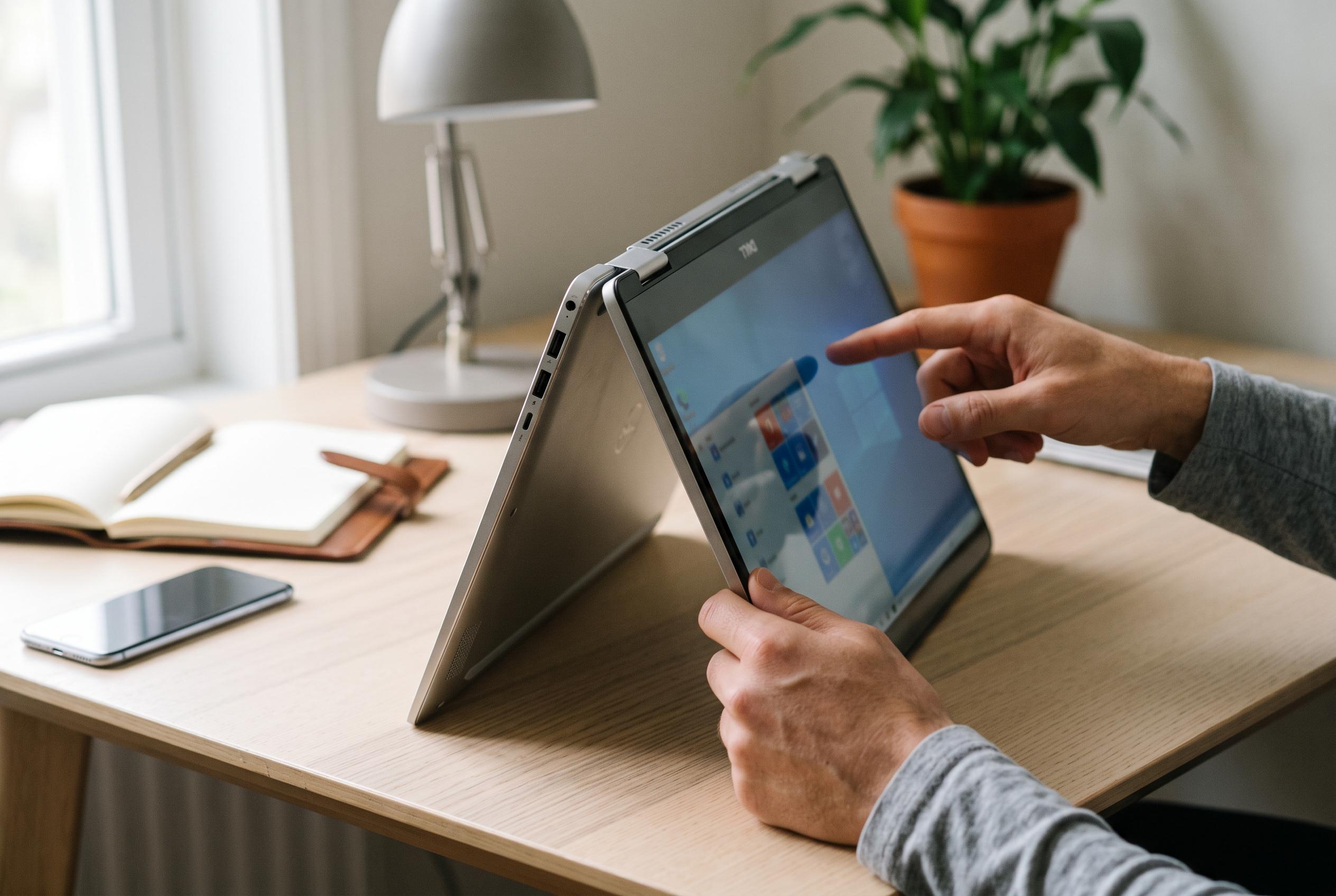
Dell’s 14 Plus 2-in-1 is pitched as a machine that can do two jobs at once: a conventional laptop when work demands it, and a touchscreen convertible when flexibility matters. In practice, that balance is what defines it. The device is sturdy, neatly finished and comfortable to use in its standard clamshell position, while its 360-degree hinge adds tent and tablet modes that are genuinely useful rather than merely decorative. According to the review, the strongest case for the design is not that users will constantly flip the screen round, but that they can do so when the task warrants it. TechRadar and PCWorld also describe the machine as well built and versatile, with a comfortable keyboard and a practical, work-focused form factor.
The display, however, is the most obvious compromise. The 14-inch 1,920 x 1,200 touchscreen is perfectly serviceable for productivity, browsing and casual video, and the 16:10 aspect ratio gives a little extra vertical room for documents and web pages. But its 300-nit brightness and 45 per cent NTSC colour coverage leave it short of what many buyers would now expect at this level. The review notes that the panel is fine indoors but lacks punch for photo work and richer media, while Notebookcheck similarly flags the absence of a full sRGB option as a limitation for colour-sensitive use. RTINGS also frames the screen as functional rather than class-leading, especially when judged against the laptop’s convertible ambitions.
Input devices are a brighter spot. The keyboard is described as comfortable over long sessions, with decent key travel and a layout that does not feel cramped by the 2-in-1 design. The touchpad is adequate rather than exceptional, but reliable enough for everyday work. Dell’s Active Pen support adds a more meaningful layer of utility, particularly for annotating documents, making small image edits and using the machine in tent mode. The review says the stylus becomes especially handy once users start interacting directly with the screen, while RTINGS also highlights pen input as a practical advantage for note-taking and light creative tasks.
On performance, the tested AMD model with a Ryzen AI 7 350, 16GB of LPDDR5X memory and a 1TB SSD is pitched squarely at productivity rather than heavy creative work or gaming. The review says it handled multitasking, browsing, writing and photo editing smoothly, with quick application launches and strong storage speeds. Benchmark results were respectable for the class, but the integrated Radeon 860M graphics clearly set the ceiling once workloads became more demanding. Notebookcheck reaches a similar conclusion, noting good CPU behaviour from the AMD version but weaker graphics performance than the Intel equivalent. TechRadar’s broader coverage of the range also shows that Dell offers different configurations, including Intel Core Ultra options with up to 32GB of RAM and Thunderbolt-enabled USB-C ports, underlining that performance varies meaningfully by model.
Battery life appears solid rather than spectacular. The review puts real-world endurance at around 10 to 12 hours of mixed use from the 64Wh battery, which is enough for a full working day in most cases, even if it falls short of Dell’s stated best-case figure. A 65W USB-C charger and ExpressCharge support make top-ups straightforward. PCWorld likewise characterises the machine as a sensible everyday companion with good battery life, while Dell’s own product page positions the model as a portable system designed for all-day use and AI-assisted workflows.
The broader picture is that the Dell 14 Plus 2-in-1 does many things well without completely excelling in any one area. It is competent, well made and genuinely more flexible than a standard laptop, and the convertible modes are useful enough to justify their inclusion. Yet the screen does not lift it into premium territory, and that matters because the laptop was launched at around Rs. 90,000, where the competition becomes sharper. The review argues that the Asus Vivobook 14 Flip offers a more convincing OLED display for only a little more, while the HP OmniBook X Flip 14 moves further upmarket still with a higher-resolution OLED panel and lighter body. For buyers who value practicality, a comfortable keyboard and a reliable battery above visual flair, Dell’s machine remains credible. For those who expect the display to be the main attraction, it is harder to recommend without reservations.
Disclaimer: This content is intended for informational purposes only. Readers are advised to exercise their own judgement, conduct due diligence, or consult a qualified expert before acting on any information provided.