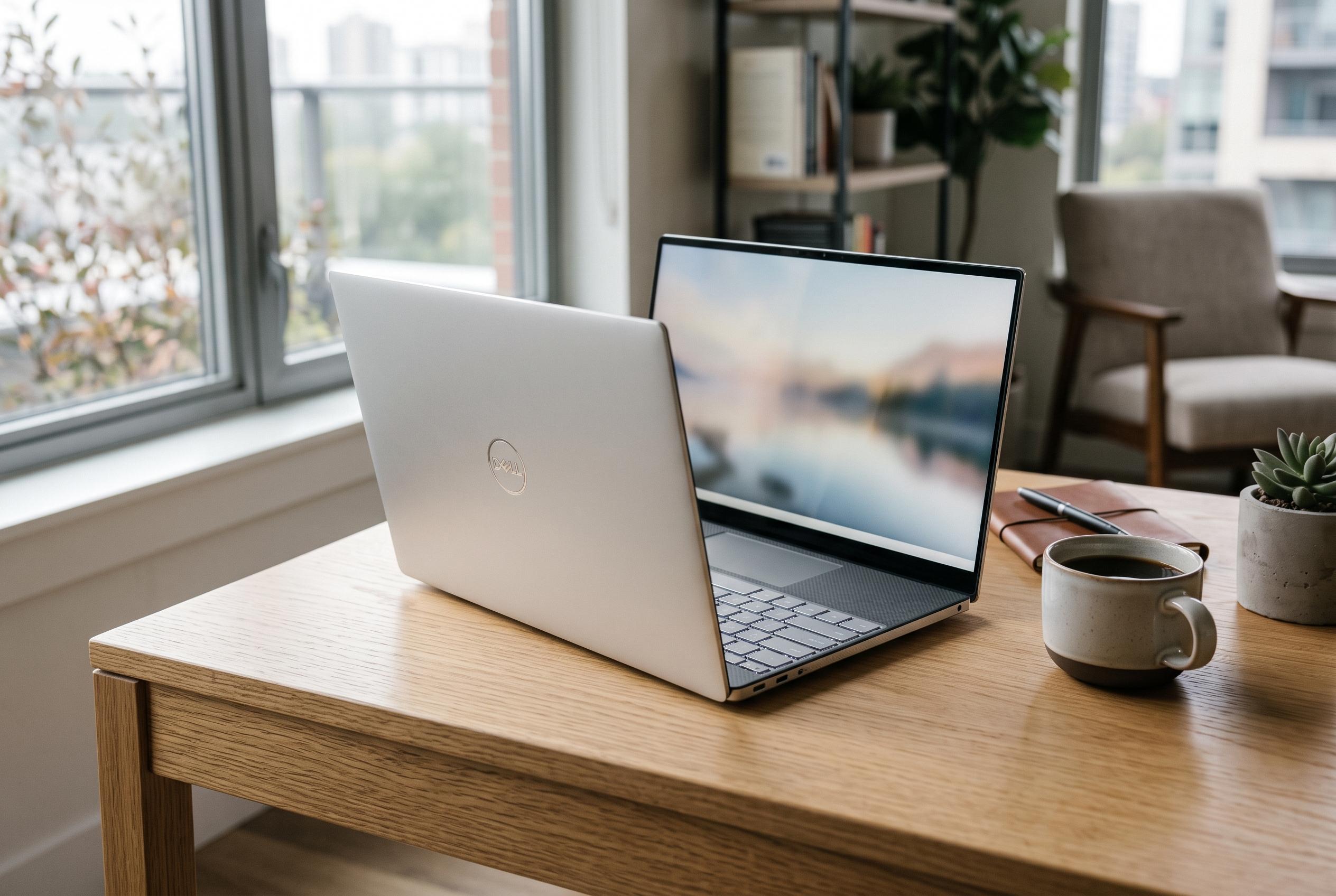

Dell’s refreshed XPS 13, priced from $699, challenges Apple’s MacBook Neo with a high-end feel and striking design, but its performance and memory options vary in suitability for different users.
Three months after launch, Dell’s revived XPS 13 has settled into an unusual position in the laptop market: reviewers broadly agree that the $699 machine looks and feels far more expensive than its price suggests, but they are almost equally united that the base 8GB memory option is the one compromise buyers should examine most closely. RTINGS called it excellent for browsing and office work, WIRED said the design is genuinely distinctive at this price, and PCWorld judged it the first serious Windows answer to Apple’s MacBook Neo, even while stopping short of naming it the better machine overall. (rtings.com)
That tension was present from the start. When Dell introduced the model on 31 May 2026, it described the notebook as the “most accessible XPS ever built”, with US pricing from $699, or $599 for eligible students aged 16 and over during the back-to-school period. Reuters reported that Dell was aiming the system squarely at students and young professionals as it tried to prise open a more price-sensitive premium segment, with chief operating officer Jeff Clarke saying: “I’ll give them (Apple) credit. It’s a good product and it validates the market we’ve been talking about.” (dell.com)
The rollout itself was staggered. Dell said the Core Series 3 version would be available from 16 June 2026, while Core Ultra Series 3 models and the darker Storm finish would arrive later in the summer. That is now reflected on Dell’s US store, where Sky and Storm versions are listed alongside a 16GB Core 5 configuration at $899.99 and a Core Ultra 7 version at $1,199.99, suggesting the launch plan outlined in June has largely been completed by early September. (dell.com)
The hardware case is easier to make than the configuration case. Across reviews, the XPS 13’s CNC aluminium body, 13.4in 2560 x 1600 touch display, 30-120Hz refresh range and 2.2lb starting weight have stood out as unusually ambitious for a machine at this price. Reviewers also highlighted details often removed from cheaper laptops, including a backlit keyboard, a glass touchpad, USB-C charging from either side and infrared support for Windows Hello. The omissions are clear too: there is no USB-A, no HDMI, no headphone jack and, as PCWorld pointed out, no physical privacy shutter for the 1080p webcam. (dell.com)
Performance, by contrast, is respectable rather than dramatic. Tom’s Hardware found the six-core Intel Core 5 320 sufficient for mainstream work but well behind more powerful machines in heavier tasks such as video transcoding, while RTINGS concluded that the XPS 13 is not a workstation substitute and is poorly suited to gaming because it relies entirely on integrated graphics. In PCWorld’s testing, the laptop remained responsive through ordinary daily use and posted 6,491 in UL Procyon’s Office Productivity benchmark, yet it still trailed the MacBook Neo in Geekbench. (tomshardware.com)
The more consequential question is memory. RTINGS warned that the 8GB version can feel constrained once Windows 11 is handling heavier multitasking, and WIRED treated the starting specification as the main reason for caution. Its reviewer found that 10 Chrome tabs could push memory use above 95 per cent and recommended the $900, 16GB model instead. Tom’s Hardware reached a similar conclusion after testing both capacities, saying the 8GB system becomes laggy much more quickly even though the two versions use the same Core 5 processor. (rtings.com)
Battery life is the area where the independent verdicts diverge most sharply, which makes Dell’s own claim of up to 17 hours of streaming less useful than it first appears. RTINGS said the machine should last through a full work or school day with light use and measured about 8.5 hours of video playback. Tom’s Hardware, using a mixed test at 150 nits over Wi-Fi, recorded more than 14 hours on both the 8GB and 16GB models. PCWorld’s office productivity battery test was much tougher, returning 6 hours 10 minutes with Wi-Fi enabled and 9 hours 6 minutes in aeroplane mode. (dell.com)
Taken together, those findings lead to a fairly precise conclusion. The new XPS 13 is one of the rare sub-$1,000 Windows laptops that consistently looks, feels and behaves like a premium ultraportable, and Dell has sensibly framed it around lecture halls, coffee shops, offices and other everyday settings rather than content creation or gaming. But the cheapest version only makes full sense for light workloads. Buyers who expect years of browser-heavy work, or who simply want more breathing room for Windows, should treat the 16GB configuration as the model that best expresses what this XPS is trying to be. (channelnewsasia.com)
Disclaimer: This content is intended for informational purposes only. Readers are advised to exercise their own judgement, conduct due diligence, or consult a qualified expert before acting on any information provided.