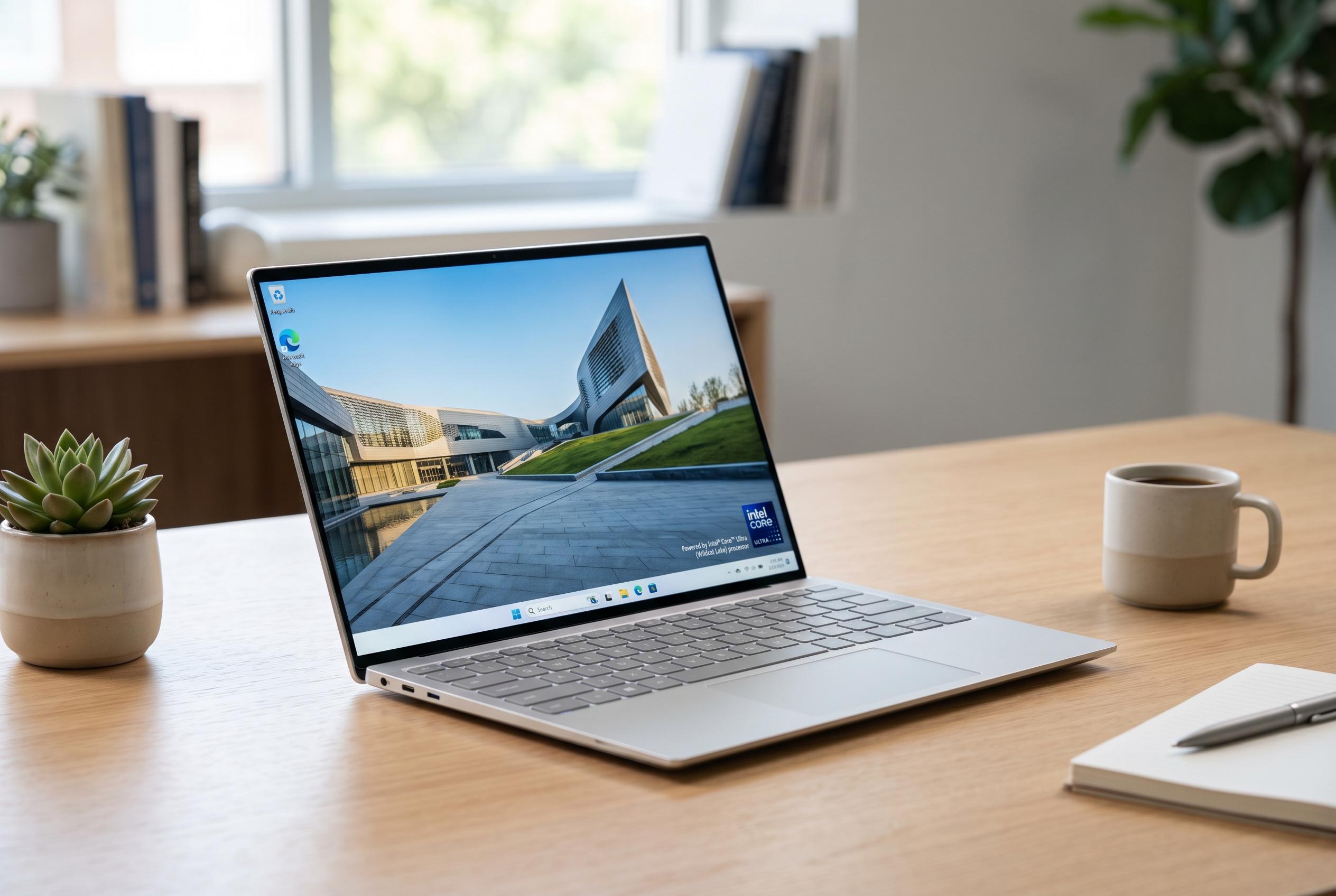

Dell’s budget-friendly XPS 13, powered by Intel’s new Wildcat Lake chip, sets a benchmark in energy efficiency, challenging perceptions of performance and affordability in the ultraportable laptop market.
Jeff Geerling says Dell’s new low-cost XPS 13 is the first x86 laptop he has tested that reaches the top tier of his floating-point efficiency benchmark, a result that puts Intel in unusual territory for a small, affordable machine. In his review, Geerling said the machine costs $699, or $599 with an educational discount, and argued that the real story is not the price but the efficiency of the Intel Core 5 320 inside. Tom’s Guide’s review of the 2026 XPS 13 also points to a strong package for the money, citing a 13.4-inch 2.5K touchscreen, solid aluminium construction, light weight and impressive battery life.
The chip at the centre of that result is part of Intel’s new low-end Wildcat Lake family, and Geerling said it delivered roughly 0.5 to 0.8 watts at idle with the display off, rising to around 3 to 4 watts with the screen on at half brightness. He described that as a notable advance for x86 hardware, especially because the same system reached more than 4 Gflops per watt in his HPL FP64 test, second only to Apple’s M4 Mac mini in his ranking. Tom’s Guide similarly characterised the Core 5 system as strong for everyday work, which supports the view that Intel’s smaller chips are improving in both responsiveness and efficiency.
Geerling also said the XPS 13 is more practical than the budget MacBook Neo in several respects. He highlighted the higher-resolution matte touchscreen, backlit keyboard, faster and upgradeable 512GB SSD, and dual USB-C ports with 10Gbps data, DisplayPort and power delivery. He added that Fedora 44 recognised all the hardware, including Wi-Fi 7, even though Dell does not advertise Linux support. Tom’s Guide was similarly positive on the keyboard and connectivity, but noted that the laptop has no headphone jack and only a serviceable 1080p webcam.
Not everything was flattering. Geerling criticised the top-hinge trackpad for making physical clicks awkward away from the bottom edge, and said the speakers, webcam and microphone lag behind expectations. Notebookcheck’s earlier XPS 13 coverage shows those trade-offs are part of a familiar pattern for the line: attractive design and compactness alongside compromises such as weaker cameras, soldered memory and display-related limitations on some models. Even so, Geerling argued that the broader significance of this laptop lies in what it suggests for Intel’s next steps. If the company can extend this kind of power discipline beyond entry-level notebooks, he said, it could matter for servers, embedded systems and other low-power devices where efficiency is often more important than peak clocks.
Disclaimer: This content is intended for informational purposes only. Readers are advised to exercise their own judgement, conduct due diligence, or consult a qualified expert before acting on any information provided.