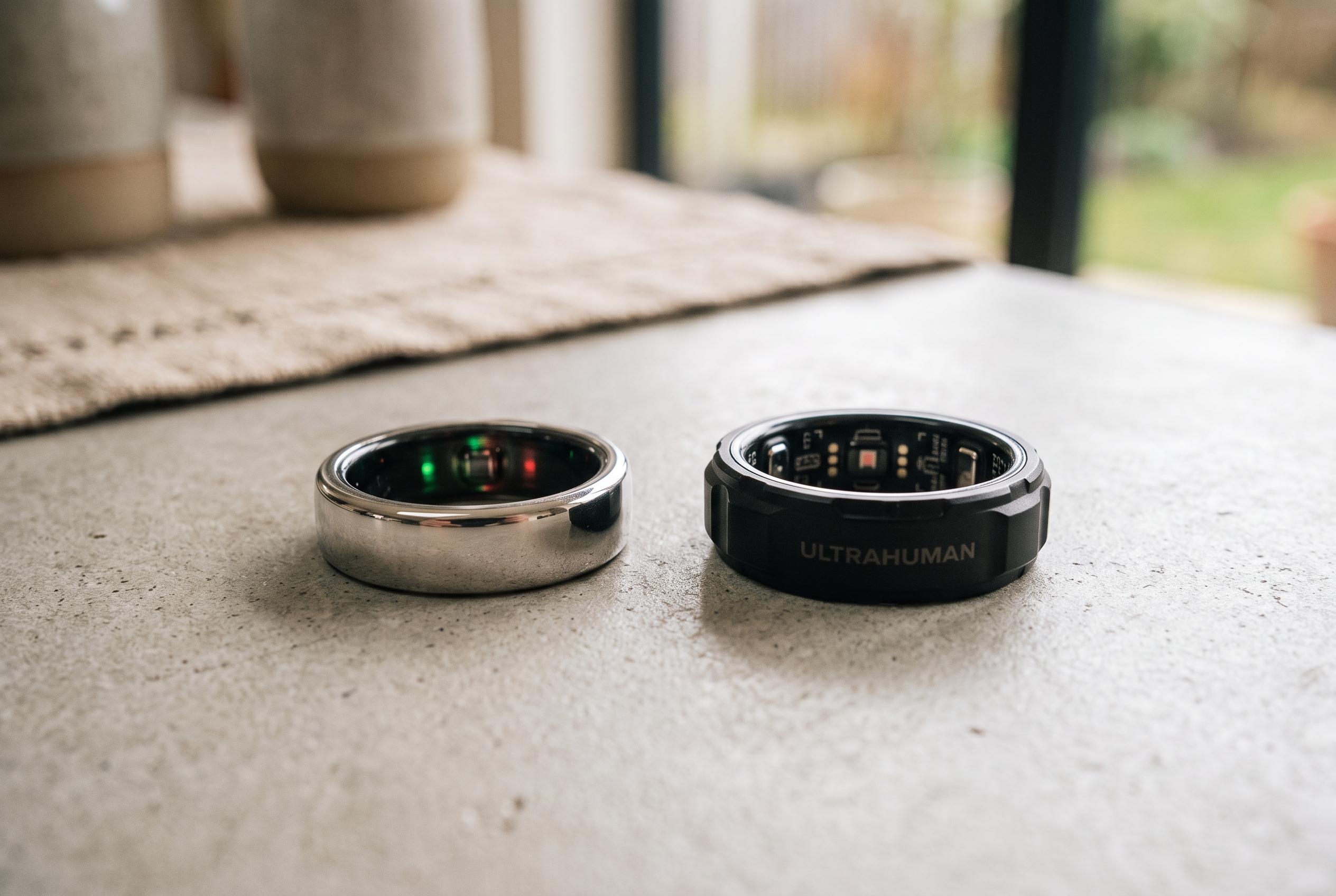

The rivalry between Oura Ring 5 and Ultrahuman Ring Pro highlights a shift in the smart ring market, emphasising design discretion versus functional depth, as users seek personalised health insights in a compact form.
The smart ring market has moved from niche curiosity to crowded category, with Oura and Ultrahuman now among the clearest rivals for people weighing a ring against a smartwatch, or alongside one. The latest flagship models, the Oura Ring 5 and the Ultrahuman Ring Pro, push that contest in different directions: one prioritises discretion and simplicity, the other battery life and deeper data. Stuff, which tested both devices over a month, found that the choice comes down less to raw capability than to how much information you want, and how you want it presented.
Design is the sharpest difference. The Oura Ring 5 is the slimmer, lighter option, with a more jewellery-like finish that makes it easier to mistake for a plain titanium band rather than a health tracker. It is also notably smaller and more comfortable for all-day wear, while the Ultrahuman Ring Pro is thicker and more substantial on the finger. The latter does, however, include a breakaway-style construction intended to make removal easier if a finger swells or is injured, a practical touch that underlines its more engineering-led approach.
On tracking, both rings cover the core health basics: sleep, recovery and heart monitoring. Oura leans heavily on its app, which aggregates more than 50 metrics and presents them through simple daily scores and an easy-to-read dashboard. Its software also includes guidance features such as symptom spotting and cycle-related insights. Ultrahuman’s app is less polished but more expansive in raw detail, with an AI assistant called Jade and optional add-ons covering functions such as atrial fibrillation detection, caffeine timing, vitamin D and GLP-1-related insights. That breadth may appeal to enthusiasts, though it can feel cluttered for users who want a straightforward summary of sleep and recovery.
Battery life tilts strongly towards Ultrahuman. Stuff says the Oura Ring 5 lasts roughly six to nine days, with its own testing landing closer to six, while the Ultrahuman Ring Pro is quoted at up to 15 days in its most economical mode and around 12 days in normal use. The charging case is another point of contrast: Oura sells one separately, whereas Ultrahuman includes it in the box. Pricing also reflects the different business models. Oura starts at $399/£399 and requires a monthly subscription for full access, while the Ultrahuman Ring Pro costs $479/£429 upfront and avoids a mandatory subscription, though some features are paid extras.
For most buyers, the verdict is straightforward. According to Stuff, the Oura Ring 5 is the better pick if you want the most discreet design and the cleanest app experience, even if that means paying a subscription and charging more often. The Ultrahuman Ring Pro makes more sense if you value longer battery life and a denser stream of health data, and are content with a bulkier form factor and a more complicated app. For now, the debate is not about which ring can do more, but which kind of user each ring is built to satisfy.
Disclaimer: This content is intended for informational purposes only. Readers are advised to exercise their own judgement, conduct due diligence, or consult a qualified expert before acting on any information provided.