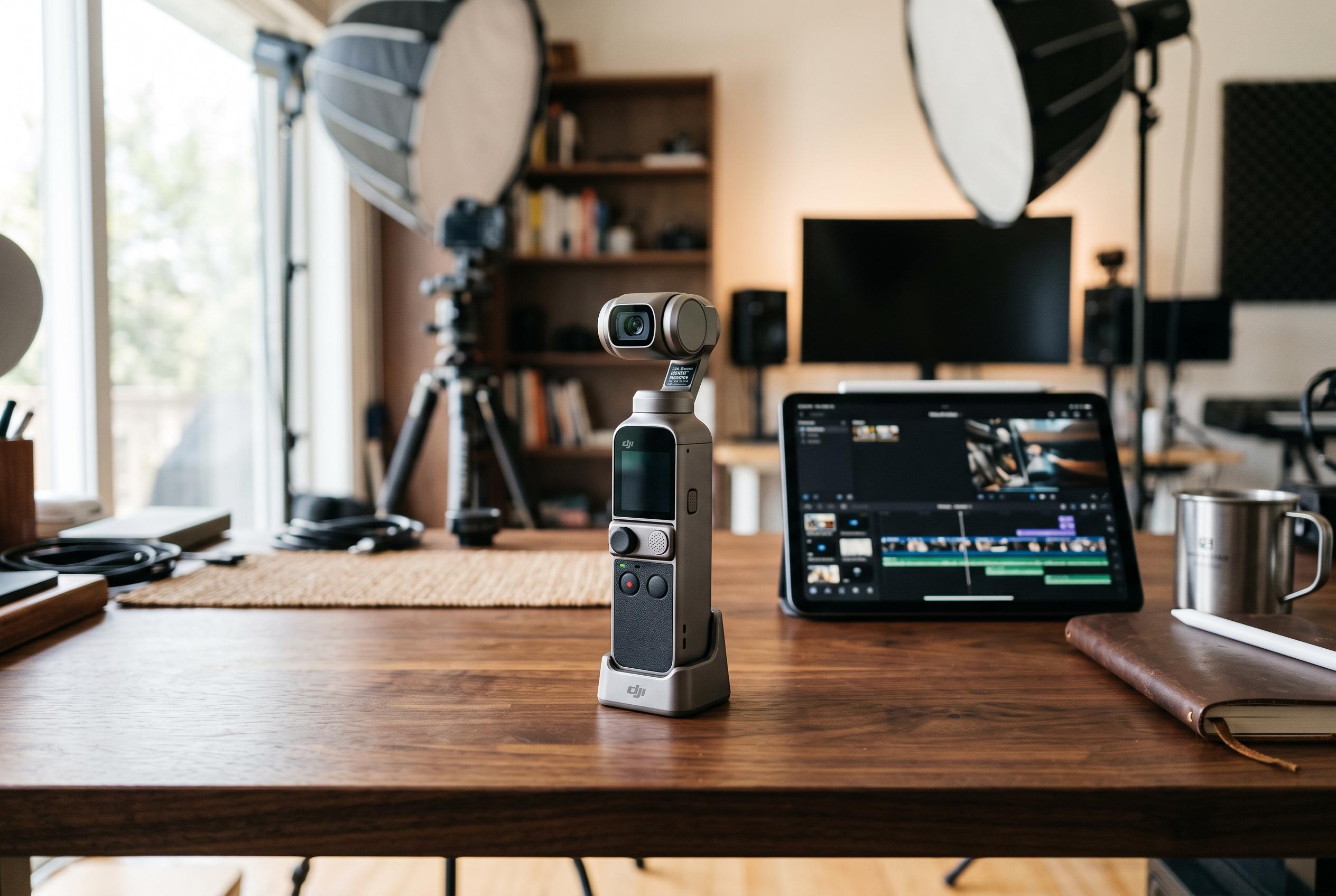

DJI has elevated the Osmo Pocket 4P from a niche gadget to a mainstream tool, offering advanced dual-lens capabilities and professional-level stabilisation in a compact form, making cinematic filming accessible for everyday creators.
DJI has turned a niche idea into a mainstream video tool with the Osmo Pocket 4P, a pocket-sized gimbal camera that is now being sold as a serious option for everyday filming. The device has quickly risen to the top of Japanese video camera sales charts, according to BCN data cited in the lead article, and it reflects how far compact creators’ gear has moved beyond smartphones and action cameras.
At first glance, the appeal is obvious. The camera is light enough to carry all day, yet it combines a one-inch main sensor with a second, 60mm-equivalent telephoto lens for tighter framing. Reviewers at TechRadar and Notebookcheck say that this dual-lens layout gives the Pocket 4P more flexibility than earlier single-lens models, while DJI’s three-axis gimbal continues to provide the kind of stabilisation that mobile phones still struggle to match.
The practical effect is that even casual users can obtain polished footage with very little effort. The lead article describes simple controls such as instant power-on by sliding the screen and one-tap switching between standard and zoom views. It also highlights subject tracking, which allows the camera to keep following a person or pet automatically. That is a key part of the device’s appeal: it reduces the need to monitor the screen constantly and makes it easier to film while staying present in the moment.
Image quality is where the Pocket 4P appears to justify its premium positioning. According to TechRadar, the main camera uses a refined one-inch sensor with LOFIC technology and supports the D-Log 2 colour profile, while Notebookcheck reports 4K recording at up to 240fps and a maximum bitrate of 180Mbps. GizGuide notes that the main sensor’s dynamic range is impressive, but also points out a limitation: the telephoto lens does not support the same advanced capture features, and digital zoom beyond the optical range inevitably loses detail.
The lead article makes the strongest case for the camera’s accessibility by showing it in everyday use. One tester filmed a toddler in motion, another captured a cat at home, and both found that the camera’s colour modes and tracking tools made the footage look more cinematic than expected. That ease of use is not accidental. DJI’s own technical material frames the Pocket series as part of a broader effort to make professional-looking imaging more available to ordinary users, building on work first developed for its gimbals and drone systems.
That background also helps explain why the company can claim credibility in professional circles. The lead article says DJI’s Ronin stabilisers have won major technical awards, while the company’s products have been used on large-scale film productions. It also points to a short film shot by cinematographer Mikiya Takimoto on the Osmo Pocket 4P, which the article uses to argue that the camera is not just for social video. In practice, the message is straightforward: DJI has packed a great deal of imaging technology into a form factor small enough to slip into a coat pocket.
Disclaimer: This content is intended for informational purposes only. Readers are advised to exercise their own judgement, conduct due diligence, or consult a qualified expert before acting on any information provided.