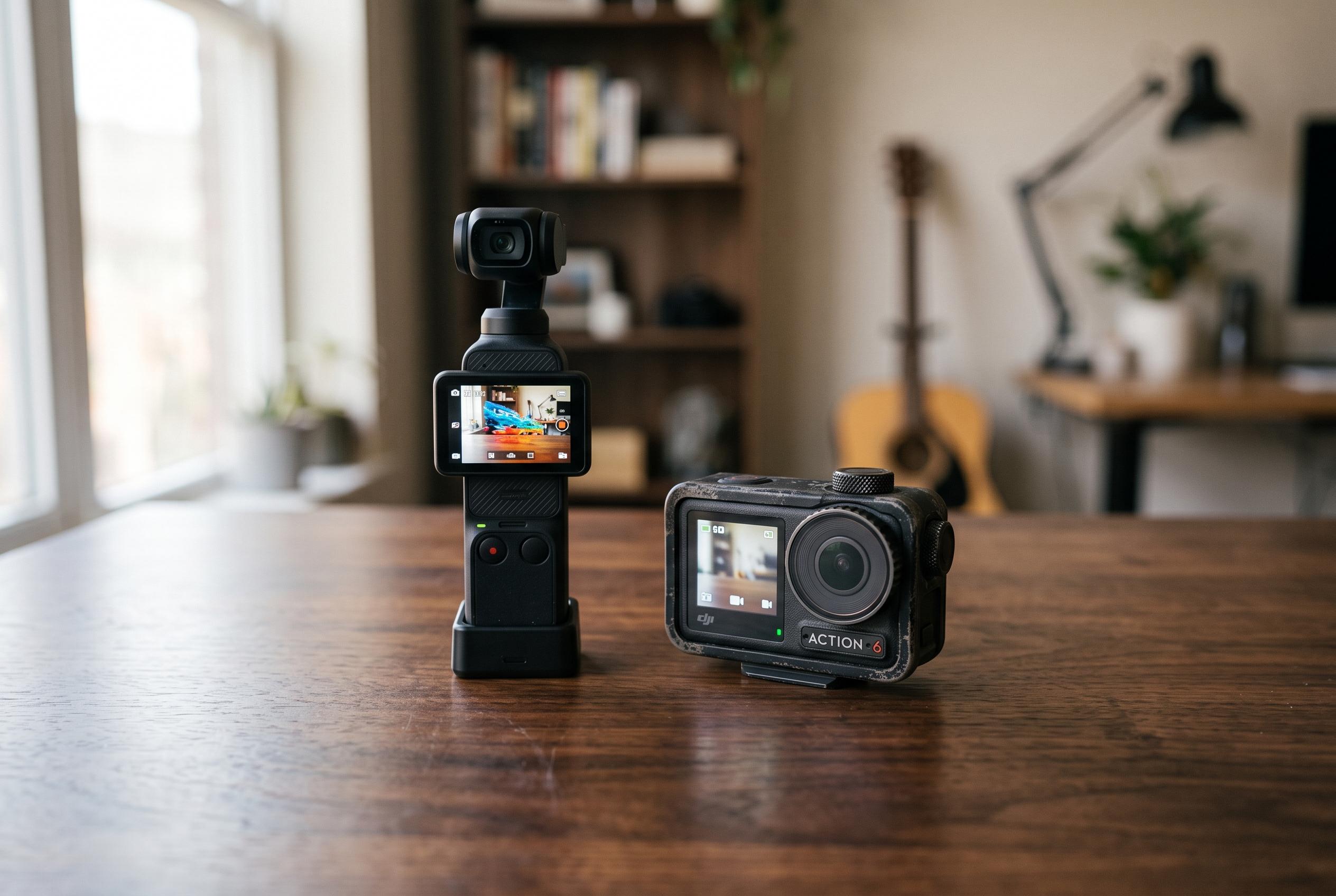

DJI’s latest Pocket 4 and Osmo Action 6 cameras are tailored for creators with distinct needs, from cinematic storytelling to rugged outdoor use, highlighting the company’s expanding scope in versatile filming technology.
DJI’s Pocket 4 and Osmo Action 6 are built for different kinds of shooting, and the right choice depends less on headline specifications than on how you work. According to Tech Court’s comparison, the Pocket 4 is aimed at creators who want controlled, cinematic footage, while the Action 6 is intended for rugged, fast-moving environments where durability matters more than delicacy. That split is reflected in the hardware: one uses a mechanical gimbal and a larger sensor to prioritise smooth, polished images, while the other relies on a tough body and a wide lens to capture action with minimal fuss.
The Pocket 4 is the more deliberate tool. TechRadar says DJI’s latest Pocket model keeps the compact gimbal format but adds a 1-inch CMOS sensor, 10-bit colour, D-Log support and 4K recording at up to 240fps, giving it stronger scope for slow motion and colour grading. It also has more than 100GB of internal storage, improved tracking and battery life that can reach around four hours, making it well suited to travel vlogs, interviews and narrative work where consistent framing is important.
The Osmo Action 6, by contrast, is built for hostile conditions. TechRadar’s review describes a larger 1/1.1-inch sensor, RockSteady stabilisation, a bright adjustable lens and a body designed to keep working in wet, cold and underwater conditions. The camera also offers internal memory and support for expandable storage, while its form factor remains simple to mount on helmets, bikes or vehicles. DJI has also used the camera in a dramatic proof-of-durability exercise, placing multiple units on a reusable rocket and capturing usable footage through extreme heat, which underlines the model’s environmental resilience.
That difference in intent also shows up in image shape and recording flexibility. The Pocket 4’s narrower field of view is better suited to composed shots and subject focus, whereas the Action 6’s wider perspective is intended to pull in more of the scene for point-of-view filming and immersive action coverage. Geeky Gadgets notes that the Pocket 4’s gimbal gives it an advantage for smooth movement in calmer settings, while the Action 6’s electronic stabilisation is more appropriate for running, skiing or mountain biking, where the camera must absorb sudden changes in motion.
Price and practicality complete the picture. TechRadar says the Action 6 is positioned at a lower entry price than the Pocket 4, which reinforces its role as the more accessible, all-weather option. The Pocket 4 costs more, but that premium buys a more polished shooting experience, better low-light handling and a deeper feature set for creators who want cinema-style output from a device that still fits in a coat pocket. In simple terms, the Pocket 4 is the stronger choice for controlled, story-led filming, while the Action 6 is the better fit for outdoor use, fast movement and harsher conditions.
Disclaimer: This content is intended for informational purposes only. Readers are advised to exercise their own judgement, conduct due diligence, or consult a qualified expert before acting on any information provided.