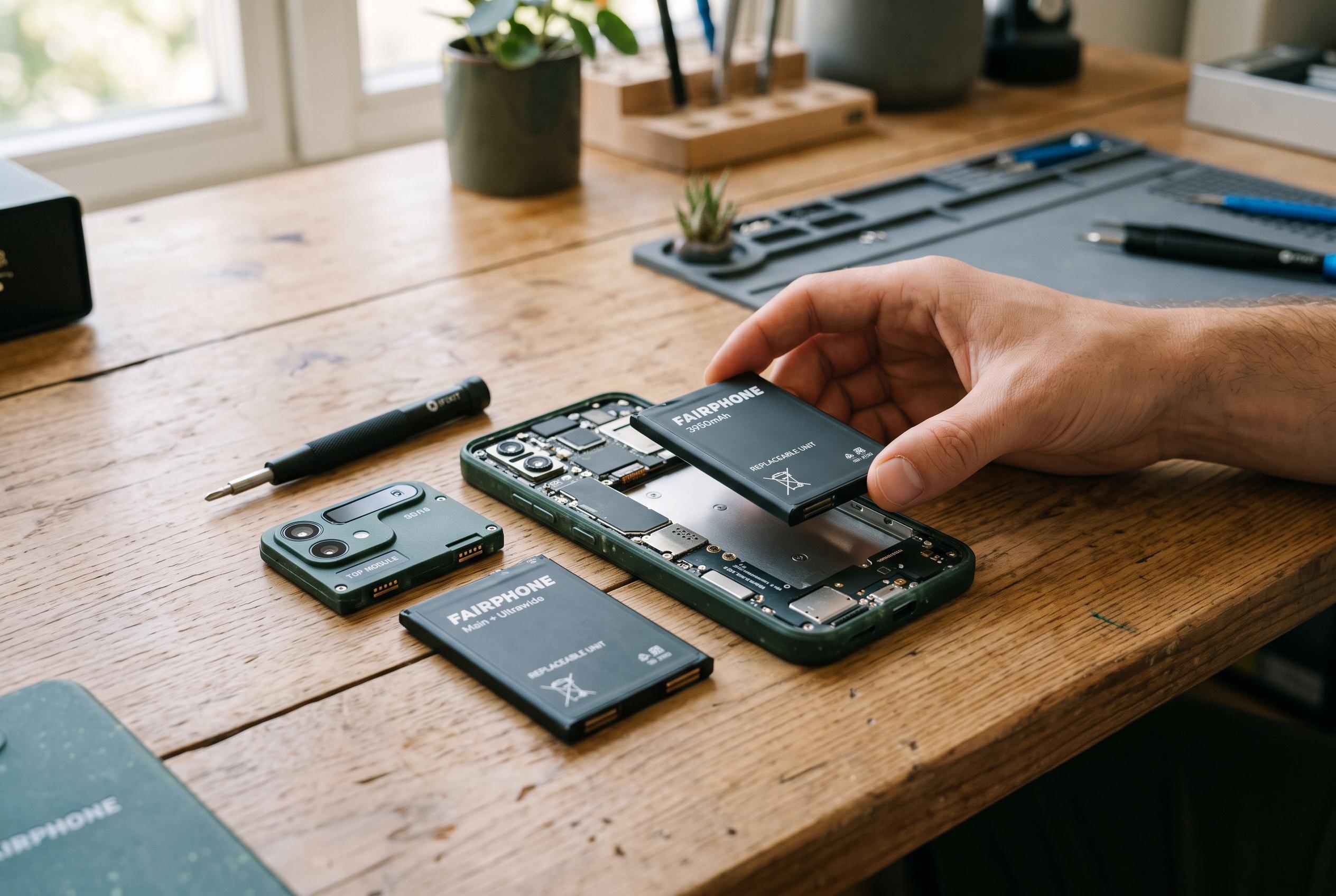

The Fairphone Gen 6 combines modular design, user-repairability, and long software support, positioning itself as a practical choice for buyers prioritising longevity and sustainability amid an increasingly sealed smartphone market.
Fairphone’s latest mid-range handset is being pitched on a simple idea: keep it for years, then fix it yourself when something fails. That proposition is what has put the Fairphone Gen 6, also referred to in some coverage as Gen 6+, into the conversation as one of the more practical smartphone buys for 2026. According to Fairphone, the device is built around a modular design, a replaceable battery and a seven-year software support commitment.
The company says the phone runs Android 16, although its own materials for the Gen 6 describe Android 15 at launch, suggesting that software versions may vary by market or by later update cycle. The core hardware is mid-range rather than flagship: a Qualcomm Snapdragon 7s series chip, 12GB of LPDDR5 memory in the newer variant cited by Android Police, 256GB of storage, and a 6.31-inch POLED display with a 120Hz refresh rate. Battery capacity is 4,415mAh, with a removable pack and USB-C charging, while the camera system combines a 50-megapixel main sensor, 13-megapixel ultra-wide camera and 32-megapixel front camera.
What sets the handset apart is repairability. Fairphone says 12 parts can be replaced at home with basic tools, including the battery, display, all three cameras, the rear panels, speaker and USB-C port. Its repair and recycling guidance also points to practical connectivity features such as Wi-Fi 6E, Bluetooth 5.4 LE, NFC and dual-SIM support. The company’s sustainability pitch is therefore not limited to recycled materials or long support windows; it is built around reducing the cost and hassle of common failures.
That matters in day-to-day ownership. Android Central and The Guardian have both framed the Fairphone line as unusual in a market where most phones are sealed units, and long-term reviews have suggested that while performance does not challenge top-end devices, it remains adequate for ordinary use. The trade-off is clear: the Fairphone costs more than some conventional mid-rangers at €599 or about $650, but it offers a replaceable battery, user-serviceable parts and a longer software horizon than many rivals. For buyers who value ownership certainty over raw power, that combination may be the real selling point.
Disclaimer: This content is intended for informational purposes only. Readers are advised to exercise their own judgement, conduct due diligence, or consult a qualified expert before acting on any information provided.