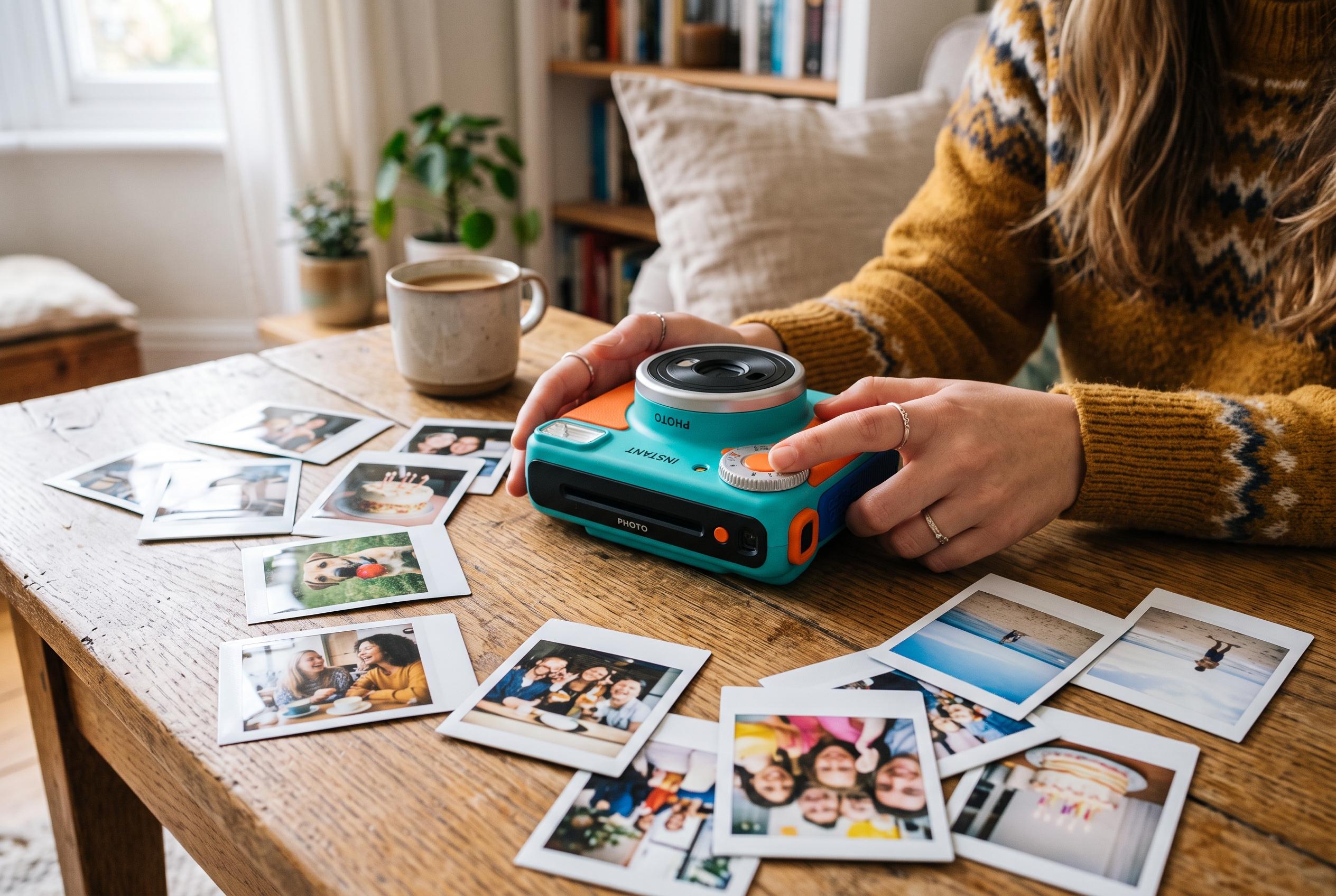

Fujifilm’s redesigned Instax Pal 2 is tactile, colourful and packed with playful filters, but sluggish autofocus, shutter lag and a high price undermine its charm.
Fujifilm’s Instax Pal 2 is a strikingly different follow-up to the original Pal, and the company says that redesign was shaped by extensive customer feedback. The result is a small, lightweight digital compact that is less a serious photographic tool than a playful device intended to encourage image-making away from a phone. It is also positioned more directly against novelty cameras such as the Kodak Charmera, while Fujifilm’s own announcement stresses the addition of a proper optical viewfinder and a broader set of filters.
On paper, the specification is modest but sensible for the category: a 10-megapixel sensor, a 28mm equivalent f/2.2 lens, automatic exposure, face detection, a 1.3in screen, and support for microSD storage. Fujifilm also gives the camera a slide-out USB-C connector for direct phone transfer, Bluetooth connectivity, and direct printing to Instax Link printers or hybrid models such as the Evo and LiPlay. In practice, the hardware feels carefully chosen for convenience and novelty rather than technical ambition.
The appeal of the Instax Pal 2 lies in its handling. Reviewers consistently describe it as tactile and enjoyable, with a retro-inspired body, physical controls, and an unusually hands-on approach to settings. That matters because it makes the camera feel more intentional than a typical toy device. At the same time, the redesign goes beyond aesthetics: the new body is more conventional than the original Pal’s rounded form, and the built-in viewfinder and top-plate controls give it a stronger sense of being a camera rather than an accessory.
The main weakness is performance. Amateur Photographer found that start-up is slow, autofocus is unreliable, and the shutter often hesitates or refuses to fire at all, especially with close subjects or selfies. TechRadar reached a similar conclusion, pointing to frustrating shutter lag and weak battery life, while PetaPixel also singled out operational slowness as a major drawback. That combination is more serious than it might sound, because a camera of this kind depends on instant gratification; if the button press is not followed quickly by a picture, the whole experience loses momentum.
Image quality is best judged in context. The small sensor will not satisfy anyone expecting smartphone-class detail, and close inspection reveals noise and heavy processing. But that criticism is only partly fair, because the camera is designed for small displays, social sharing and Instax prints, not large crops or critical review. Viewed in that light, the results can look lively and appealing, especially in good daylight. Fujifilm’s colour handling and filter set remain a major part of the proposition, and reviewers note that the 30 effects, grouped into themed collections, are one of the camera’s most successful features.
That said, the price is hard to defend. At around $170 in the US or £145 in the UK, the Instax Pal 2 is expensive for what is effectively a novelty camera with limited autonomy and inconsistent responsiveness. Alternative Fujifilm products, including the Instax Mini Evo, add more capability for only a small increase in cost, which weakens the Pal 2’s value case further. The outcome is a camera with genuine charm and a strong identity, but one that currently asks too much money for too many compromises.
Disclaimer: This content is intended for informational purposes only. Readers are advised to exercise their own judgement, conduct due diligence, or consult a qualified expert before acting on any information provided.