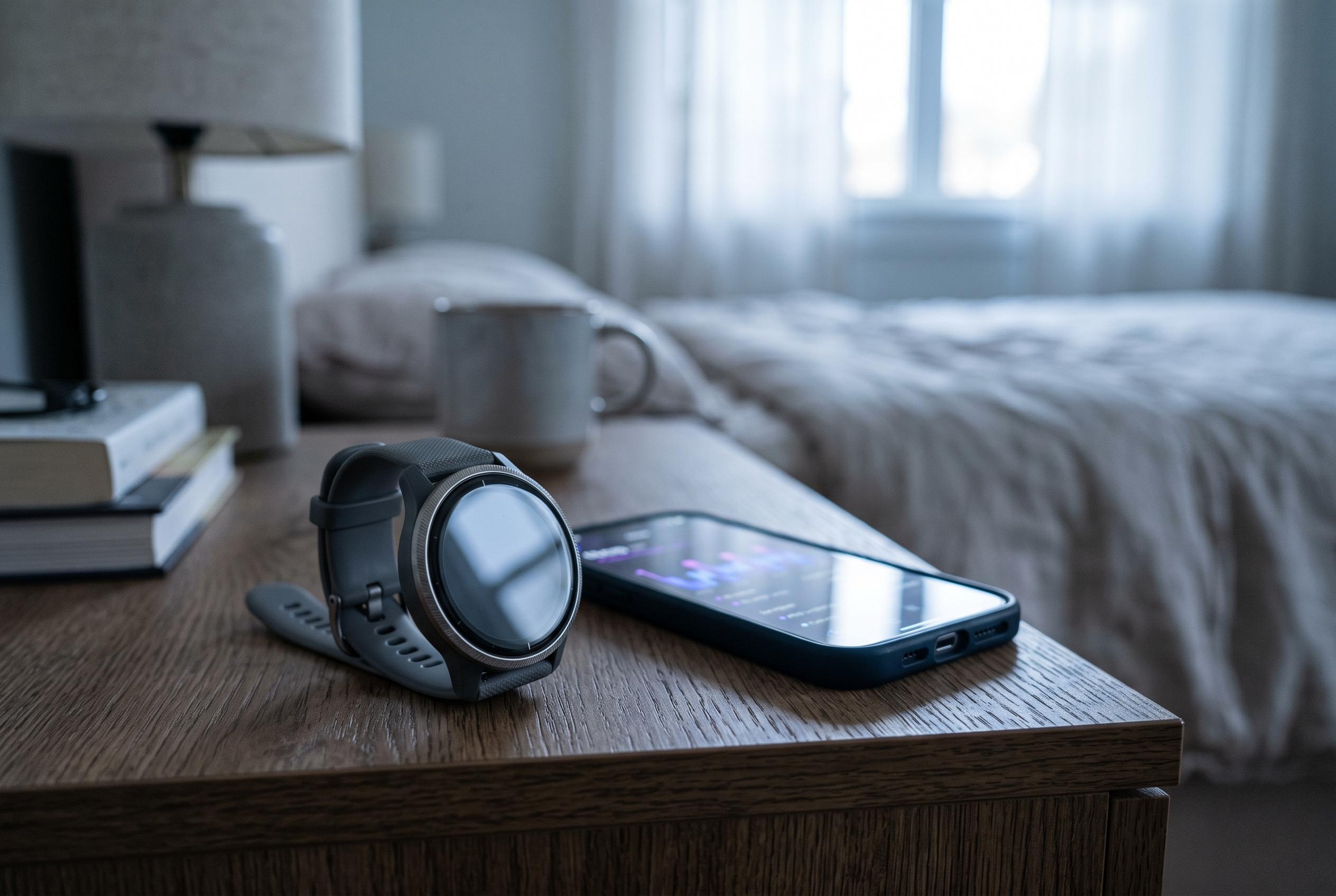

At $181.97 on Amazon, the Garmin vívoactive 5 offers affordability and broad health features, but its sleep score remains an estimate, highlighting ongoing limitations in consumer sleep data accuracy.
Garmin’s vívoactive 5 has become easier to recommend on price, but not because its sleep data has suddenly become clinical-grade. The Ivory version has fallen to $181.97 on Amazon, a sharp discount from its launch price, and the attraction is obvious: Garmin’s Sleep Coach, battery life, AMOLED display and broad health toolkit are all packaged into a watch that now sits well below $200. But anyone buying it chiefly for sleep analysis should understand that the score on the wrist is an estimate, not a direct measure of sleep physiology.
What makes the deal notable is not only the discount itself but the timing. Price trackers cited in recent coverage suggest the Ivory model has been hovering near its lowest level since May, while other reports have put the watch at an even lower promotional price on Amazon. Either way, the vívoactive 5 is now positioned as an affordable route into Garmin’s health platform, with the same general case design, AMOLED screen and long battery life that have helped it stay relevant against newer models.
That health platform remains substantial. According to Garmin’s product specifications and independent reviews, the watch offers a 1.2-inch AMOLED display, built-in GPS, water resistance to 5 ATM, music storage, contactless payments and more than 30 sports profiles. TechGearLab has also found Garmin’s heart-rate tracking to be strong in testing, which matters because the watch’s broader wellness features, including stress, recovery and Body Battery, depend heavily on cardiovascular data rather than on sleep staging alone.
The caution comes from how the sleep score is created. Wrist wearables do not measure brain activity. They infer sleep from movement and photoplethysmography, or PPG, which reads blood-flow changes at the wrist. That approach can do a good job of identifying when someone is asleep, but it struggles when a person is awake and still. In practice, that is where sleep scores can become misleading: quiet wakefulness is often recorded as light sleep, and brief overnight awakenings can be missed.
A 2025 peer-reviewed study in SLEEP Advances, which compared consumer wrist devices with polysomnography in a laboratory setting, illustrates the problem. The Garmin device tested in that study, the Vivosmart 4, showed only fair agreement with the clinical standard and detected wakefulness poorly. The research found that it identified sleep much more reliably than wake, while also tending to understate wake after sleep onset and overstate deep sleep. That study did not test the vívoactive 5 itself, and Garmin has updated its algorithms since then, but no independent PSG validation specific to the vívoactive 5 was identified in the material provided.
That leaves the watch in a sensible but limited category. It is a strong choice for users who want a general fitness smartwatch with useful trend data, especially when bought at this price. It is a weaker choice for people expecting precise sleep staging or anything close to a diagnostic report. For suspected sleep apnoea, chronic insomnia or other clinical sleep problems, polysomnography remains the standard. For everyone else, the vívoactive 5 can still be useful if its sleep score is treated as a trend line, not a verdict.
Disclaimer: This content is intended for informational purposes only. Readers are advised to exercise their own judgement, conduct due diligence, or consult a qualified expert before acting on any information provided.