
Garmin launches the Cirqa, a screen-free fitness tracker that combines detailed health metrics with a simple design, aiming to rival Fitbit’s Air and Whoop with a subscription-free approach and seamless integration into Garmin’s ecosystem.
Garmin’s latest screen-free fitness tracker arrives into a growing corner of the wearables market that favours simplicity, constant monitoring and less time staring at a display. The Cirqa is positioned against devices such as Whoop and Fitbit’s Air, but it takes a different route by avoiding a subscription for core features and leaning on Garmin’s long-established Connect ecosystem. At $200 in the US and £180 in the UK, it is meant to appeal to existing Garmin users who want 24/7 health data without sleeping in one of the company’s larger sports watches.
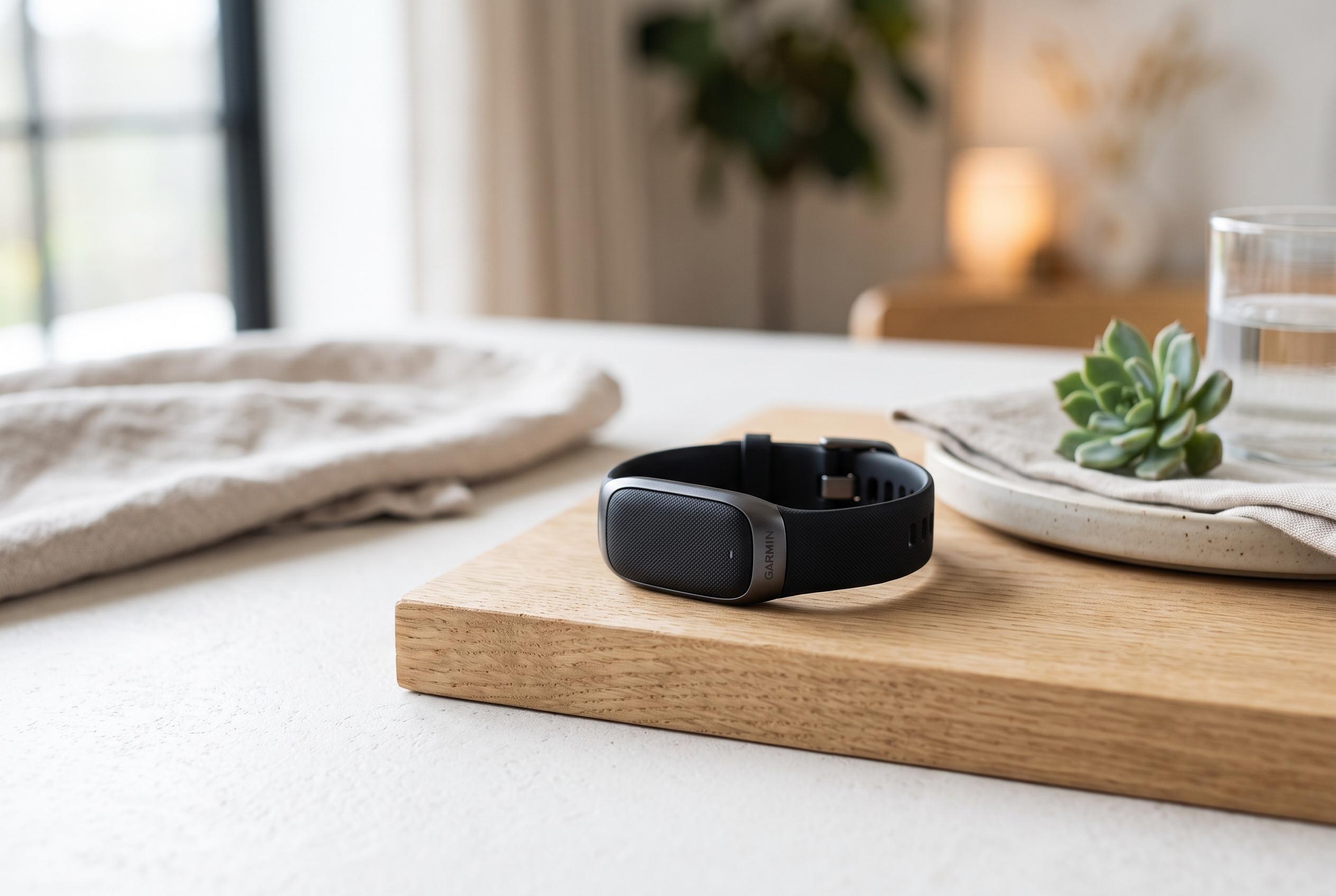
That intent is reflected in the hardware. The Cirqa uses a fabric strap and a small black tracking module with no screen, making it discreet enough for sleep and day-to-day wear. Stuff found it comfortable despite the module being larger than rivals, while TechRadar also described the strap as easy to live with. Garmin has added practical touches that are unusual in this category, including a physical button for starting exercise sessions and ANT+ connectivity, which allows heart-rate data to be shared with compatible gym machines and training devices.
The bigger selling point, though, is the software. Garmin Connect is one of the most detailed consumer fitness apps available, and the Cirqa feeds it a broad set of metrics, including heart rate, sleep stages, heart-rate variability, breathing rate, blood oxygen saturation and skin temperature. Tom’s Guide noted that the band sits neatly between the cheaper Fitbit Air and the more expensive Whoop 5.0, while still giving users a subscription-free route into deeper wellness tracking. For people already invested in Garmin’s training metrics, that matters: the Cirqa can fill gaps when a watch is too bulky to wear all the time.
In use, the tracker appears to perform well where it counts most. Stuff said wrist-based heart-rate tracking was strong across cycling, strength work and exercise classes, with running accuracy also solid in normal conditions. TechRadar’s testing against a chest strap reached a similar conclusion, finding heart-rate readings to be very good overall. Battery life is another strength, with Garmin’s claim of up to 10 days broadly matching independent reviews that found about a week of mixed use realistic. A full recharge takes roughly 90 minutes, which makes the Cirqa easy to keep running continuously.
The weaknesses are more about convenience than capability. Stuff pointed out that workouts cannot be edited retroactively if the band fails to detect the start of an activity, which is a notable limitation for a device built around passive tracking. The Garmin Connect app is also powerful but not especially friendly for beginners, and the lack of premium band options leaves the Cirqa feeling more utilitarian than polished. For existing Garmin users, that may still be enough. For newcomers, the Fitbit Air may be easier to understand, while Whoop remains stronger at connecting recovery, sleep and training into a single subscription service.
Disclaimer: This content is intended for informational purposes only. Readers are advised to exercise their own judgement, conduct due diligence, or consult a qualified expert before acting on any information provided.