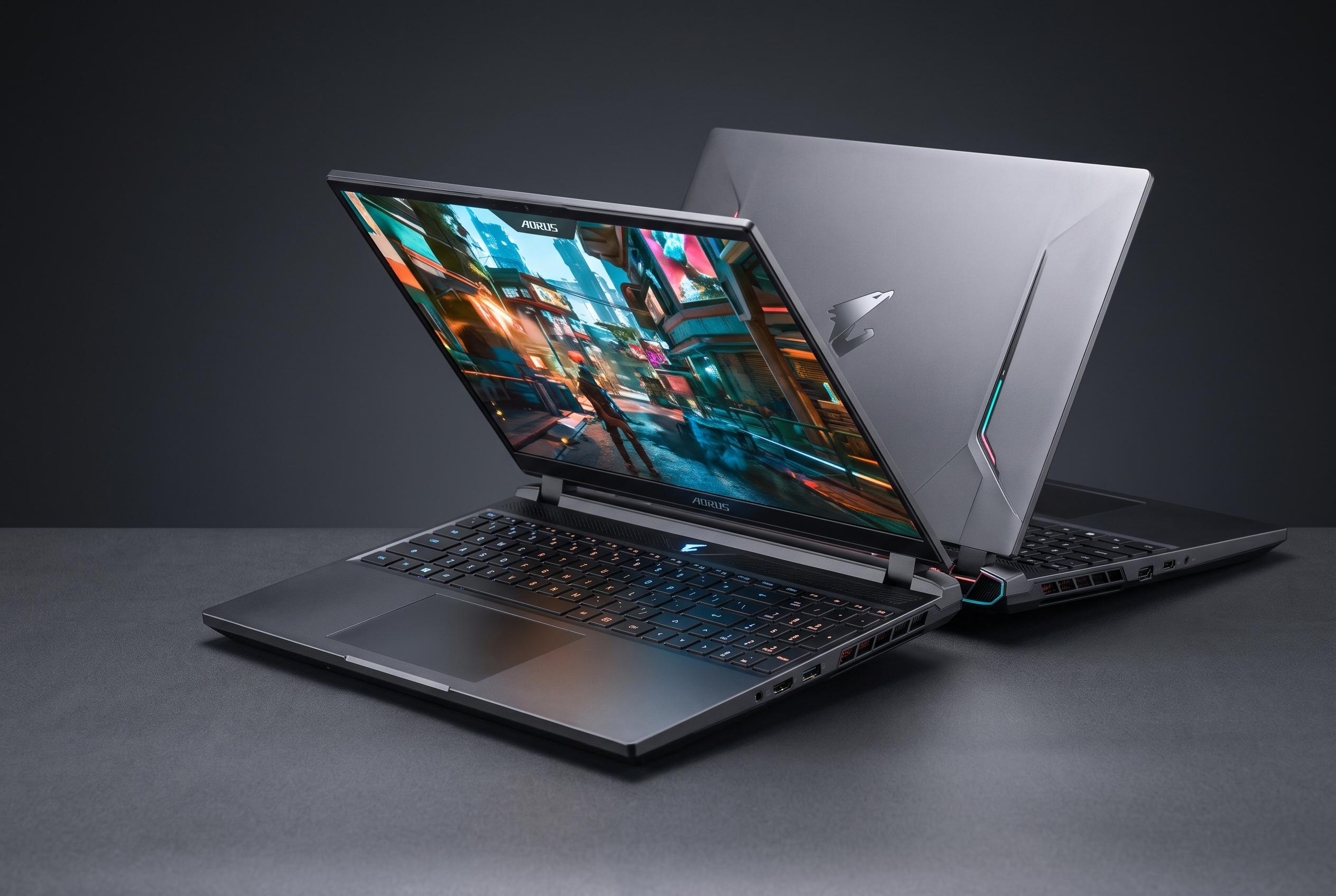

Gigabyte’s Aorus Master 16 offers near-flagship gaming performance with a stunning OLED display, but its loud fans and limited battery life highlight the trade-offs of high-end gaming hardware.
Gigabyte’s Aorus Master 16 has emerged as a high-end gaming laptop that pairs serious graphics power with an equally serious cooling burden. In a recent Notebookcheck review, the RTX 5080 model stood out for its consistently strong performance, helped by AMD’s Ryzen 9 9955HX3D, a processor built around Zen 5 architecture and 3D V-Cache for improved gaming throughput. The machine handled current games at maximum detail settings with ease at its native 2,560 x 1,600 resolution, and in many cases left little need for extras such as DLSS or frame generation. Notebookcheck also singled out the OLED display for its high contrast, vivid colours and solid brightness.
That performance, however, comes with trade-offs that are increasingly common in this class of laptop. Notebookcheck said battery life was limited to around 5 hours of web browsing, which places it well below what many buyers would want from a premium portable system. The more striking drawback was noise: when Gigabyte’s preloaded software is set to gaming mode, the 16-inch notebook becomes extremely loud under 3D load, reaching close to 60 dB(A), a level that effectively pushes most users towards a headset. A balanced mode reduces the acoustic output, but at the cost of lower speed.
Other reviews broadly reinforce that picture. Tom’s Hardware said the Aorus Master 16 combines an RTX 5080 with Intel’s Core Ultra 9 275HX in its own configuration, delivering excellent gaming results but also high temperatures under load, with the keyboard and underside becoming notably warm. RTINGS described the 2025 model as a feature-rich machine with 32GB of memory, a 1TB solid-state drive and a 16-inch OLED panel, while noting its size and weight in the context of portability. LapZen Lab likewise praised the core performance and display quality but criticised the chassis for feeling less refined than the price might suggest, as well as the limited usefulness of Gigabyte’s GiMate software.
Taken together, the reviews suggest that the Aorus Master 16 is aimed squarely at buyers who want near-flagship gaming performance first and portability second. Laptop Mag’s testing of the RTX 5080 variant also pointed to strong graphics results and support for Nvidia’s latest DLSS 4 features, including multi-frame generation, which can improve frame rates in supported games. But the wider consensus is clear: this is a powerful 16-inch laptop with an excellent OLED screen and top-tier gaming credentials, tempered by short battery life, loud fans and a design that does not fully escape the thermal and acoustic compromises of very high-end hardware.
Disclaimer: This content is intended for informational purposes only. Readers are advised to exercise their own judgement, conduct due diligence, or consult a qualified expert before acting on any information provided.