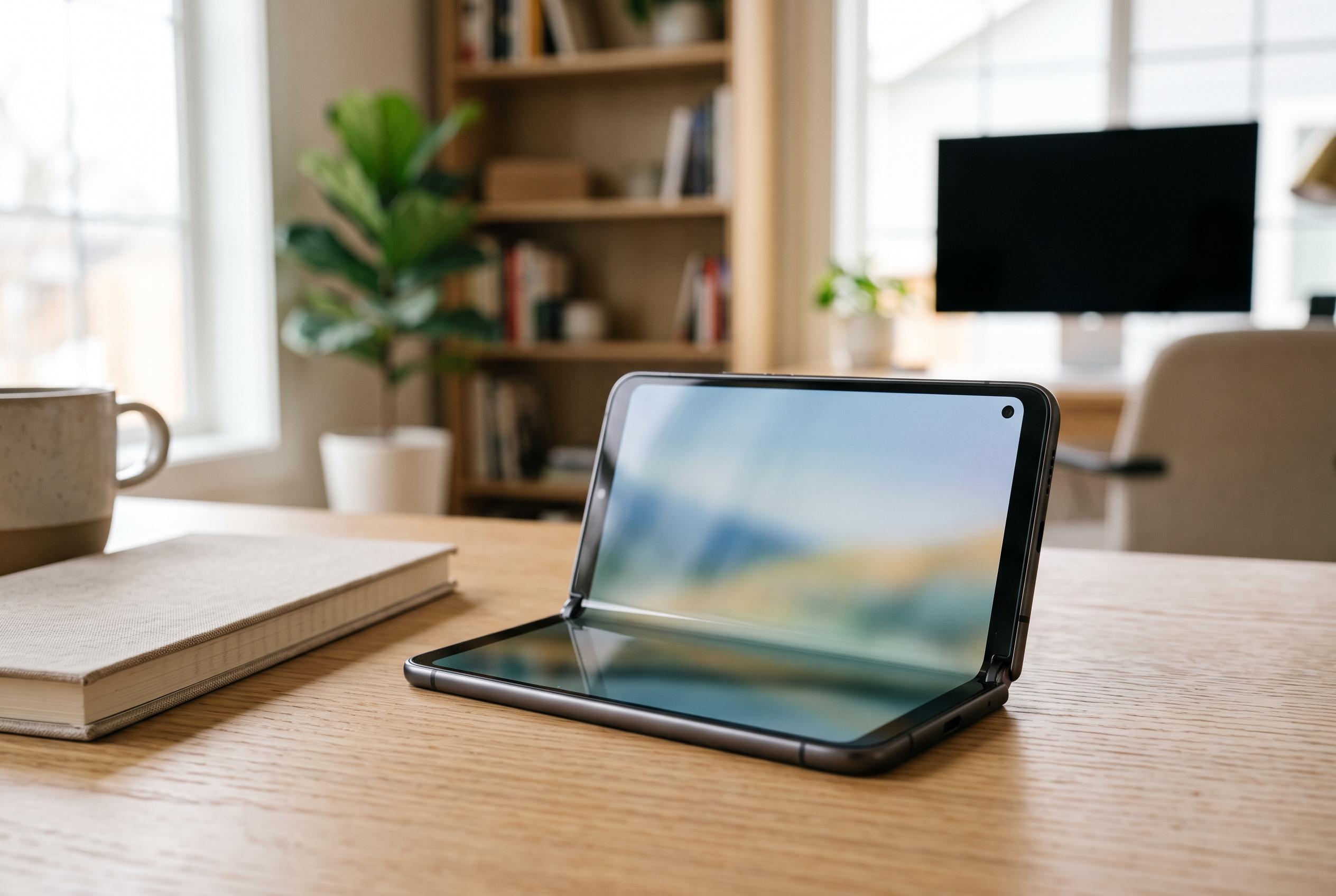

Google’s latest Pixel 11 Pro Fold introduces subtle hardware updates and innovative software features, but reviews suggest it struggles to keep pace with competitors in design, battery and overall ambition, raising questions about its value proposition amidst a swiftly evolving foldable market.
Google’s latest foldable looks and feels like an exercise in refinement rather than reinvention. According to PetaPixel, the Pixel 11 Pro Fold is priced at $1,899, keeps much of the same overall design language as its predecessor, and still leans heavily on software and AI to justify its place in the market. That approach gives the phone a clear identity, but it also leaves the impression that Google has made only limited progress in the areas that matter most in a premium foldable.
The strongest hardware changes are incremental. Android Central and TechRadar say Google has slimmed and lightened the device, improved the hinge, and pushed brightness higher on both OLED screens, while retaining 16GB of RAM and offering storage up to 1TB. The phone also keeps IP68 dust and water resistance, which remains unusual in this category. Even so, reviewers note that rival foldables are moving faster on industrial design, battery capacity and overall ambition.
Camera hardware is the clearest example of Google’s cautious approach. PetaPixel reports that only the main rear camera has received a meaningful upgrade, with a larger 48-megapixel sensor and f/1.7 aperture, while the telephoto and ultra-wide modules remain largely unchanged. That helps the main camera, especially in lower light, but it does not close the gap to rivals. Other reviews reached the same conclusion, saying image quality is improved but still uneven, particularly when compared with the best non-folding Pixels and with leading foldables from Samsung, Oppo and Honor.
Google’s new camera software is more interesting than the hardware. PetaPixel highlights Camera Looks, a feature that lets users choose from preset styles and then adjust how images are processed, alongside Magic Capture, which uses AI to select moments from short clips. Android Central and TechRadar also point to creator-focused tools such as better viewfinder handling and creator modes. The appeal is obvious: Google is trying to give users more control while still relying on its computational photography stack. But the reviews suggest that some of the new tools remain inconsistent, and that the phone still cannot fully overcome its ageing camera architecture.
Performance and day-to-day usability appear to be the same mixed story. Multiple reviews say the Tensor G6 is adequate for ordinary use and helpful for Gemini features, but still lags behind the fastest chips from Apple and Qualcomm, especially in gaming and heavier workloads. The Pixel 11 Pro Fold does gain points for practical software touches, including multitasking tools, a pinnable taskbar and exclusive Pixel Fold features, yet reviewers also describe issues with charging speed, display behaviour and the phone’s failure to exploit the folding format as fully as some competitors.
Taken together, the Pixel 11 Pro Fold looks like a polished but conservative update. It is tougher than many rivals, especially in the United States, and its software remains one of Google’s main strengths. But the broader verdict across the reviews is that the phone still feels expensive for what it offers. Unless a buyer values Pixel-exclusive software above all else, or is upgrading from a much older device, the case for choosing it over faster-moving foldables is not especially strong.
Disclaimer: This content is intended for informational purposes only. Readers are advised to exercise their own judgement, conduct due diligence, or consult a qualified expert before acting on any information provided.