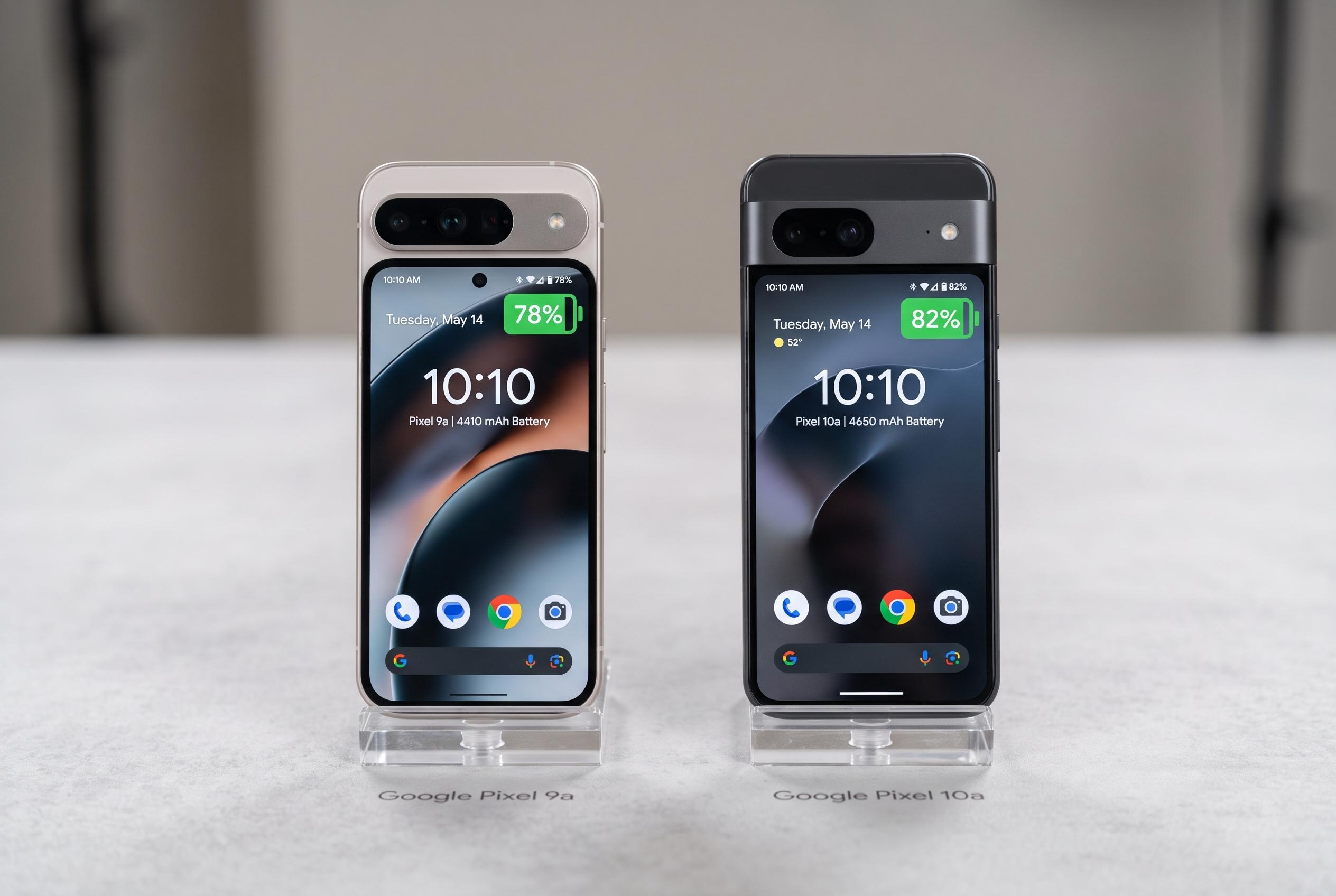

As Google’s Pixel A-series evolves, recent models like the Pixel 9a and Pixel 10a focus more on battery life and design, highlighting a shift from flagship features to value-driven devices amid market competition and discounts.
Google’s Pixel A-series has spent seven years proving that a cheaper phone can still feel distinctly Pixel. The line began as a stripped-back alternative to the main flagship range, but it has steadily evolved into something more complicated: sometimes a smart bargain, sometimes a near-copy of the more expensive model, and occasionally a release that makes little commercial sense at all. Recent Android Central reviews suggest that Google’s latest budget phones, especially the Pixel 9a and Pixel 10a, continue that pattern by trading flagship flourishes for long battery life, clean design and broadly similar performance.
At the bottom of the pile sits the Pixel 7a, not because it was weak, but because it arrived at the wrong moment. It brought several firsts to the A-series, including wireless charging, a 90Hz display and the same Tensor G2 chip, 8GB of RAM and 128GB of storage as the base Pixel 7. Yet its £-for-£ logic was poor: by the time it launched, the Pixel 7 was already heavily discounted, so buyers could often get the better phone for the same money or less, according to How-To Geek’s ranking.
The Pixel 5a had a similar problem, although the reasons were different. It was technically a sensible mid-range option, with the Snapdragon 765G, an IP rating and a full aluminium build, but it arrived in a market where the Pixel 4a 5G offered a nearly identical experience for less. By contrast, the Pixel 6a marked a clearer step forward. Android Central described it as a strong value phone because it used Google’s Tensor chip, delivered smooth daily performance and kept much of the Pixel software experience intact, even if the camera and 60Hz display represented obvious compromises.
The 9a and 8a show how the A-series has changed. The Pixel 9a, according to Android Central, focuses less on matching the flagship in every respect and more on offering the core Pixel experience at a lower price, with exceptional battery life, strong Tensor performance and a cleaner design that removes the camera bump. The 10a, meanwhile, appears to be a modest refresh rather than a genuine leap forward: Android Central says it keeps the Tensor G4 and dual-camera layout of the 9a, while adding Satellite SOS and a 5,100mAh battery. That makes the 10a competent, but also hard to argue for over its predecessor if pricing and discounts are close. The Pixel 8a sits in a stronger position, since it paired the Tensor G3, 8GB of RAM and a 120Hz OLED panel with a significantly lower launch price than the Pixel 8, making the value case far clearer.
The original Pixel 3a and 3a XL still matter because they established the formula. They offered the same camera hardware as the Pixel 3 series at a far lower price, even if they relied on slower Snapdragon 670 silicon and eMMC storage. That made them less capable in demanding workloads, but for photography and everyday use they were exactly what the A-series needed to be. The Pixel 4a then refined that idea further, with a much bigger price gap versus the Pixel 4, better storage and a Snapdragon 730G that made the performance gap feel manageable rather than punishing.
Taken together, the rankings reflect a broader truth about Google’s mid-range strategy. The best A-series phones are not necessarily the most powerful; they are the ones that make the clearest case for themselves against both the flagship model above them and the discounted phone beside them. By that measure, the early 3a and 4a generations remain the cleanest expressions of the idea, while the newer models increasingly depend on whether a buyer values battery life, software features or simple cost savings over the last word in hardware.
Disclaimer: This content is intended for informational purposes only. Readers are advised to exercise their own judgement, conduct due diligence, or consult a qualified expert before acting on any information provided.