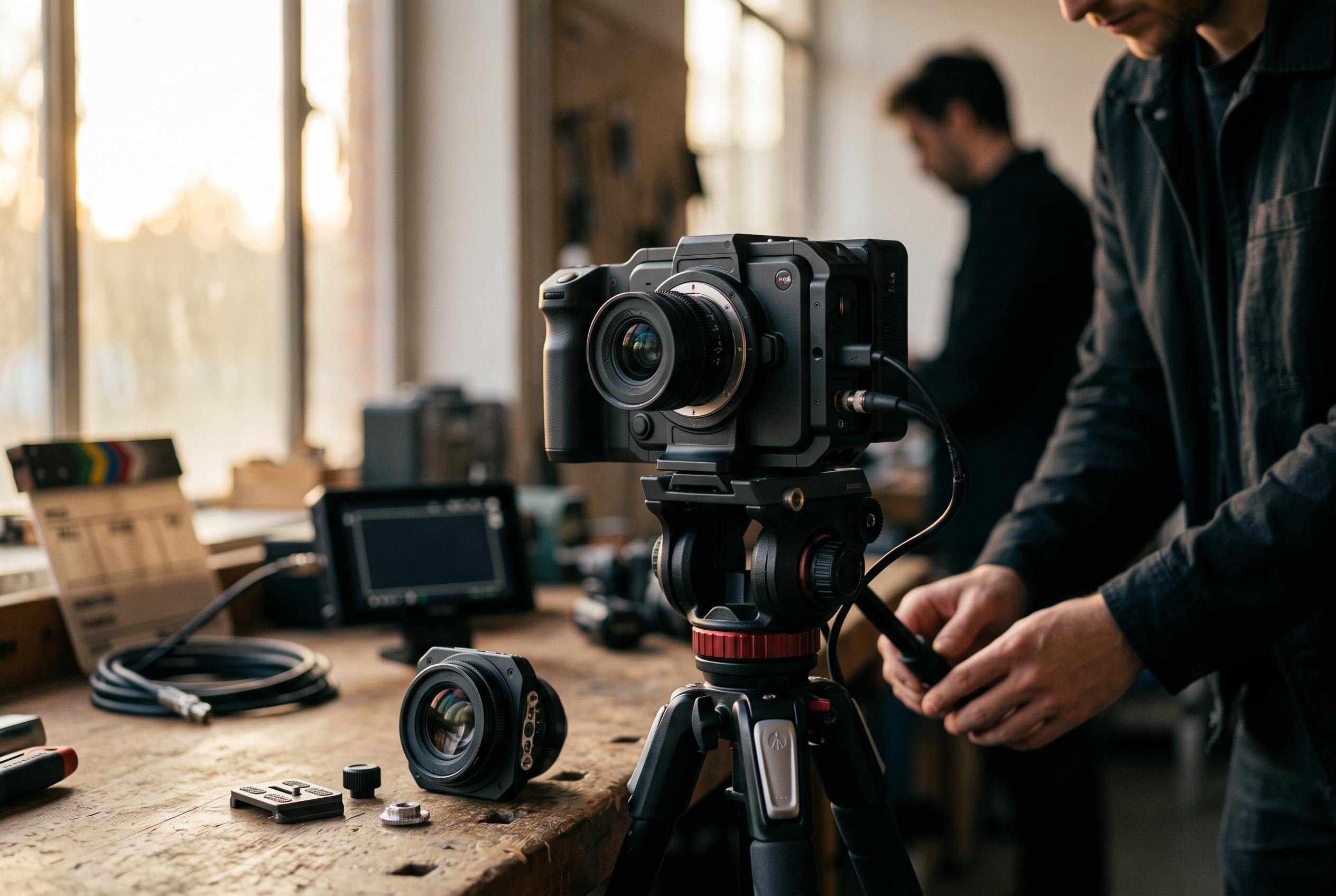

GoPro introduces the Mission 1 Pro ILS, a specialised camera designed for filmmakers seeking optical flexibility, but its niche appeal highlights the company’s struggle to capture a broad market share amid shifting consumer demands.
GoPro’s new Mission 1 Pro ILS is an intriguing, awkward machine. It takes the company’s large-sensor action-camera concept and removes the fixed lens, replacing it with a Micro Four Thirds mount aimed at filmmakers who want more optical flexibility. In practice, that makes it less of a mainstream action device and more of a specialist tool for a narrow group of users, arriving at a difficult moment for a company that needs a broad commercial hit. GoPro has framed the wider Mission 1 range as a step towards more serious video production, with a larger Type 1 sensor, 8K recording and accessories built around creator use rather than casual capture, but the ILS version pushes that idea into far more specialised territory.
The design is familiar if you have used the fixed-lens Mission 1 Pro. The body is the same size and weight, and the dual-screen layout, mounting options and general control scheme remain unchanged. The big difference is the lens mount, and that is where the compromises begin. Because the mount has no electronic contacts, most modern autofocus lenses lose key functions, including autofocus and electronic aperture control. That leaves the camera best suited to fully mechanical lenses, including vintage glass and cinema lenses. GoPro’s own accessories also seem close to essential rather than optional; the Media Mod-style cage adds connections and handling improvements that make the camera much easier to live with.
Shooting with it is therefore a mixed experience. Manual focus is manageable thanks to focus peaking and punch-in magnification, but the small displays make precise work difficult without a monitor or phone attached. The companion app improves usability by adding a larger preview, zebras and LUT support, although latency remains an issue and focusing still lacks the certainty of a larger cinema-oriented body. That means the ILS can be handled as a discreet, compact rig, but once it is built out enough to be practical, its size advantage begins to shrink.
Image quality remains the strongest argument for the platform. Reviews of the Mission 1 Pro have consistently praised the sensor’s video output, particularly in low light, and the ILS inherits that underlying capability. It can shoot high-resolution 8K material, and its slow-motion options are unusually ambitious for the class, reaching 4K at 120fps and far beyond that in Full HD. The trade-off is that stabilisation is designed around fast shutter speeds and action use. Once shutter speeds slow down to more cinematic settings, the digital stabilisation becomes far less convincing, and the lack of optical stabilisation or in-body stabilisation leaves the camera exposed to visible blur.
That leaves a small but real audience. The ILS may appeal to filmmakers with Super 16 lenses who want a modern digital body that can give their older glass new life, and to operators who value extreme slow motion in a comparatively affordable package. But that is a specialised market, not the mass audience GoPro appears to need. For many buyers, a larger mirrorless camera such as Panasonic’s GH7 will be easier to use and more adaptable, while the fixed-lens Mission 1 Pro remains the more obvious choice for pure action work. At $700, the ILS is not outrageously priced, but it feels more like a proof of concept for a specific niche than the product that will turn GoPro’s fortunes around.
Disclaimer: This content is intended for informational purposes only. Readers are advised to exercise their own judgement, conduct due diligence, or consult a qualified expert before acting on any information provided.