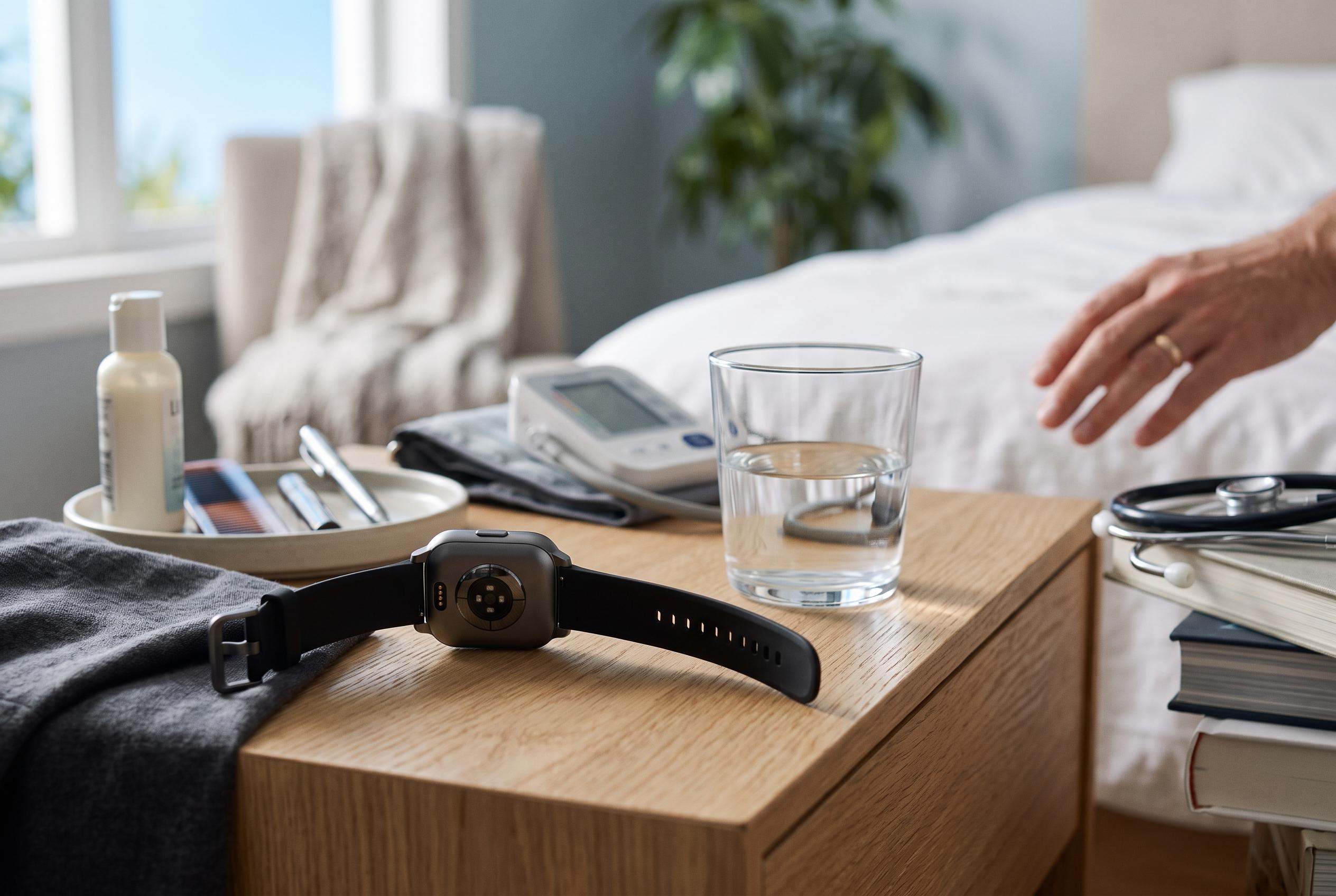

Huawei’s new Watch D3 differentiates itself with a built-in blood pressure system that offers clinical accuracy and continuous monitoring, blending health tech with everyday wear in a slimmer design.
Huawei’s Watch D3 is an unusual entrant in the smartwatch market because its defining feature is not a new training metric or a brighter screen, but a built-in blood pressure system. According to Sports Insider’s test, the watch uses an inflatable air cushion in the strap and a micro-pump to take oscillometric readings, the same basic method used by a pharmacy wrist monitor. That approach avoids optical estimates and does not require the kind of external calibration some competing wearables still need. Huawei also says the device carries CE-MDR medical certification for single readings, 24-hour ambulatory monitoring, ECGs and exercise-related measurements.
The hardware has been slimmed down from the previous model. Notebookcheck says the Watch D3 is 11.3mm thick, down from 13.3mm, and weighs about 40g without the strap. Its 1.92-inch AMOLED panel is larger than before and can reportedly reach 3,000 nits of peak brightness, which should help legibility outdoors. The design still includes a crown and a second button that doubles as an ECG electrode, while colour options include Black, White and Mocha Gold, depending on the market.
Sports Insider found that the blood pressure system is the reason the Watch D3 makes sense at all. When worn correctly and measured at rest, its readings were close to those of a dedicated arm-cuff device, usually within a single-digit mmHg range in the reviewer’s testing. Huawei says the watch meets the relevant accuracy targets used for validation, and the review noted particular improvements for harder cases such as weaker pulses, more soft tissue and stiffer arteries. The company’s companion app stores each reading with a timestamp and can generate a report for a doctor, which is the point at which the device’s health focus becomes practically useful.
The watch also extends that concept into training. Sports Insider says the D3 can measure blood pressure before and after supported workouts, including running, walking and cycling indoors or outdoors. That matters because exercise hypertension can push values up during exertion even when resting readings look normal. The watch prompts users to rest briefly before a session and repeat the measurement afterwards, giving a picture of how blood pressure responds under load rather than only at rest. For people managing borderline or variable readings, that may be more informative than a standard recovery score.
There is also a 24-hour monitoring mode modelled on ambulatory blood pressure practice. According to Sports Insider, the watch can take readings at regular intervals through the day and overnight, with the pump working quietly enough not to be disruptive. In the HUAWEI Health app, users get daytime, night-time and 24-hour averages, along with pulse data. The watch further adds sleep tracking, more than 100 exercise modes, GPS, barometer, compass, fall detection, NFC payments and call handling, making it a fuller health watch rather than a single-purpose medical device.
Battery life is modest rather than exceptional. Sports Insider found roughly four days of use with the always-on display, daily training and multiple measurements, compared with Huawei’s stated figure of up to six days under typical use. Continuous 24-hour blood pressure monitoring, however, reduces that to about a day, which is unsurprising given the repeated inflation cycles. The company has priced the Watch D3 at €449 and says it will be available from 15 September 2026, with launch bundles that include accessories and a protection package in some regions.
Disclaimer: This content is intended for informational purposes only. Readers are advised to exercise their own judgement, conduct due diligence, or consult a qualified expert before acting on any information provided.