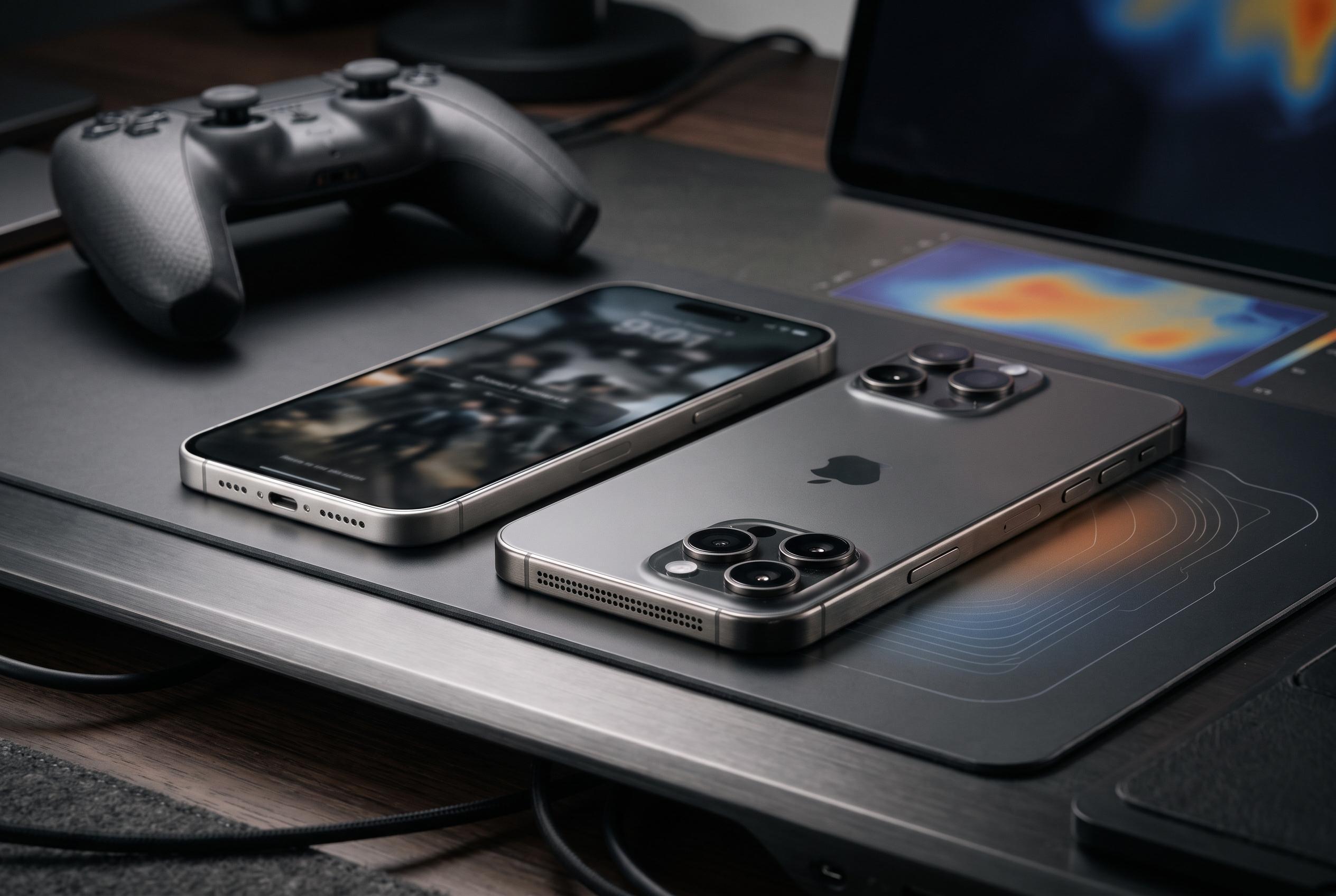

Apple’s latest iPhone 17 Pro and Pro Max emerge as serious contenders in mobile gaming, boasting new cooling systems and upgraded chips that extend performance under demanding loads, but still face GPU competition from Android rivals.
Apple’s iPhone 17 Pro and iPhone 17 Pro Max have emerged as serious gaming handsets, not just premium general-purpose phones. With the A19 Pro chip, 12GB of RAM and Apple’s first vapour-chamber cooling system in an iPhone, the models are built to sustain performance for longer than their predecessors. Reviews and benchmark tests suggest Apple has made its biggest recent gains in thermal management, which matters as much as raw speed for demanding games.
Tom’s Guide reported that the A19 Pro delivers large gains over the A18 generation, while TechRadar found that the iPhone 17 Pro Max now leads rivals in single-core and multi-core CPU testing. In graphics work, the picture is more mixed: early benchmark data shared by Gizmochina and later reviews indicate strong results in 3DMark tests, but not a clean sweep over the best Android phones. Qualcomm’s Snapdragon 8 Elite and MediaTek’s Dimensity 9400 still hold advantages in some GPU-heavy benchmarks, which helps explain why Android remains competitive for serious mobile gaming.
Even so, Apple’s latest phones perform well in real games. PhoneArena said the iPhone 17 Pro can hold roughly 65% to 70% stability in stress tests, while titles such as Death Stranding and Resident Evil 4 now run at close to 50fps. BGR also noted strong results in Genshin Impact, with the Pro models approaching 60fps at maximum settings before throttling becomes noticeable in longer sessions. Notebookcheck reported that the new cooling system improves peak performance and keeps sustained output ahead of the previous generation, even if the chip still slows under extended load.
For players already in Apple’s ecosystem, the appeal goes beyond silicon. The iPhone 17 Pro line benefits from a mature accessory market, Apple Arcade, the Games app and a broad selection of streaming services in the App Store. The 120Hz OLED display with HDR support adds to the experience, while the new aluminium design and brighter panel give the phones a more refined feel. They are expensive, starting at $1,100 and $1,200, but for iPhone users who want top-tier mobile gaming without moving to Android, they are among the strongest options available.
Disclaimer: This content is intended for informational purposes only. Readers are advised to exercise their own judgement, conduct due diligence, or consult a qualified expert before acting on any information provided.