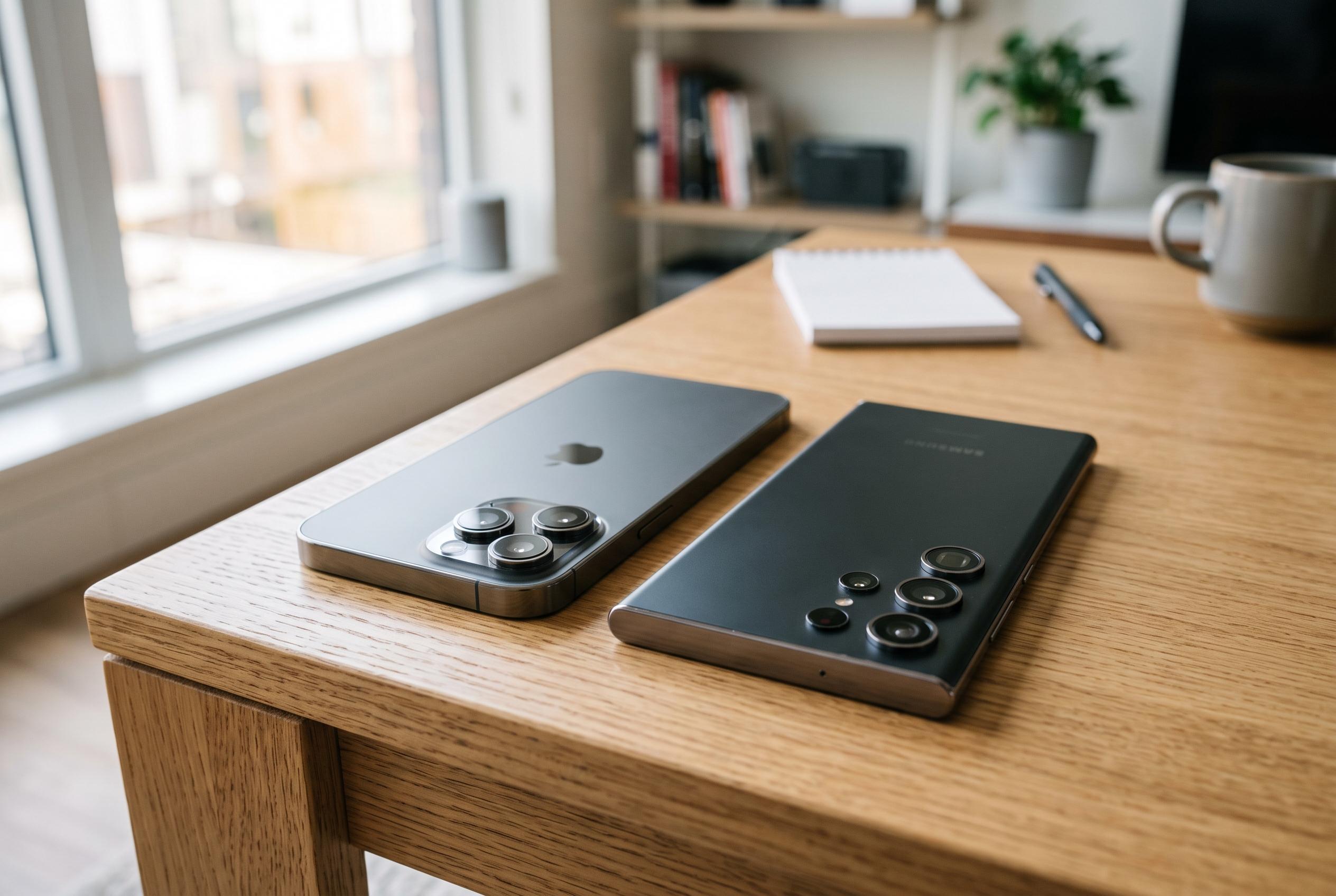

Apple’s flagship narrowly wins a 31-test camera comparison, while Samsung’s phone claims the advantage in daylight, ultra-wide photography and extreme zoom.
Smartphone camera comparisons often hinge on small margins, and that is true here. In a round-up of 31 camera tests drawn from a video by ZONEofTECH, the iPhone 18 Pro Max finished with 18 points, ahead of the Galaxy S26 Ultra on 14. The result suggests a narrow overall lead rather than a clean sweep, with each handset showing clear strengths in different shooting conditions.
The most telling split is in main-camera performance. According to the comparison, Samsung’s Galaxy S26 Ultra does better in bright daylight, where it produces vivid colour, strong contrast and convincing shadow detail. Apple’s iPhone 18 Pro Max, by contrast, is judged stronger once the light falls away, with better exposure control, more balanced highlights and cleaner results in near-dark conditions. That pattern broadly aligns with other hands-on reviews, which describe the iPhone as especially capable in low light while noting the Galaxy’s impressive daytime output and high-resolution imaging.
The two phones also diverge in close-up work and indoor scenes. The Galaxy is presented as the more eye-catching option, delivering heavier background blur and more saturated colour that suit creative close-ups. The iPhone is described as the better tool for realism, with finer detail and more faithful colour in mid- to low-light interiors. A separate sample-photo comparison from PhoneArena similarly focuses on differences in dynamic range, colour accuracy and low-light behaviour, reinforcing the idea that the choice depends on whether the user prefers a more stylised or a more natural look.
Zoom is another area where the phones are clearly tuned for different uses. The iPhone 18 Pro Max is said to be strongest at shorter telephoto ranges, roughly 4x to 5x, where it delivers crisp mid-distance shots. The Galaxy S26 Ultra, however, takes the lead at much longer distances, from around 10x to 40x, where its periscope system gives it a practical advantage. That division makes the Galaxy the more obvious choice for distant subjects, while the iPhone looks better suited to everyday portrait and street use at moderate reach.
The ultra-wide cameras follow a similar pattern. In daylight, the Galaxy is credited with sharper, brighter wide-angle images and less distortion, making it the better option for landscapes and architectural scenes. In lower light, the iPhone is said to hold up better, thanks to software processing and stabilisation that preserve detail and keep noise under control. The selfie cameras are split too: the iPhone offers a wider field of view, stronger stabilisation and more accurate colour, while the Galaxy performs better when light is scarce, especially for evening or indoor self-portraits.
Video remains one of Apple’s strongest cards. The comparison gives the iPhone the edge in 4K at 60fps, cinematic mode and time-lapse recording, describing it as the more consistent choice for creators who want polished footage with minimal effort. Samsung counters with stronger action stabilisation, which should appeal to users filming fast movement or active scenes. On special modes, the iPhone is said to be particularly effective for macro work, cinematic clips and slow motion, while the Galaxy is favoured for portrait shots and astrophotography. The overall verdict is practical rather than absolute: the iPhone 18 Pro Max appears better for low light, video and ease of use, while the Galaxy S26 Ultra is the more versatile option for zoom, ultra-wide images and advanced features. PhoneArena and Tom’s Guide both reach broadly similar conclusions in their wider comparisons, with the iPhone leaning towards camera consistency and the Galaxy offering a richer set of tools and functions.
Disclaimer: This content is intended for informational purposes only. Readers are advised to exercise their own judgement, conduct due diligence, or consult a qualified expert before acting on any information provided.