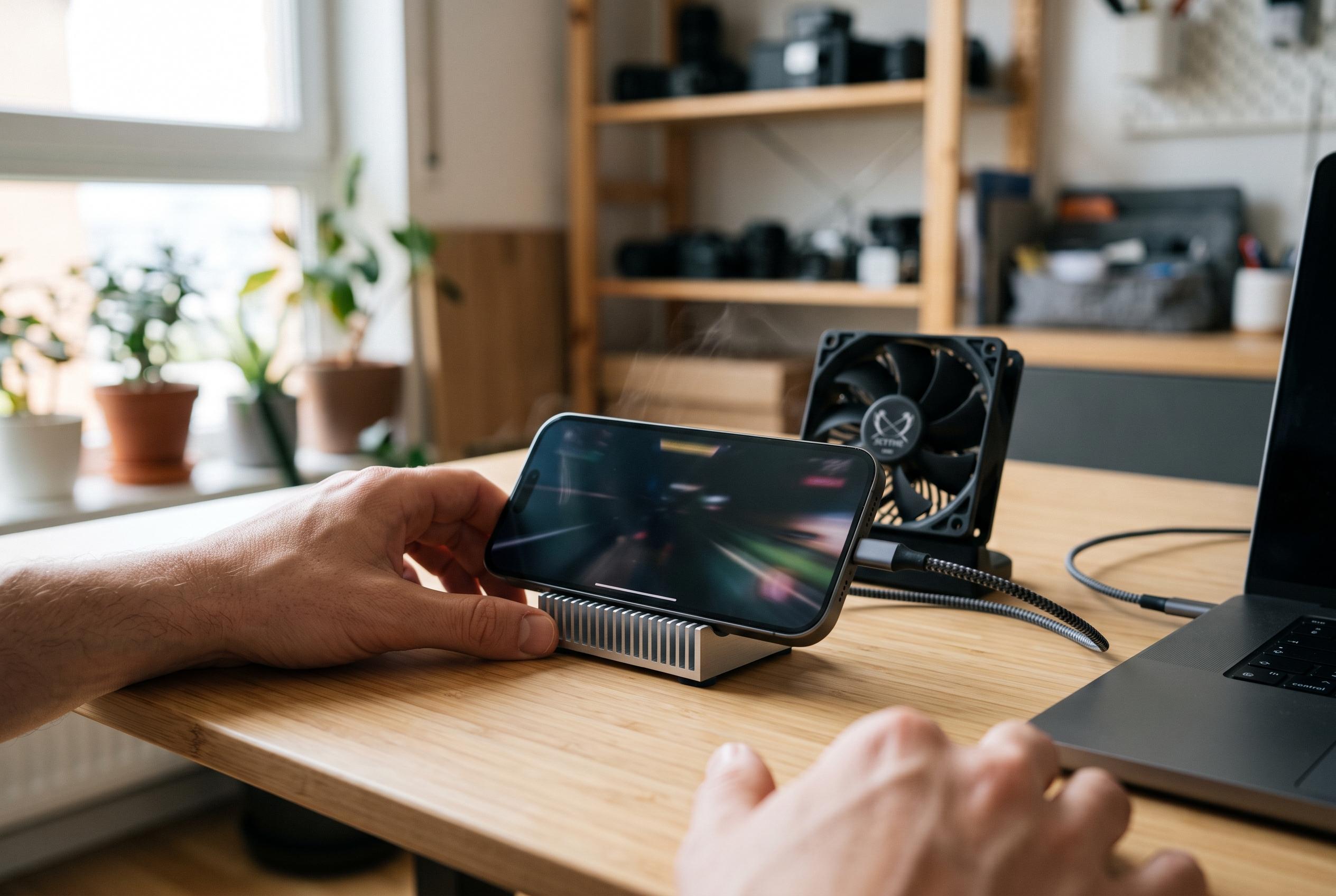

The latest flagship iPhone, tested under intensive gaming conditions, surpasses Apple’s claimed sustained performance improvements thanks to advanced silicon and thermal design, promising better gaming experiences for users.
Apple’s latest top-end handset has been put through a demanding gaming test, and the early evidence suggests that the iPhone 18 Pro Max is doing more than matching the performance gains Apple advertised. In extended runs of Assassin’s Creed Mirage and Resident Evil 4, the device held up better than the iPhone 17 Pro Max, with the newer model showing stronger sustained frame rates and less thermal deterioration as the session went on. According to Notebookcheck, that points to a real-world uplift that goes beyond a paper specification sheet.
The result matters because sustained gaming performance is often where a smartphone’s cooling system is exposed. Apple has claimed a 40% sustained performance improvement for the device, but the gaming test reported by Notebookcheck indicates the iPhone 18 Pro Max exceeded that figure in practice. In one comparison, the newer phone showed up to 69% less performance loss than its predecessor during prolonged play, suggesting that the gains are not limited to short benchmark bursts.
That improvement appears to be rooted in both silicon and thermal design. The A20 Pro chip has already shown a meaningful lead in synthetic testing, with Notebookcheck reporting higher Geekbench scores than the A19 Pro in both single-core and multi-core tests, alongside a roughly 40% advantage in Metal graphics results. Teardown coverage has also pointed to a larger vapour chamber in direct contact with the chip, a new thermal-pad material and a repositioned system-on-chip, all of which indicate that Apple has made heat management a priority in this generation.
The most striking part of the gaming test was how the two phones behaved under load. Dame Tech, the channel behind the run, found that Assassin’s Creed Mirage was constrained by its 30fps ceiling, but the iPhone 18 Pro Max stayed near that limit for most of the session while the older model dipped more noticeably. In Resident Evil 4, where the settings were unlocked, the difference widened further, with the newer phone running close to 60fps while the earlier model sat much lower. For buyers who care about mobile gaming, the implication is clear: the iPhone 18 Pro Max is not just faster in brief tests, but more capable of holding that speed once heat and throttling become part of the equation.
Disclaimer: This content is intended for informational purposes only. Readers are advised to exercise their own judgement, conduct due diligence, or consult a qualified expert before acting on any information provided.