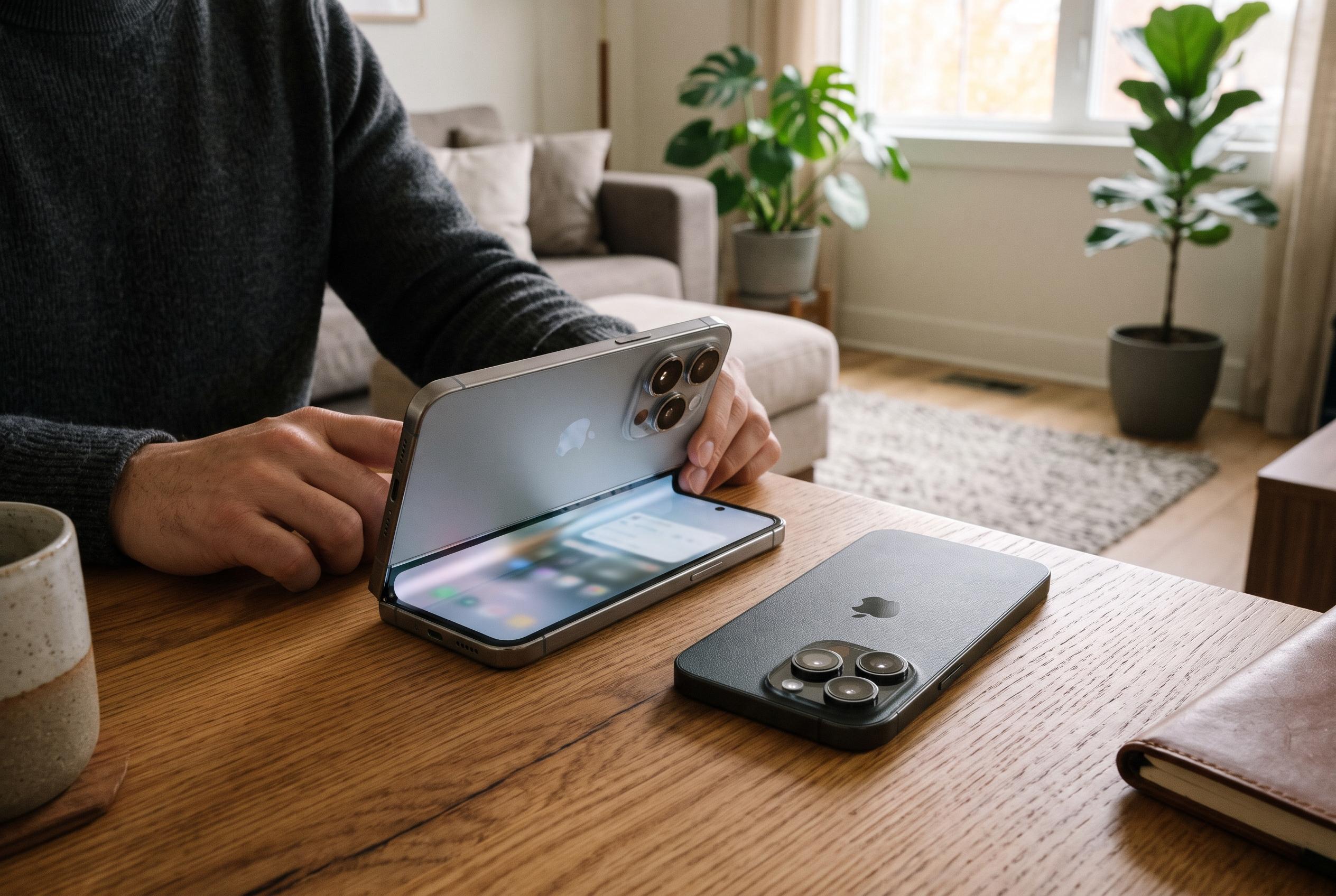

Apple’s foldable iPhone Duo held its own against the iPhone 18 Pro Max across most camera tests, but the Pro Max’s dedicated telephoto lens delivered a decisive advantage at distance.
Apple’s latest flagship and its foldable rival turn out to be far closer in camera quality than their different designs suggest. In Tom’s Guide’s 10-round comparison, the iPhone 18 Pro Max and the iPhone Duo matched each other in most tests, with both delivering strong exposure, natural colour and convincing detail across daylight, ultrawide, macro, portrait and selfie shots.
The most significant separation came in zoom, where the iPhone 18 Pro Max’s dedicated 48-megapixel telephoto camera gave it a clear advantage. The Duo, by contrast, leans on its 48-megapixel main sensor and computational crop to simulate magnification, which cannot match the sharpness and reach of native optical zoom. In the comparison, that difference became obvious in distant subjects, signage and fine texture, where the 18 Pro Max resolved more usable detail.
Elsewhere, the verdict was largely balanced. Tom’s Guide found the two phones closely matched in daytime scenes, ultrawide landscapes, macro close-ups, selfies, portrait shots and panoramas. The iPhone 18 Pro Max occasionally edged ahead with warmer colour rendering, stronger highlight control and slightly richer contrast, but the margins were narrow enough that several rounds were judged ties.
The result reinforces a familiar point about flagship phone cameras: the best results are no longer limited to one design category. The iPhone Duo’s foldable form factor gives creators a practical advantage for self-recording with the rear cameras, while the iPhone 18 Pro Max remains the more versatile imaging tool overall. For most buyers, Tom’s Guide’s conclusion is clear: if zoom matters, the Pro Max wins; if it does not, the Duo is far more competitive than its hardware layout might imply.
Disclaimer: This content is intended for informational purposes only. Readers are advised to exercise their own judgement, conduct due diligence, or consult a qualified expert before acting on any information provided.