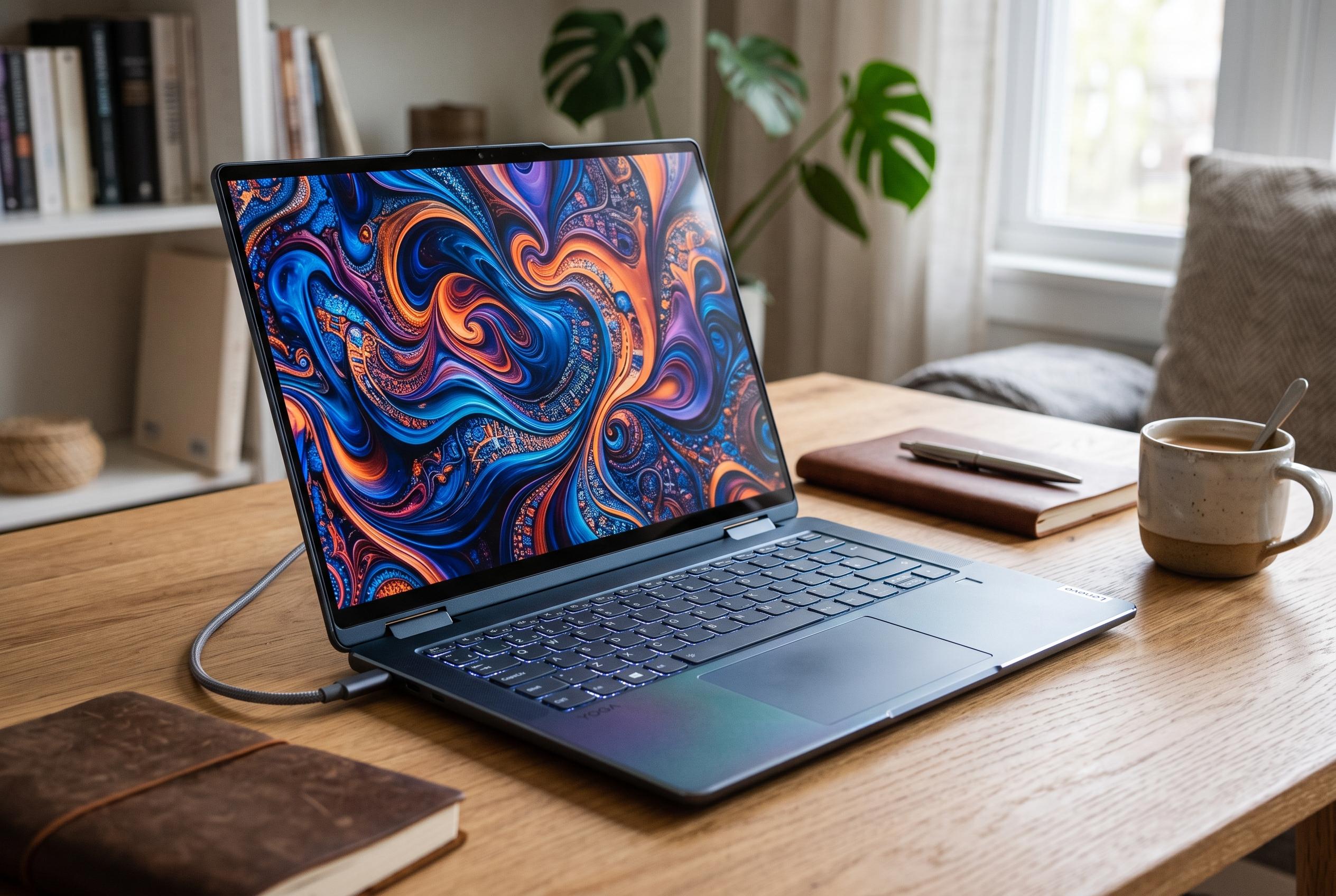

Lenovo’s Yoga Pro 9i Aura Edition impresses with its OLED display and sleek design but struggles to justify its high price point amid middling performance and tough competition.
Lenovo’s Yoga Pro 9i Aura Edition Gen 11 is a polished creator laptop that makes a strong first impression, then struggles to defend its asking price. PCMag found that the machine combines a premium aluminium chassis, an excellent OLED panel and unusually strong battery life, but judged the overall package less convincing once its cost and middling performance were weighed against rivals. Other reviews largely agree on the basics: this is a well-built, attractive laptop with a display that stands out immediately, but its value depends heavily on the configuration and the discounts available at the time of purchase.
Much of the criticism centres on Lenovo’s pricing structure. The Yoga Pro 9i starts at a level that already places it in premium territory, yet PCMag’s review unit pushed the total far higher while still pairing the laptop with only a midrange GeForce RTX 5060. Even the least expensive model is positioned as an expensive creator machine rather than a bargain, and the highest-end option climbs to a level that invites direct comparison with more powerful workstations and gaming notebooks. PCMag argued that those alternatives often deliver better graphics performance for similar money, while Tom’s Guide and UltrabookReview both noted that the machine’s premium build and display do not erase the cost concern.
On design, Lenovo has built a laptop that feels restrained rather than flashy. The chassis is slim, relatively light for a 16-inch system, and well supplied with ports for external displays, storage and accessories. Reviewers also singled out the keyboard, which offers generous key travel and a comfortable typing feel, and the large touchpad, which doubles as a pen-enabled drafting surface. That included stylus support remains a distinguishing feature, especially for artists and note-takers, while the 5MP webcam and clear speaker output make the machine easier to recommend for remote work than many creator-focused rivals.
The display is the Yoga Pro 9i’s clearest strength. PCMag described the 16-inch OLED touch panel as bright, colourful and especially well suited to visual work, and Notebookcheck similarly praised the screen’s high peak brightness and strong multimedia performance. Across reviews, the panel is treated as the component that most clearly justifies Lenovo’s premium positioning, with vivid colour reproduction, deep blacks and a high refresh rate all helping the laptop feel more expensive than its raw specifications might suggest. For creators who spend long hours editing images or video, that screen may matter more than the machine’s uneven benchmark results.
Performance, however, is where the Yoga Pro 9i becomes harder to recommend without a discount. PCMag found its results inconsistent across productivity, graphics and workstation tests, with some cheaper competitors matching or beating it in key tasks. The report also suggested that Lenovo’s tuning leaves the RTX 5060 operating below what the hardware can theoretically sustain, which helps explain why the laptop did not always perform like a £3,000-plus creator machine should. Battery life is more impressive, and the OLED panel measures as one of the brightest and most colour-accurate in the class, but the broader verdict remains cautious: this is a refined laptop that is easiest to justify when priced below its usual premium.
Disclaimer: This content is intended for informational purposes only. Readers are advised to exercise their own judgement, conduct due diligence, or consult a qualified expert before acting on any information provided.