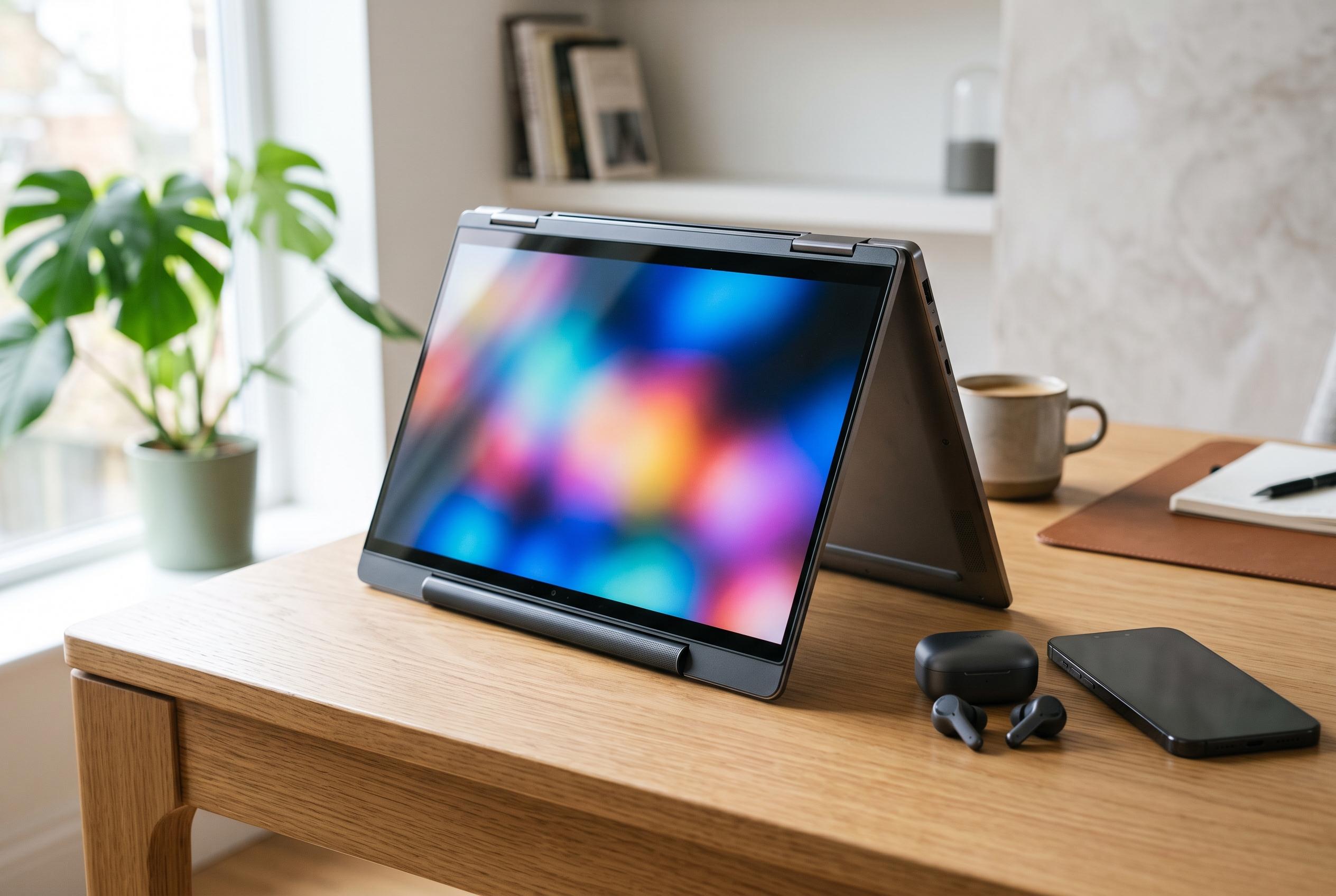

A superb OLED display, rotating soundbar and versatile design make Lenovo’s Yoga 9i one of the better Windows convertibles, but merely adequate performance and battery life weaken its value.
Lenovo’s Yoga 9i 2-in-1 Aura Edition is a reminder of how far premium convertibles have come, and how hard they are to justify for most buyers. The machine is built around a 14-inch OLED touchscreen, a hinged design that folds into several positions, and an unusual rotating soundbar that keeps audio aimed at the user whatever mode the laptop is in. It is also a costly proposition, with the reviewed configuration sitting well above entry-level ultrabooks and standard clamshell laptops.
What distinguishes the Yoga 9i most is not its flexibility, but the way Lenovo has tried to make that flexibility less awkward. Tom’s Hardware and TechRadar both highlight the rotating speaker assembly as one of the device’s defining features, and in practice it means the stereo image stays consistent when the display is flipped into tent mode or propped up for presentation use. That matters because many convertibles lose audio quality or direct sound away from the listener when used away from conventional laptop mode. The included Yoga Pen Gen 2 also adds some practical value, especially for note-taking and sketching, though the category still depends on whether the owner actually wants to write on the screen.
Lenovo has also given the Yoga 9i the sort of hardware that should suit a premium machine. The display is bright, sharp and OLED-based, with a 2,880 x 1,800 resolution and a variable refresh rate up to 120Hz, while RTINGS describes the panel as a strong point for colour accuracy and overall picture quality. The keyboard appears to be another genuine strength: the key travel, concave keycaps and soft surface finish are all designed for long typing sessions rather than flashy marketing claims. Connectivity is equally sensible, with HDMI 2.1, dual Thunderbolt 4 ports, USB-A and a headphone jack, which is more useful than the sparse port selection found on some competing thin-and-light laptops.
The problem is that the Yoga 9i does not always convert its premium specification into equally premium speed. Benchmark results cited in the review place it behind several rivals using similar memory and storage capacities, while day-to-day use was described as adequate rather than exceptional. That is a concern in a market where ARM-based Windows laptops and Apple’s MacBook line are increasingly setting expectations for responsiveness and efficiency. PCWorld’s review of a related configuration also points to the importance of battery life and integrated graphics performance in this class, both areas where the Yoga 9i looks competent rather than outstanding.
Battery life is acceptable, but not remarkable. The 70Wh cell and 65W charger deliver roughly half a working day in mixed use, with a full recharge taking around 90 minutes. That is fine for a device aimed at travel and productivity, and Gizmochina similarly frames the Yoga 9i as a portable companion for work on the move, but it is not enough to make the machine stand out from the pack. The only available Cosmic Blue finish gives the laptop a distinctive look, although it also shows fingerprints easily and adds to the sense that this is a product that prioritises style and mechanism over outright practicality.
That leads to the central question: who is this laptop really for? The answer is a narrow group of buyers who specifically want a premium Windows convertible and are prepared to pay for it. LaptopMag and Tom’s Hardware both present the Yoga 9i as a polished all-rounder with clear strengths in display quality, audio and build, but the wider market is moving away from this form factor. For readers who merely want a strong Windows laptop, a conventional design will usually offer better value, fewer compromises and stronger performance for the money. The Yoga 9i remains one of the more convincing 2-in-1s available, yet it also illustrates why the category is becoming harder to recommend.
Disclaimer: This content is intended for informational purposes only. Readers are advised to exercise their own judgement, conduct due diligence, or consult a qualified expert before acting on any information provided.