
Leofoto’s LS-324CPRO tripod combines high rigidity, weather resistance and portability in a competitively priced package, rivaling established premium brands for serious field use.
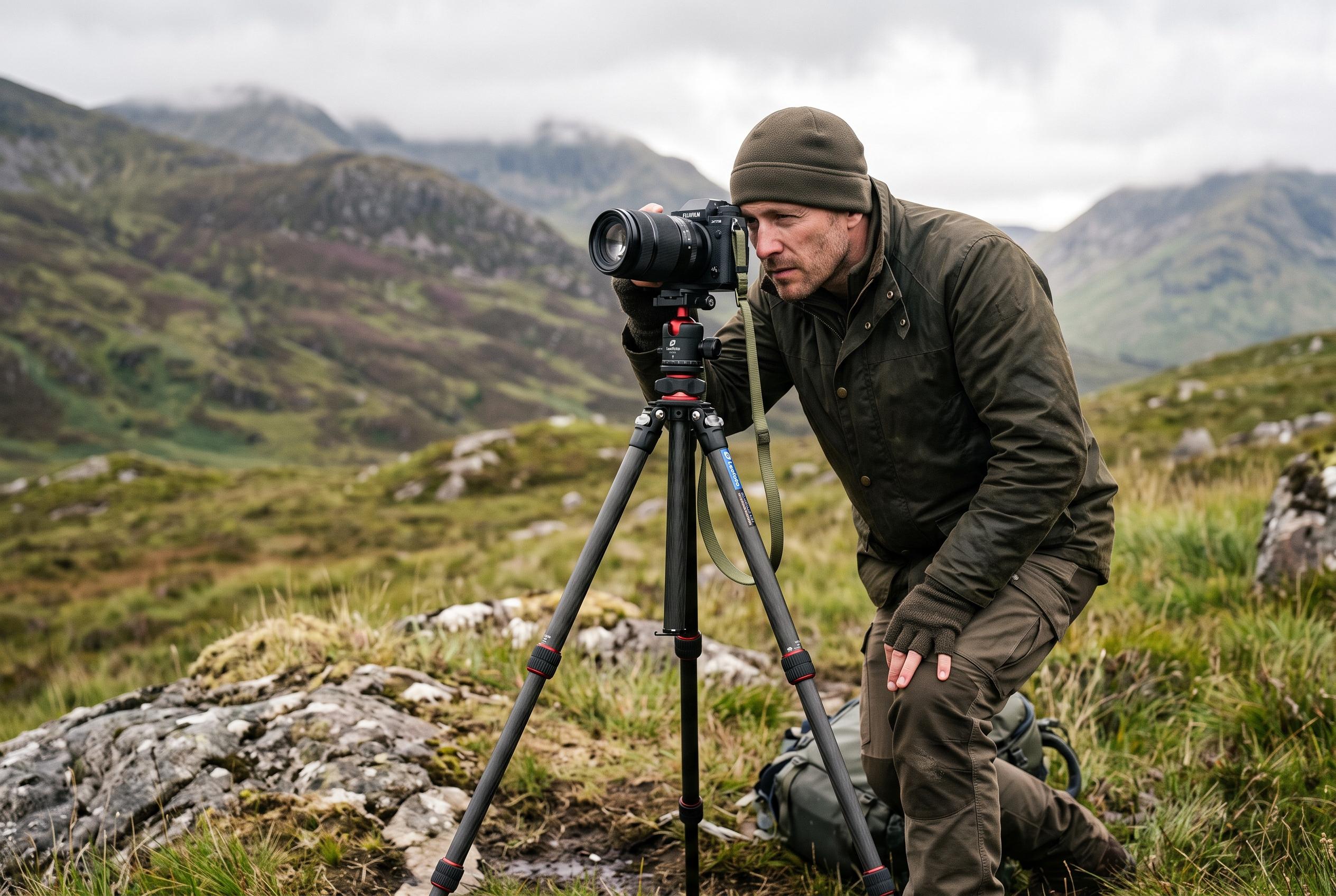
Leofoto’s LS-324CPRO sits in a crowded but demanding part of the tripod market: the segment for photographers who want high rigidity, weather resistance and sensible portability without paying the usual premium charged by the best-known names. As Martin’s review on Phillip Reeve’s site makes clear, this is a flat-apex, centre-column-free carbon-fibre tripod aimed at serious field use rather than ultra-light travel work. It is sold with the LH-40 ball head, and the combination is presented as a direct alternative to established premium field tripods from Gitzo and Really Right Stuff. The reviewer’s measurements put the complete kit at about 2kg, with a folded length of roughly 60cm with the head attached and a maximum working height of around 150cm.
The construction is a large part of the appeal. According to the review, the legs use 10-layer Japanese Toray carbon fibre, while the PRO version adds sealing intended to keep out water, sand and other debris. Leofoto says the Ranger-series PRO models use improved material density and weather-resistant joints, and the review highlights internal double O-ring seals inside the twist locks. That places the LS-324CPRO firmly in the “go anywhere” category, with a design meant for snow, mud, salt water and dusty conditions rather than fair-weather shooting only. The twist locks need only a short turn to secure or release each section, and the absence of a centre column removes a common source of flex.
The leg design is also more versatile than on many conventional tripods. Martin notes four leg-angle positions, which is one more than the three-angle layouts common on simpler models in the Ranger family. That extra setting helps on slopes and when working close to the ground. Leofoto’s own product information for the related CX line describes improved one-handed angle stops, while B&H’s listing for the LS-324C family shows how the series can also be configured with a centre column or a levelling base. The CPRO reviewed here keeps the cleaner, stiffer layout, but the wider family shows how Leofoto has split the range between maximum stability and extra flexibility.
The included LH-40 head is a more feature-rich companion than many photographers may expect in a bundled kit. The review describes an Arca-Swiss-compatible clamp, a main lock, tension control and a panning base with degree markings. It also has a second 360-degree rotation mechanism on the camera platform itself, which is particularly useful when shooting panoramas on uneven ground because it allows the camera to be levelled without having to adjust every leg. B&H’s description of the LH-40LR variant confirms the family’s Arca-type compatibility and panorama-friendly scales, although the reviewed kit uses the screw-knob clamp rather than the lever-release version. In practice, the reviewer found the head powerful, adjustable and slightly busy at first, but ultimately easy to use, even with gloves.
In use, the LS-324CPRO is described as a tripod that prioritises stability first and foremost, but without becoming unwieldy. The reviewer valued the dual drop notches for switching between portrait and landscape orientation, the included spike feet for soft or icy ground, and the accessory mounting points on the spider for extras such as a ballast hook or other add-ons. The main criticisms were practical rather than structural: swapping rubber feet for spikes is fiddly, and one leg would be more comfortable in cold weather if it were padded. Even so, the overall conclusion is clear. Leofoto has moved close to the established premium makers on build, finish and feature set, while undercutting them on price. For photographers who want a compact, strong, centre-column-free tripod for landscape, architecture or outdoor work, the LS-324CPRO looks like a serious contender.
Disclaimer: This content is intended for informational purposes only. Readers are advised to exercise their own judgement, conduct due diligence, or consult a qualified expert before acting on any information provided.