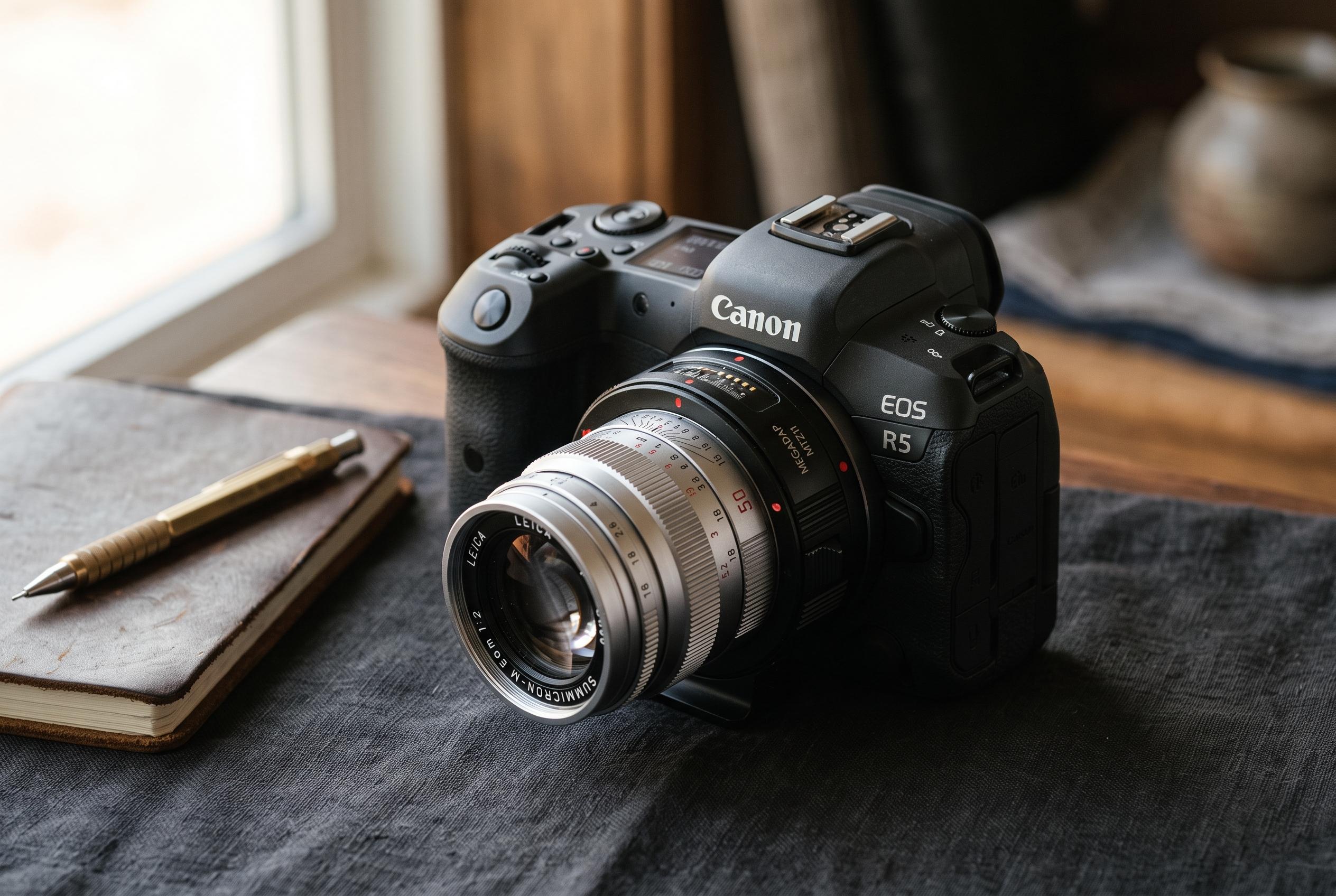

Megadap has launched an innovative autofocus adapter enabling Leica M-mount lenses to operate with native autofocus on Canon RF cameras, blending manual optics with modern autofocus systems for the first time.
Megadap has built an autofocus adapter that gives Leica M-mount lenses a new role on Canon RF bodies, including cameras such as the Canon C50. The device sits between the lens and the camera, then uses a motorised helicoid to move the optics while Canon’s own Dual Pixel autofocus system handles subject tracking, face priority and eye detection. In practice, that means manual rangefinder glass can behave like native autofocus kit, which is unusual on a mount system Canon has traditionally kept tightly controlled.
In Anthony Gugliotta’s test footage, the adapter is not simply translating commands in software. The motor physically drives focus forwards and backwards, while the lens focus ring stays at infinity during recording. Aperture remains a manual step, but Megadap says the adapter can store up to four lens profiles and pass EXIF data through to the camera. The company also says the unit supports a dedicated macro mode and firmware updates, and that it is compatible with Canon and RED RF-mount mirrorless bodies.
The hardware comes with clear limits. Megadap and retailers including B&H list a price of $399, while Wex Photo Video lists it at £429. The adapter is designed for Leica M lenses rather than heavier cinema glass, and Megadap warns against lenses above 500 g because the motor has to shift the optical group itself. Canon Addict also notes that the adapter supports an AF/MF switch and can be stacked with other mount converters while keeping autofocus active.
The appeal is obvious for photographers and filmmakers who already own sought-after manual M-mount lenses and want to keep their character without giving up autofocus. That fits a broader trend in which older glass is being adapted for modern bodies, but the Megadap approach is lighter than LiDAR-based focusing rigs such as DJI’s Focus Pro, which add more cost and bulk. The trade-off is that the adapter is best suited to controlled shooting, not fast lens changes or demanding action work, because it offers only four stored profiles and the motor behaviour can be audible and slightly uneven.
Disclaimer: This content is intended for informational purposes only. Readers are advised to exercise their own judgement, conduct due diligence, or consult a qualified expert before acting on any information provided.