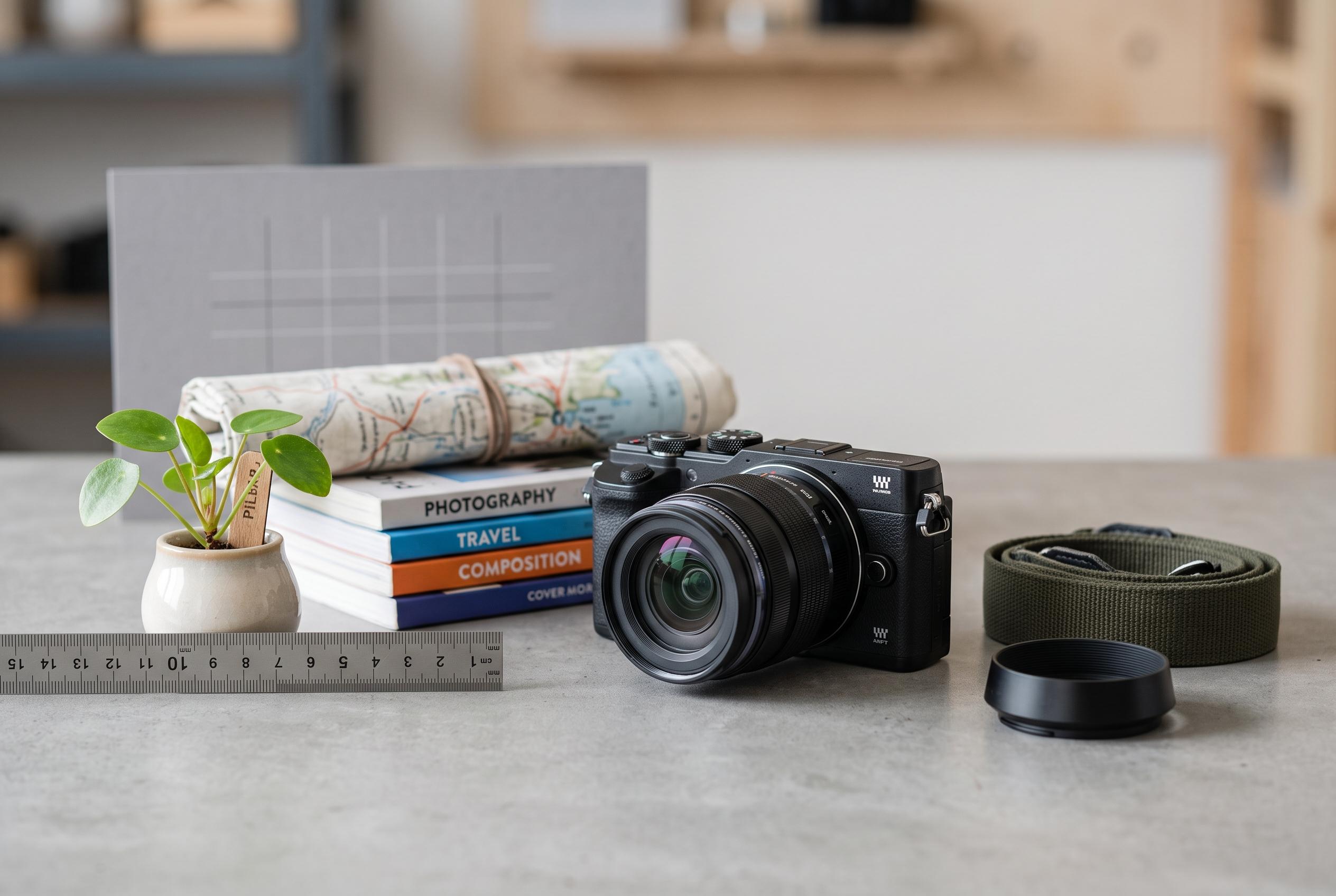

While often dismissed for its limitations, Micro Four Thirds is gaining recognition for its practical benefits, including compact design, deep depth of field, and versatile working conditions, making it a compelling choice for niche photographers.
Micro Four Thirds remains a format defined by compromise, but that is also its strength. According to Fstoppers, Dee Rosa argues that the system should not be judged against full frame on the basis of one metric alone. Its smaller sensor brings a 2x crop factor, more depth of field for the same framing and weaker low-light performance than larger formats, which can make it a poor fit for photographers who want very shallow backgrounds or routinely work in difficult light.
Those limitations are real, but so are the practical gains. The Four Thirds consortium says the system was built around compact, lightweight cameras and lenses, with an open standard that allows bodies and optics from different makers to work together. In Rosa’s hands, that means a body such as the OM System OM-5 Mark II can remain unusually small while still offering weather sealing and access to fast, sealed lenses that are far smaller than their full-frame equivalents.
The format’s most persuasive argument is depth of field control. Rosa says the same front-to-back sharpness that might require f/8, f/11 or f/16 on full frame can often be achieved at much wider apertures on Micro Four Thirds. That keeps more light available at dusk, in street scenes and in other low-light situations where photographers often need to balance sharpness with shutter speed. The system’s strong in-body stabilisation and computational features, including high-resolution multi-shot modes, extend that advantage further.
Independent guides and buyer’s notes from recent years have made a similar case. Digital Camera World, KEH and other commentators describe Micro Four Thirds as a mature, technically capable system that still makes particular sense for travel, street, wildlife and macro work, especially where portability matters. The trade-off is clear: it is less attractive for photographers chasing extreme background blur or the best possible high-ISO performance.
That leaves Micro Four Thirds in a narrow but defensible position. It is not the obvious choice for everyone, and Rosa is careful not to present it as such. But for photographers who value a small kit, weather resistance, a broad lens range and practical working speed over maximum subject separation, it remains one of the most coherent systems available.
Disclaimer: This content is intended for informational purposes only. Readers are advised to exercise their own judgement, conduct due diligence, or consult a qualified expert before acting on any information provided.