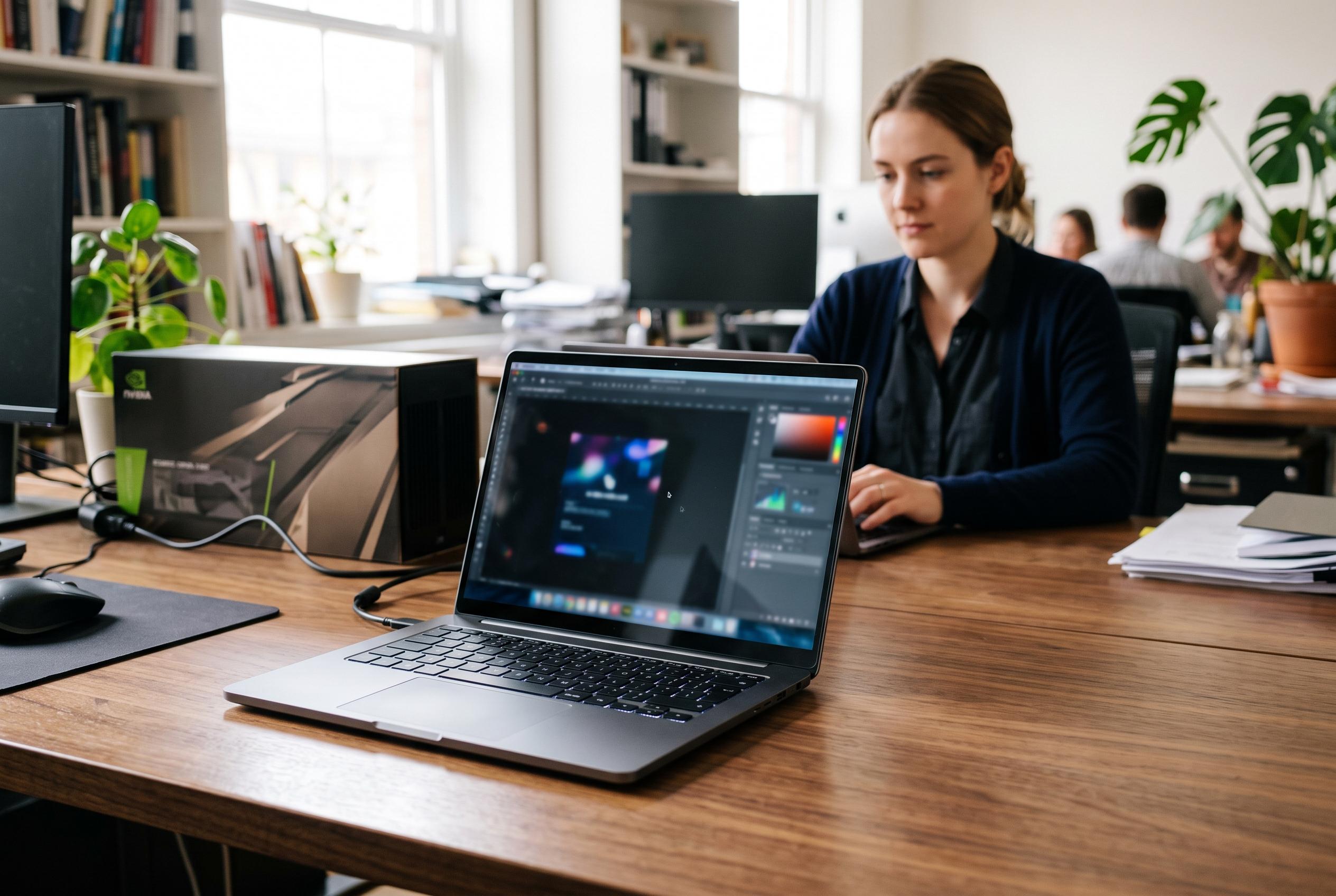

Microsoft’s premium Surface Laptop Ultra pairs a touchscreen, Nvidia graphics and up to 128GB of memory in a direct challenge to Apple’s MacBook Pro, but ecosystem lock-in and weight could blunt its appeal.
Microsoft’s new Surface Laptop Ultra is shaping up as a direct challenge to Apple’s high-end MacBook Pro line, with the most obvious distinction being a touchscreen on a premium Windows machine that also brings Nvidia graphics into the mix. According to Microsoft, the laptop starts at $2,599.99, with pre-orders open ahead of an October 16 release, and it is aimed at users who want workstation-class performance in a portable design. The company says the device uses a 15-inch PixelSense Ultra display with a 3:2 ratio and up to 2,000 nits of peak HDR brightness.
That display is part of a broader specification set that places the Surface firmly in the MacBook Pro class. Microsoft’s own product page describes an 18-core or 20-core RTX Spark N1X platform, unified memory of up to 128GB, and a 120Hz panel, while Tom’s Hardware notes that the machine is built around Nvidia’s Blackwell graphics architecture. Windows Central, which has reviewed the device, says the design is polished and the large haptic touchpad reinforces the premium positioning, although the cooling system can become audible under heavy load.
For Apple users, the question is not only whether the Surface is faster or more flexible, but whether it can replace the software and ecosystem advantages that come with macOS. The MacBook Pro still offers features such as AirDrop, Universal Clipboard and Sidecar, which make it easier to move files and extend work across Apple devices. It also retains a strong position for video work, especially where Apple’s ProRes workflow matters. Microsoft’s machine, by contrast, runs Windows on Arm, so users would need to confirm support for specialist plug-ins, older utilities and external hardware before considering a switch.
The Surface’s case for switching becomes stronger for users who depend on Nvidia’s CUDA ecosystem. That is a specific advantage Apple’s current laptop line does not match. Tom’s Guide says Microsoft is pitching the machine as its most capable Surface yet, with a broad port selection that includes HDMI, USB-A, USB-C, an SD card reader and a headphone jack. Microsoft also emphasises battery life and a professional-grade design, although, as with any vendor claim, the figures depend heavily on workload and brightness settings.
There are practical trade-offs as well. Windows Central and Tom’s Hardware both describe a large, premium chassis, but the Surface is still heavier than Apple’s 14-inch MacBook Pro and closer to the 16-inch model in weight. That matters for anyone who carries a laptop daily. Serviceability is one area where Microsoft may have an advantage: the company’s product material highlights a removable SSD and repair guidance, which may appeal to buyers who value upgrade or replacement options over a sealed design.
Pricing also complicates the decision. At the entry level, Microsoft’s new model undercuts some higher-spec MacBook Pro configurations only narrowly, while Apple still offers the lower-priced 14-inch MacBook Pro with a standard M5 chip for users who do not need the Pro or Max tiers. For buyers already inside Apple’s ecosystem, that makes the Surface harder to justify unless touch input or Nvidia-specific workflows are genuinely important. And with reports suggesting Apple may eventually move to a thinner MacBook Pro with an OLED display, some buyers may prefer to wait rather than switch now.
Disclaimer: This content is intended for informational purposes only. Readers are advised to exercise their own judgement, conduct due diligence, or consult a qualified expert before acting on any information provided.