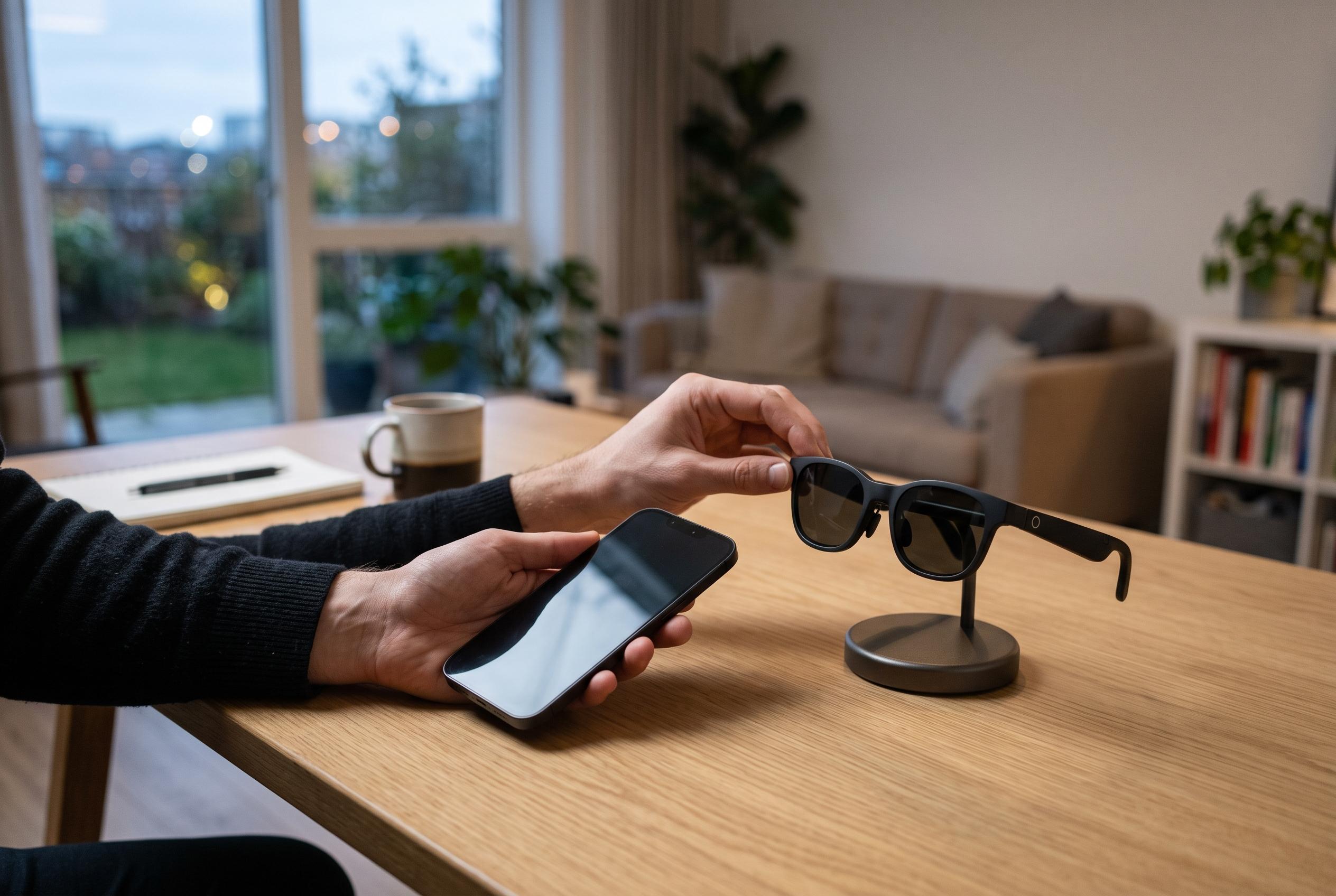

New hardware devices like the Light Phone III and Meta’s AI glasses are challenging traditional gadgets by emphasising simplicity and privacy, aiming to curb compulsive device use amid growing concerns over attention capture.
Arthur Brooks’s rule of thumb is brutally simple: if you cannot leave your phone alone for an hour without reaching for it more than once every five minutes, the device is already in control. The most interesting response from the gadget industry is not better software, but hardware designed to sit outside that feedback loop. Among the newest options, the strongest case is still the Light Phone III, a minimalist handset from the Brooklyn-based company Light that is intended to do as little as possible while still covering calls, texts, navigation and photography. According to the company, it uses a Qualcomm SM4450 chip, 6 GB of RAM and a monochrome AMOLED screen, and it was launched in early 2025 at $599.
That makes the Light Phone III the clearest fit for anyone trying to reduce compulsive checking rather than merely manage it. Light has long framed its products around the idea that a phone should be used sparingly, and the third-generation model keeps that philosophy intact while offering enough performance to feel polished rather than crude. The trade-off is obvious: users will lose the apps and visual clutter that have become habit forming, but that is also the point. In practice, it is less a secondary device than a deliberate downgrade.
Meta’s new Ray-Ban Meta Audio glasses occupy a different part of the same market. Announced at Meta Connect 2026, they remove the camera from the company’s earlier smart glasses and focus on calls, personal listening and Meta AI interactions. Meta says the glasses deliver up to 12 hours of battery life, are available in Clubmaster and Burbank styles, and can be pre-ordered at $349 in the United States, with shipping due on 13 October. The company is also marketing them as its largest expansion of AI glasses so far, with 23 colour and lens combinations across the two new frames.
That camera-free approach is meant to ease privacy concerns, but it does not remove the broader problem of attention capture. The glasses still support voice-activated Meta AI, touch controls and built-in microphones and speakers, which means the user remains within the same assistant-led ecosystem, only with the phone pushed further into the background. The design is also lighter than previous models, at 43 grams, but the reduced feature set has prompted questions about value, given that earlier Ray-Ban Meta versions offered more for a higher price.
For meetings, transcription and other situations where the phone should stay out of sight, the Plaud NotePin offers a more disciplined option. Its appeal is the physical control: rather than an always-listening device, it uses a tactile button, haptic feedback and a small indicator light so the user can decide exactly when recording begins. The advantage is practical as much as psychological. A transcript linked to the original audio can help settle disputes over deadlines or commitments, but Plaud’s subscription model means the device is most sensible for people who will use it often enough to justify the ongoing cost.
Meta’s Muse Charm is the least convincing of the group for anyone trying to cut screen time. The company has positioned it as a dedicated companion for its assistant, but even Meta’s own chief technology officer has described it as an early version rather than the centre of the strategy. It was built in roughly nine months and is due to go on sale by December, according to the company, but it still depends on a phone for setup and is aimed mainly at users already deep into Meta’s assistant ecosystem. For most people, the better discipline remains the oldest one: keep the phone in the drawer, strip back notifications and treat the device as a tool rather than a companion.
Disclaimer: This content is intended for informational purposes only. Readers are advised to exercise their own judgement, conduct due diligence, or consult a qualified expert before acting on any information provided.