
MSI’s Prestige 16 AI+ enters a competitive market with a focus on AI-powered productivity, boasting a lightweight design, vivid OLED display, and powerful specs. However, compromises in build quality, reflection-prone screen, and camera performance dampen its premium appeal.
MSI’s Prestige 16 AI+ arrives in a crowded class of 16-inch laptops that promise serious work power without the bulk of a desktop replacement. According to La Razón’s hands-on review, this model pairs Intel’s latest Panther Lake platform with a chassis that keeps weight to 1.59 kg, making it unusually easy to carry for a machine with this much screen and processing power. MSI itself positions the C3MX as a productivity-focused OLED notebook with a 50 TOPS neural processing unit and modern connectivity.
That lightness, however, comes with compromises. La Razón says the magnesium-aluminium shell feels thinner and less convincing than the asking price suggests, with visible flex in the deck and lid and a plastic screen surround that undermines the premium brief. The same review notes that the design is understated to the point of anonymity, even if the overall thickness is impressively slim for a 16-inch computer.
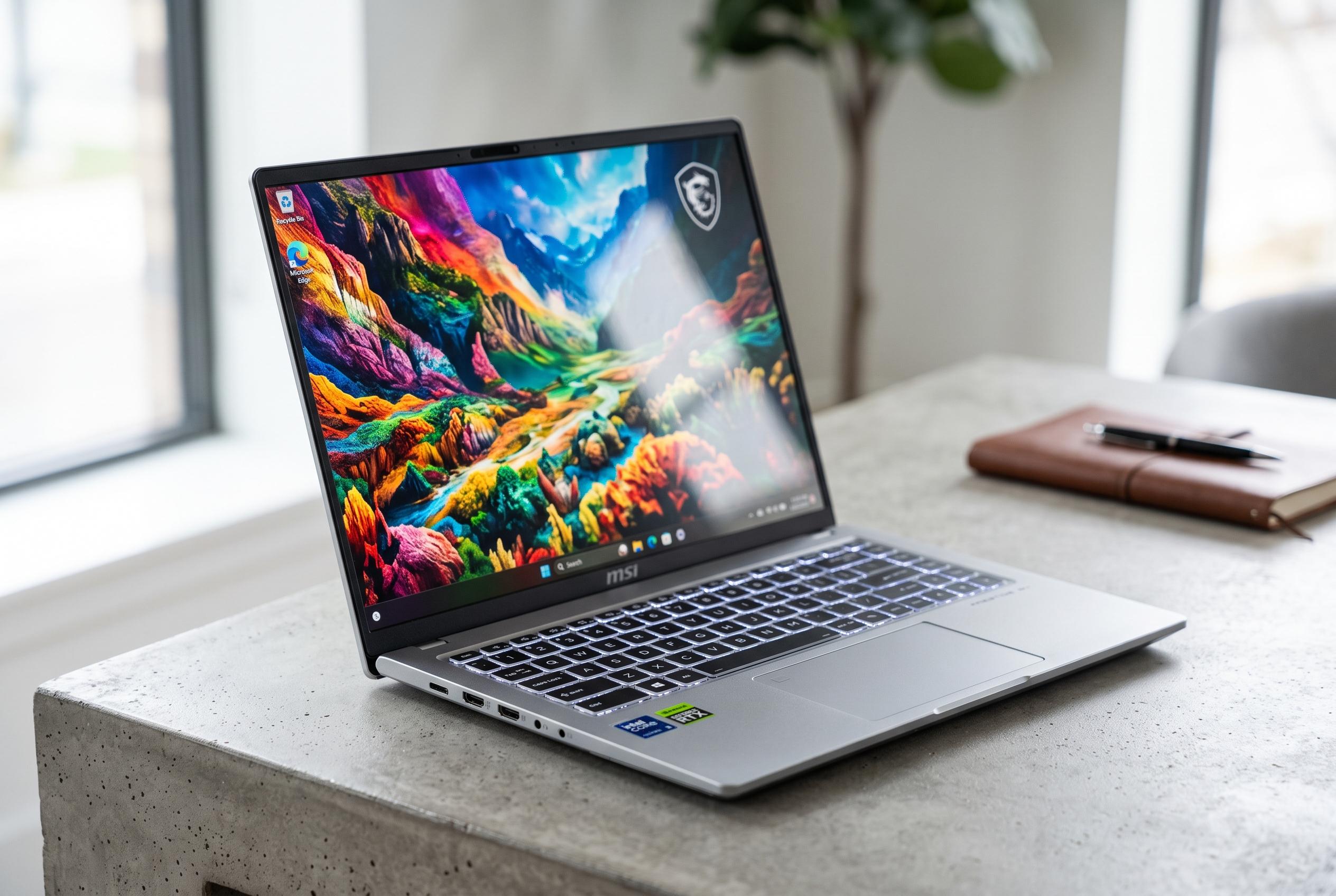
The display is the Prestige’s clearest selling point. La Razón describes the 16-inch 2.8K OLED panel as vivid, colour-rich and ideally suited to long documents and creative work thanks to its 16:10 aspect ratio and variable refresh rate up to 120 Hz. MSI’s product information backs up the review’s praise, while also underscoring the machine’s business-focused positioning. The catch is the glossy finish: both La Razón and Tom’s Guide say reflections are a real drawback, especially away from controlled indoor lighting.
Input quality is more mixed but still largely positive. La Razón praises the keyboard for its unusually deep travel and comfortable, quiet feel, and says the omission of a number pad helps keep the typing position centred. The touchpad is large and smooth, but the physical click mechanism is less refined than the haptic systems now appearing on rival premium laptops. Tom’s Guide’s review of a related Prestige 16 AI Evo also pointed to the glossy screen as the main usability flaw rather than the core controls.
Port selection is adequate rather than generous. La Razón highlights two USB-A ports, HDMI 2.1, dual Thunderbolt 4 connections and a 3.5 mm headset jack, but criticises the lack of SD card support and Ethernet, two omissions that will matter to photographers, editors and office users alike. MSI says both Thunderbolt ports support Power Delivery, so charging can be done from either side.
Inside, the Prestige 16 AI+ is built for speed. La Razón’s review model uses Intel’s Core Ultra X9 388H, 32 GB of LPDDR5x memory and a 2 TB PCIe Gen4 SSD, and the review says that combination is strong enough to handle demanding 4K video work and other heavy creative tasks with ease. MSI’s own product page lists the C3MX variant with Intel’s Core Ultra 7 355 and a 50 TOPS NPU, showing that the line spans multiple configurations. Either way, the broader picture is the same: this is a thin laptop aimed at AI-era productivity, not gaming-first graphics muscle.
Thermals and battery life show the limits of that design approach. La Razón says the machine can become uncomfortably warm under sustained load and may throttle during long exports, even though it is quiet in lighter work. Battery life of 7 to 8 hours in mixed use is respectable, but it trails the best ARM-based rivals, and a 65-watt charger feels a little undersized for a laptop at this level. Other reviews of MSI’s Prestige line have found stronger endurance in different configurations, but also noted that performance and portability often trade places in this category.
The weakest link is the webcam. La Razón says the 1080p camera produces soft, noisy video unless lighting is ideal, which is hard to excuse in a premium business laptop in 2026. On the plus side, Windows Hello facial recognition is fast and there is a physical shutter for privacy. Taken as a whole, the Prestige 16 AI+ looks like a machine that gets the big things right: speed, screen quality and portability. But at this price, the missing card reader, the glossy panel and the mediocre camera keep it from feeling fully polished.
Disclaimer: This content is intended for informational purposes only. Readers are advised to exercise their own judgement, conduct due diligence, or consult a qualified expert before acting on any information provided.