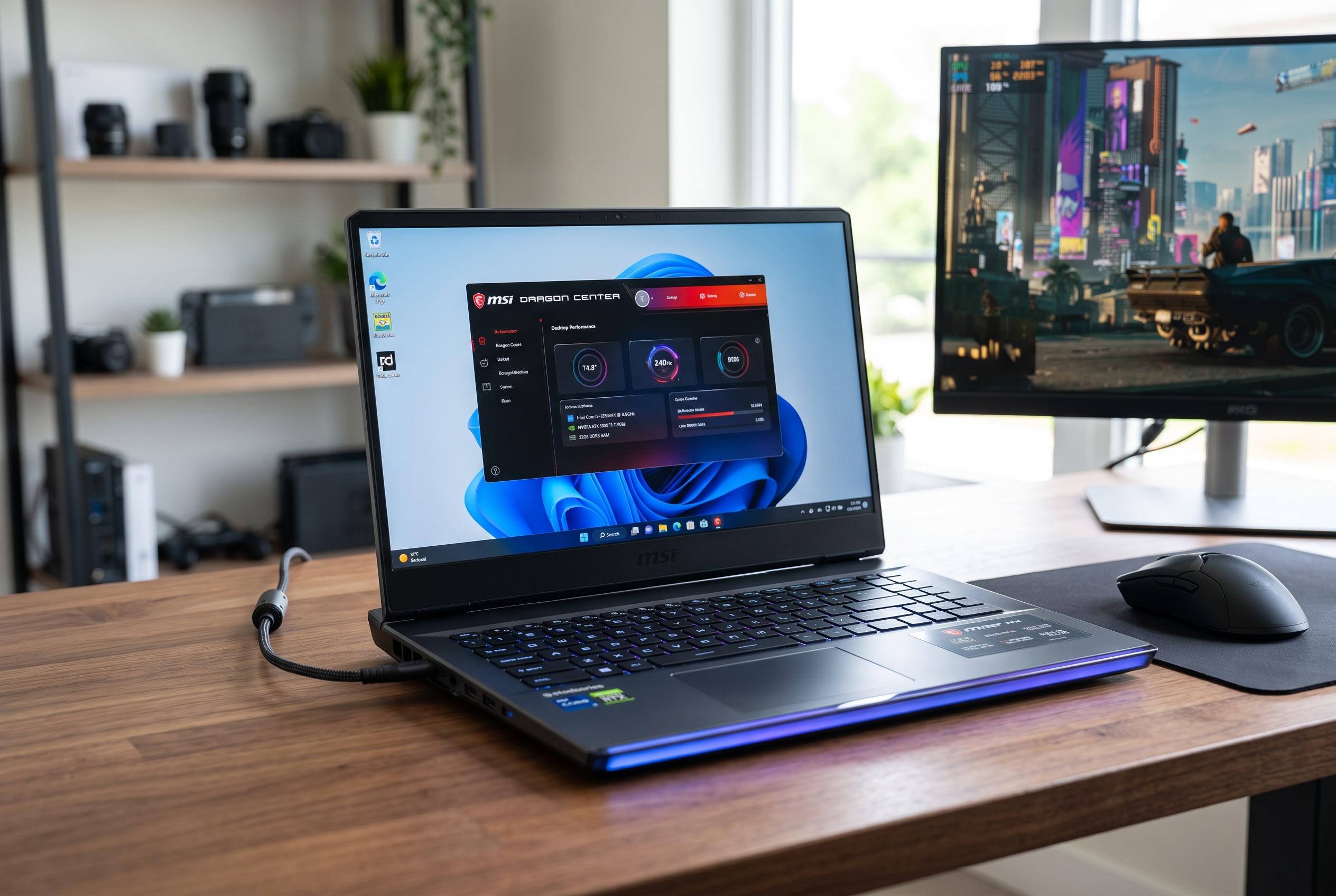

The MSI Raider GE67HX, launched in 2022, remains a top-tier gaming laptop in 2026 thanks to its desktop-class CPU, high-powered GPU, and upgradable design, challenging newer models on performance and longevity.
The MSI Raider GE67HX remains an unusual case in the gaming-laptop market: a 2022 machine whose design choices still give it real relevance in 2026. The reason is not subtle. MSI built it around Intel’s Alder Lake-HX platform, which used a desktop-class die in a portable chassis, and paired it with a high-power Nvidia GPU and a 240Hz OLED display. That combination gives the laptop a level of outright performance and display quality that still compares well with many newer mid-range systems. According to RTINGS.com, the GE67 HX also stands out for its premium panel, connectivity and overall positioning as a high-end gaming model.
The processor is the core of its appeal. The Core i7-12800HX brought 16 cores and 24 threads to a 15.6-inch notebook, with power limits far above typical mobile chips of its era. Notebookcheck’s testing showed the chip delivering strong multi-core results and, in some workloads, surpassing desktop processors that would normally be expected to pull ahead in a laptop comparison. That matters in 2026 because CPU-heavy games, streaming, editing and code compilation still run well on this platform, even if newer chips are more efficient.
The graphics configuration is equally important. The RTX 3070 Ti in the GE67HX is run at a full 150 watts, which helps it perform above many other laptops carrying the same badge. In practice, that means it can still handle modern games smoothly at 1080p and often at 1440p, especially with DLSS enabled. The 12UHS version with an RTX 3080 Ti goes further, but the 12UGS model already offers performance that remains credible by current standards. The trade-off is that the machine lacks newer features such as frame generation, which gives current RTX 40- and 50-series laptops an edge in the heaviest titles.
The display is one of the strongest reasons to consider the machine at all. RTINGS.com notes the 240Hz QHD OLED panel, along with full DCI-P3 colour coverage, though it does not support variable refresh rate. That makes it excellent for gaming and general use, but less suitable for buyers who want adaptive sync or a matte screen. The panel’s strengths are obvious in motion and contrast, but ageing OLED concerns remain relevant. Any used unit should be checked carefully for burn-in, especially around static interface elements such as taskbars and HUDs.
Cooling is competent, but the MSI is not a quiet laptop. Notebookcheck’s testing found the chassis running relatively cool at the keyboard and palm rest under load, which suggests the thermal design is doing its job. The cost is fan noise and power draw. Light use is manageable, but gaming loads push the system into a noise range that most users will only tolerate with headphones. Tom’s Guide’s coverage of MSI’s later Raider 16 Max HX line reflects the same basic design philosophy: these are large machines built to make room for high-performance parts, not to maximise portability or silence.
Battery life is respectable for the class, but this is still very much a wall-powered machine. The 99.9Wh battery helps, yet the 330W adapter is part of the experience and part of the burden. That charger is heavy, and the system does not accept USB-C charging in the way many thinner laptops do. For buyers, that means travel convenience is limited. For sellers, it also means the original power brick matters more than usual, because a missing charger can affect resale value.
There is, however, one area where the GE67HX has aged especially well: upgradability. Dual DDR5 SODIMM slots and two PCIe 4.0 M.2 slots make it straightforward to increase memory and storage rather than replace the whole machine. That gives the model a longevity advantage over many thin-and-light competitors with soldered components. It is one reason the GE67HX still makes sense on the used market. For buyers who want strong gaming performance, a premium OLED panel and a machine that can be refreshed over time, it remains a practical choice. For anyone who wants quiet operation, long untethered use or the newest graphics features, newer hardware is the better fit.
Disclaimer: This content is intended for informational purposes only. Readers are advised to exercise their own judgement, conduct due diligence, or consult a qualified expert before acting on any information provided.