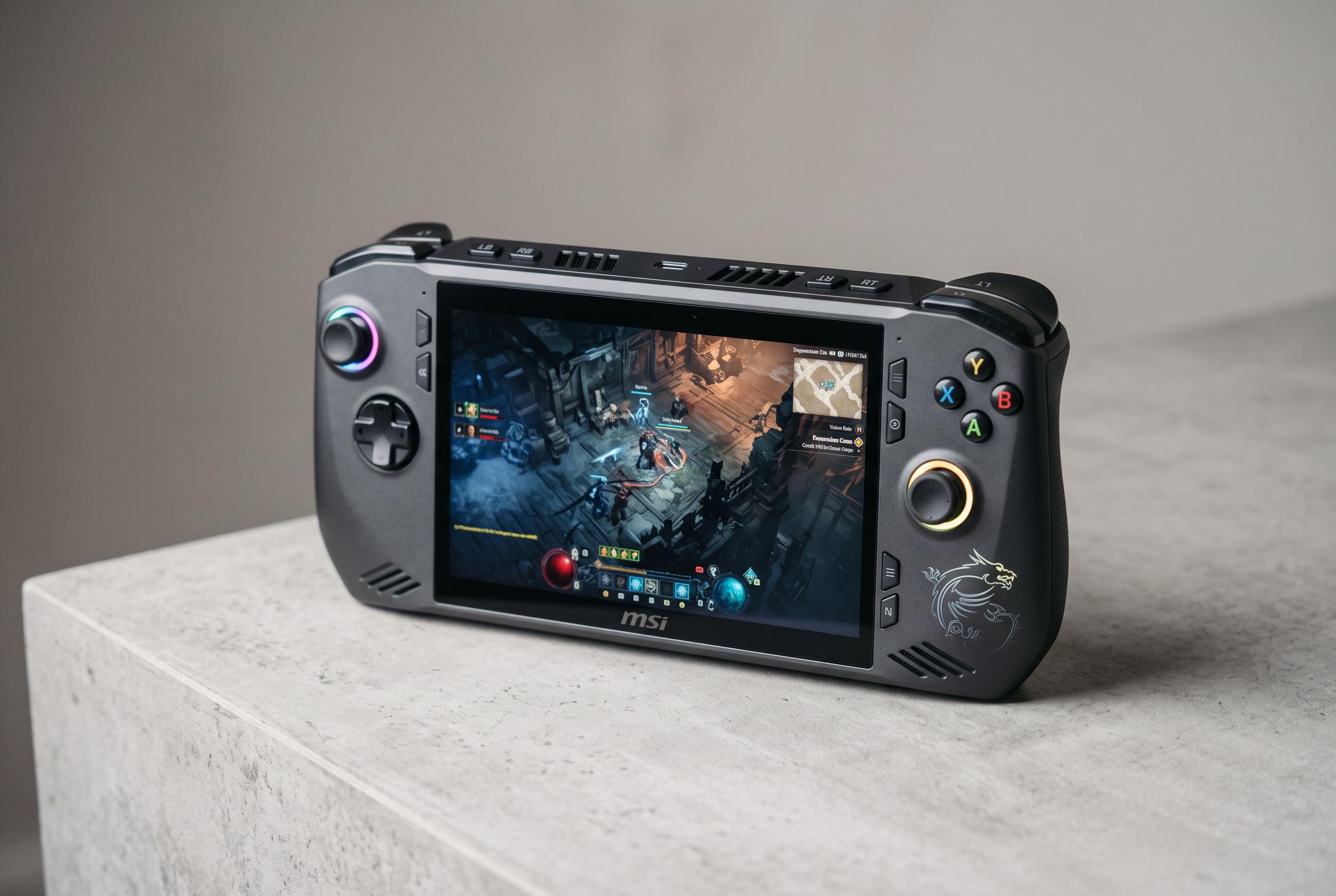

The MSI Claw 8 EX AI+ emerges as a notable breakthrough in Windows handheld gaming, offering top-tier performance and battery life, yet its high price and ongoing glitches position it primarily for enthusiasts willing to accept rough edges for speed and stamina.
MSI’s Claw 8 EX AI+ looks like a turning point for Windows handheld gaming, but it arrives as an expensive and imperfect one. The Verge says the device is the first portable PC the reviewer has consistently reached for, largely because Intel’s newer chip gives it a level of speed and stability that earlier handhelds have lacked. According to the review, it combines strong gaming performance with the sort of sleep-and-resume behaviour that Windows handhelds have long struggled to deliver. Yet the same assessment argues that the machine’s price, at about $1,800, puts it firmly in enthusiast territory rather than mainstream use.
The appeal starts with the hardware. The Verge praises the ergonomics, saying the larger grips make the 785g device feel more comfortable than some lighter rivals during extended play. It also prefers the 8-inch, 1,920 x 1,200 display to the smaller panels used in some competing models, even while noting that the glossy surface can be distracting in bright conditions. Windows Central similarly highlights the redesigned shape, Hall-effect controls and 120Hz variable refresh panel, while stressing the 80Wh battery that helps set the Claw apart from many competitors.
Performance is the Claw 8 EX AI+’s main argument. The Verge reports frame-rate gains of roughly 40% over the Xbox Ally X in some 1080p tests, with the new Intel platform making demanding games look sharper and run more smoothly than on earlier handhelds. TechSpot and Notebookcheck reach the same broad conclusion, describing the machine as a class-leading performer and, in Notebookcheck’s case, the fastest gaming handheld it has tested. Tom’s Hardware also says the Claw’s performance stands out clearly, although it frames the device as one for buyers who value top-end results over affordability.
Battery life appears to be the other major strength. The Verge says Intel’s chip can deliver better endurance than competing handhelds without sacrificing as much frame rate, and that lighter games can run for far longer when the display is tuned sensibly. In one example, it says a simple 2D title can stretch to around 12 hours after switching to a lower refresh rate and endurance mode. That said, the review also warns that performance can collapse once battery charge falls too low, and that full speed does not always return immediately after plugging back in.
Even so, the Claw 8 EX AI+ is not yet a clean recommendation. The Verge says Intel’s drivers still cause freezes, graphical glitches and occasional launch problems in some games, while Windows itself remains awkward on a device designed to be picked up and played. Tom’s Hardware and TechSpot both point to the same trade-off: this is a major step forward for handheld PCs, but one aimed at enthusiasts who can accept premium pricing and some rough edges. For everyone else, the consensus is clear enough: wait for the ecosystem, and perhaps the price, to catch up.
Disclaimer: This content is intended for informational purposes only. Readers are advised to exercise their own judgement, conduct due diligence, or consult a qualified expert before acting on any information provided.