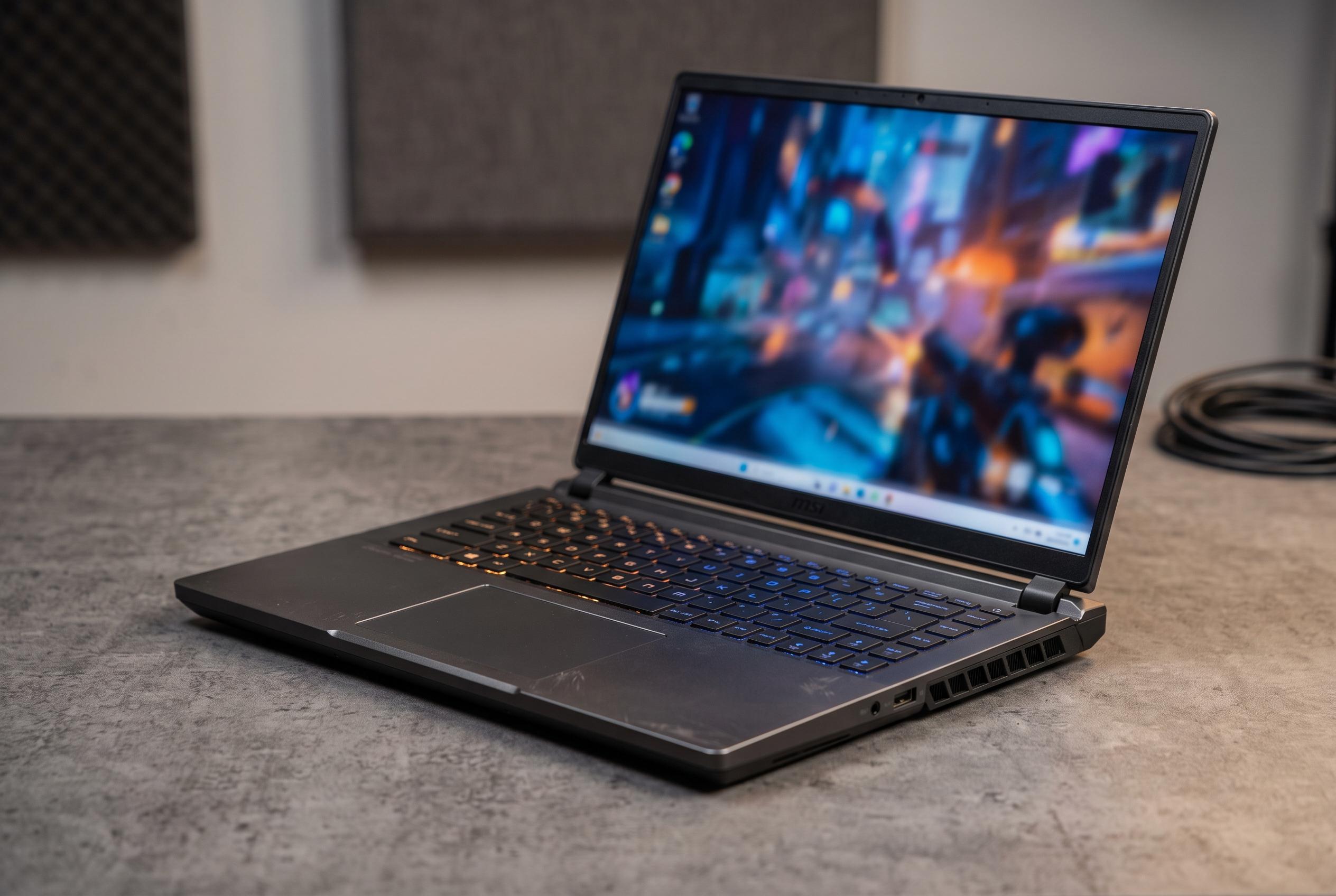

MSI’s Crosshair 16 HX balances powerful gaming performance and portability, but at the cost of battery endurance and fan noise, targeting users who prioritise display quality and gaming prowess over battery life.
MSI’s Crosshair 16 HX sits in the awkward middle ground that defines much of the current gaming-laptop market: powerful enough to replace a desktop for many users, but still constrained by heat, battery life and price. SlashGear’s review frames it as a machine aimed at players who want to take a full PC setup on the move without sacrificing the flexibility of Windows for work, editing or emulation. In that sense, it is less a portable console and more a transportable gaming rig.
Across recent reviews, the core specification is consistent: a 16-inch 2.5K-class panel with a 240Hz refresh rate, an Intel Core i7-14650HX processor, Nvidia GeForce RTX 5070 graphics, 16GB of memory and up to a 1TB SSD. MSI’s own product pages for the Crosshair A16 HX E8W also point to an AMD-based version with Ryzen 9 8940HX and the same general display formula, suggesting the line is being positioned as a broad-performance range rather than a single fixed model. Reviewers have generally praised the screen for its sharp resolution, fast refresh and wide colour coverage, with brightness levels landing around the high-400-nit mark.
Performance is the main reason to consider it. Tom’s Guide said the laptop handled demanding games and productivity workloads with ease, while Creative Bloq found it strong in rendering and AI-related tasks. That said, the praise is qualified. The Intel chip in particular is now an older HX-class part, and while it remains capable, it is not the newest silicon in the segment. PC Gamer’s separate review of a lower-tier RTX 4060 version made a related point: the display and chassis can feel better suited to higher-end graphics than the entry GPU can sustain at native resolution.
The drawbacks are familiar for this category, but they matter. Battery life is poor in every review, with results of roughly two and a half hours. Fan noise is another recurring issue, even where cooling itself is effective. Creative Bloq also noted the absence of USB4 or Thunderbolt on its test model, while other reviewers mentioned the sort of software clutter that often accompanies gaming laptops. The result is a machine that looks strongest when plugged in, on a desk, doing exactly what a desktop replacement should do.
For buyers, the Crosshair 16 HX appears best suited to those who value display quality, strong gaming performance and a fairly portable 16-inch format above silence, endurance and the latest platform features. It is not the most balanced option, but it is a serious one. For users willing to accept the usual compromises, it remains an appealing example of how far mainstream gaming laptops can still go.
Disclaimer: This content is intended for informational purposes only. Readers are advised to exercise their own judgement, conduct due diligence, or consult a qualified expert before acting on any information provided.