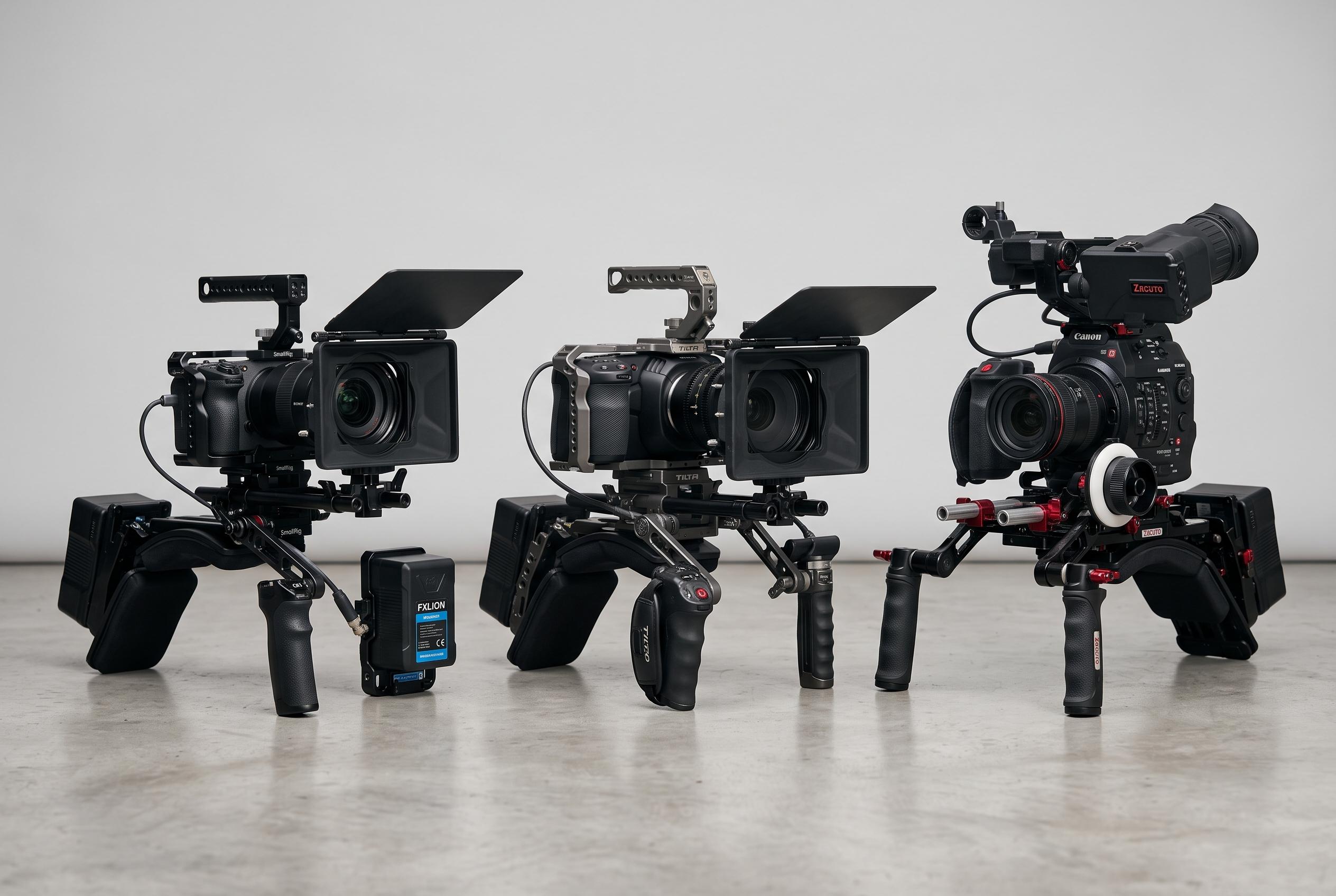

Recent field tests reveal that mid-range modular shoulder rigs like SmallRig and Tilta are transforming the endurance and stability of handheld documentary filming, while professional options such as Zacuto Recoil are redefining balance for heavier cinema setups.
For documentary filmmakers, the best shoulder rig is the one that turns a heavy camera into a workable tool for long, mobile shooting days. The most useful rigs do three things well: they place weight on the shoulder rather than the arms, they stay stable with a fully built camera, and they leave enough room for accessories such as monitors, follow-focus units and batteries. Across the field-tested rigs in the lead article, the strongest options ranged from a low-cost starter kit to a modular professional system, with the SmallRig Classic emerging as the most balanced choice for mirrorless work and the Tilta rig standing out for more demanding cinema setups.
That conclusion is consistent with other recent shoulder-rig roundups. A documentary-focused guide from Kidd of Speed also stresses that the best rigs must balance cleanly on the shoulder, support additional accessories and remain comfortable over long shoots. A broader comparison from MiSec reaches the same practical point: shoulder rigs are less about glamour than about reducing fatigue and preserving usable footage during extended handheld work. In other words, the value of a rig is measured less by its badge than by whether it lets a shooter work for hours without the image falling apart.
For heavier cinema bodies, the priorities change again. Canon Rumors, in separate guides on the Canon Cinema EOS C300S and C500S, highlights the Zacuto Recoil as a leading professional option because it places the camera directly over the shoulder for better balance. That approach reflects a long-standing principle in shoulder-rig design: the closer the centre of gravity is to the body, the less strain the operator carries and the steadier the image becomes. Canon Rumors also points to more affordable modular alternatives for users who need flexibility without the cost of a fully premium system.
The lead article’s product testing reinforces that pattern. Budget rigs such as the NEEWER and basic SmallRig kit can work well for mirrorless cameras and lighter lenses, but comfort drops as weight and shoot length increase. Mid-range rigs are where many documentary filmmakers are likely to land, because they offer proper 15 mm rod support, enough mounting points for real-world use and quick-release systems that speed up swaps between tripod and shoulder. For crews moving between interview, run-and-gun and event coverage, that workflow efficiency can matter as much as raw load capacity.
The practical takeaway is simple. If the camera package is light, a compact rig with decent padding and standard mounting points is usually enough. If the build includes a larger body, matte box, monitor and battery plate, a more robust modular rig is a better investment. The common thread across all of the sources is that a shoulder rig is not just an accessory. It is a support system that directly affects stamina, framing stability and the amount of time a filmmaker can stay in the field.
Disclaimer: This content is intended for informational purposes only. Readers are advised to exercise their own judgement, conduct due diligence, or consult a qualified expert before acting on any information provided.