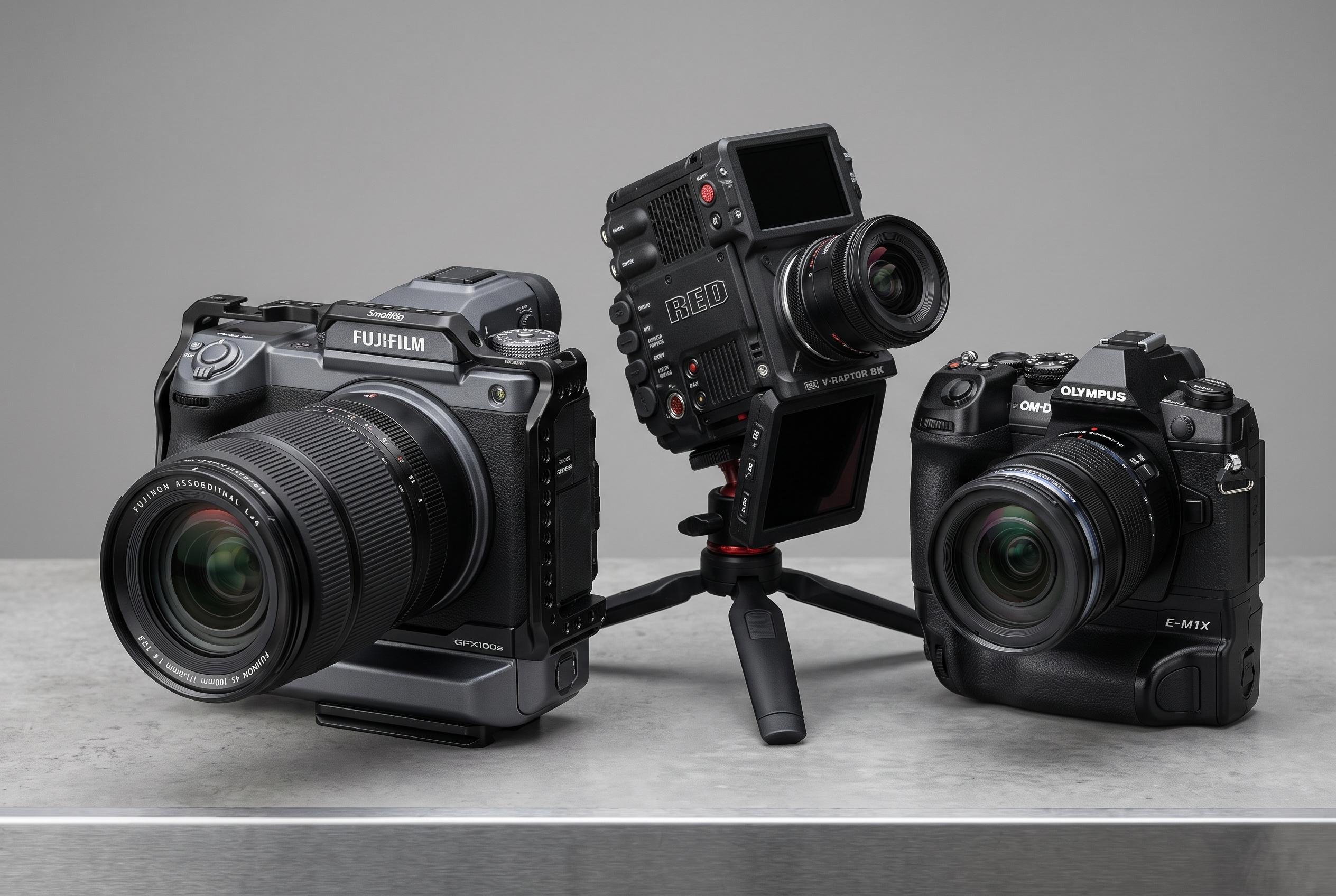

Advancements in rugged and weather-sealed camera gear, from action cams to hybrid mirrorless bodies, are transforming filmmaking in extreme conditions, offering greater reliability and versatility for remote and harsh environments.
Filmmakers working in rain, snow, dust and freezing temperatures need more than a capable sensor. They need a body that seals properly, batteries that do not collapse in the cold and controls that remain usable when hands are wet or gloved. In that context, the DJI Osmo Action 5 Pro stands out as the most capable all-round choice for hostile conditions, while larger mirrorless cameras such as the Panasonic LUMIX GH5M2 and Nikon Z6 III remain the stronger options for projects that demand interchangeable lenses and a more conventional production workflow.
The Action 5 Pro is the most compelling option when mobility matters. Its IP68 protection, 20-metre waterproof rating and claimed endurance at -20C make it unusually well suited to expeditions, while its 4K recording at 120 frames per second gives editors room for slow motion and stabilised action sequences. The camera’s dual touchscreens, built-in storage and strong cold-weather battery performance also make it easier to operate in situations where changing gear quickly is difficult.
For filmmakers who need a weather-sealed interchangeable-lens body, the Panasonic GH5M2 remains highly practical. Panasonic’s magnesium alloy design, splash and dust resistance and freezeproof rating down to -10C make it a sensible choice for field work, especially because it can record without a time limit. That combination is useful for documentary crews, live events and any shoot where stopping to manage clip length is a liability. Digital Camera World’s 2026 filmmaking guide also continues to place Panasonic bodies among the strongest options for video-focused users, reflecting the brand’s long-standing position in this segment.
The Nikon Z6 III pushes further into premium territory. It offers internal 6K RAW recording, 4K at 120 frames per second and an electronic viewfinder bright enough to remain usable in hard sunlight, which is a genuine advantage on desert, snow and high-altitude shoots. TechRadar has also highlighted Nikon’s newer ZR cinema camera, which is built around much the same 24-megapixel full-frame platform and adds compact, weather-sealed handling, but the Z6 III remains the more established stills-and-video hybrid for production crews that need one body to do both jobs.
Low-light performance remains a deciding factor for expedition work, particularly for dawn, dusk and interior shots in remote locations. That is where the Sony Alpha 7S III continues to matter. Its 12.1-megapixel full-frame sensor is tuned for video and its high-ISO performance is still among the best in its class, even if its operating temperature range is less forgiving than the harsh-weather specialists. In practice, that means it is better protected by covers and careful battery management than by brute-force ruggedness.
The Insta360 X5 addresses a different problem. In unpredictable weather, the issue is often not only whether the camera survives, but whether it captures the right direction at the right time. A 360-degree camera records the whole scene, then lets the filmmaker reframe later. That makes it useful for storm chasing, solo travel work and action sequences where the subject’s movement is impossible to predict. The replaceable lenses are especially important in abrasive environments such as salt spray, sand and ice.
There is still a place for cheaper bodies if the budget is tight. The DJI Osmo Action 4 delivers much of the Action 5 Pro’s cold-weather and low-light performance at a lower cost, while the Sony Alpha 7 III remains a strong value full-frame option for outdoor video when conditions are challenging but not extreme. At the rugged end of the market, the PENTAX WG-8 is less about image quality than survival, but its waterproof, shockproof and dustproof build makes it a useful secondary camera when a main body would be too risky to expose.
The broader lesson is simple: harsh-weather filmmaking is not only about sealing and temperature ratings. It is about battery behaviour, lens choice, stabilisation and whether the camera can be operated quickly when conditions deteriorate. For many shooters, the best result will come from matching the camera to the environment rather than chasing the highest specification sheet. That is why the safest recommendation remains a tough action camera for the worst conditions, and a weather-sealed mirrorless body when image quality and lens flexibility matter most.
Disclaimer: This content is intended for informational purposes only. Readers are advised to exercise their own judgement, conduct due diligence, or consult a qualified expert before acting on any information provided.