
A comprehensive review of modern calibration tools reveals how both traditional discs and advanced hardware are helping enthusiasts achieve more accurate picture and sound in the evolving landscape of home theatre technology.
The best calibration discs and related tools for a home cinema are still the ones that solve a simple problem: they reduce guesswork. In a market now dominated by 4K and HDR displays, the old Blu-ray benchmark disc has been joined by colourimeters, reference charts and white-balance cards, each suited to a different stage of setup. The result is a broader toolkit for owners who want more accurate picture and sound without relying solely on factory presets or on-screen menus.
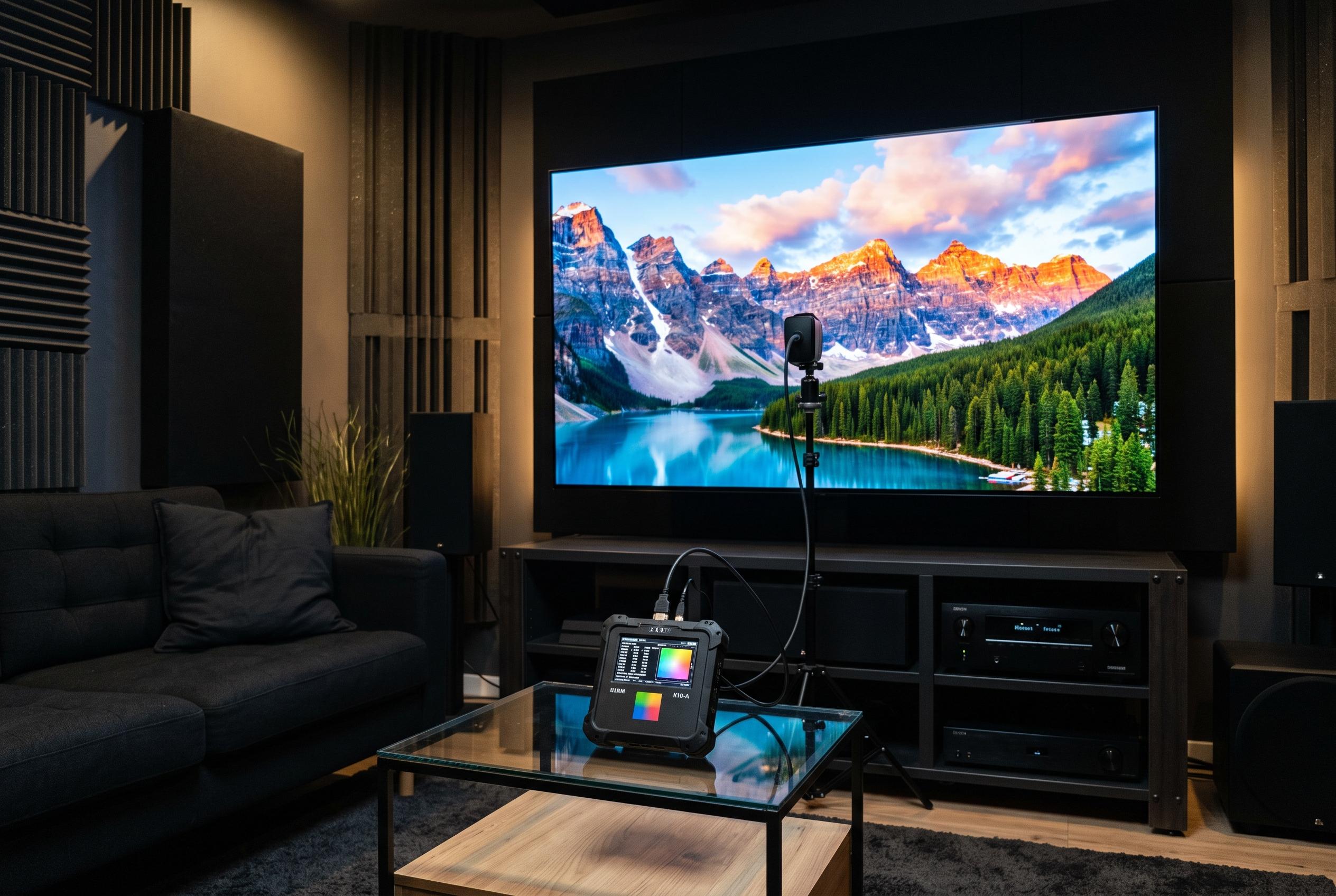
For display calibration, the practical dividing line is between discs that offer test patterns and hardware that measures the screen itself. Spears & Munsil’s Ultra HD Benchmark remains one of the most complete discs available, with patterns for clarity, motion, sharpness and colour alignment, plus demo material mastered in 8K HDR and audio tests in Dolby Atmos and DTS:X. By contrast, newer hardware such as Datacolor’s Spyder range and Calibrite’s colourimeters can profile a screen directly, which is often more precise than eye-balling a pattern on a disc.
Audio calibration has also become more specialised. SpatialCD’s Spatial Audio Calibration Toolkit is pitched as the first calibration disc designed specifically for Dolby Atmos systems, and it includes 160 lossless Dolby TrueHD tracks with visual cues and a printed guide. That matters because many home theatre owners now need to balance not just brightness and contrast, but speaker levels, channel timing and immersive audio placement as well.
The older benchmark discs still have a place, especially for owners who want a straightforward, player-based method. ProjectorCentral’s review of classic titles such as AVIA Guide to Home Theatre, Digital Video Essentials and Sound & Vision Home Theatre Tune-Up found that the newer discs were more suitable for modern flat-panel TVs and projectors, while AVIA was better suited to older CRT-era setups. That distinction still holds: discs remain useful, but the most effective ones are those built with current display technology in mind.
For users who want a more automated workflow, Ted’s LightSpace CMS Calibration Disk takes a different route by using the Blu-ray disc itself as the pattern source for profiling through LightSpace software. That approach removes the need for an external pattern generator and gives more advanced users access to detailed cube profiling. It is a reminder that calibration is no longer a single product category; it is now an ecosystem ranging from physical discs to software-driven measurement systems.
The best choice depends on how deep you want to go. A disc such as Spears & Munsil is ideal for a careful manual setup. A colourimeter is better if you want repeatable results across multiple displays. And if your focus is immersive sound, SpatialCD’s Atmos-focused toolkit fills a gap that general-purpose video discs do not address. In practice, the right calibration tool is the one that matches both your equipment and your patience.
Disclaimer: This content is intended for informational purposes only. Readers are advised to exercise their own judgement, conduct due diligence, or consult a qualified expert before acting on any information provided.