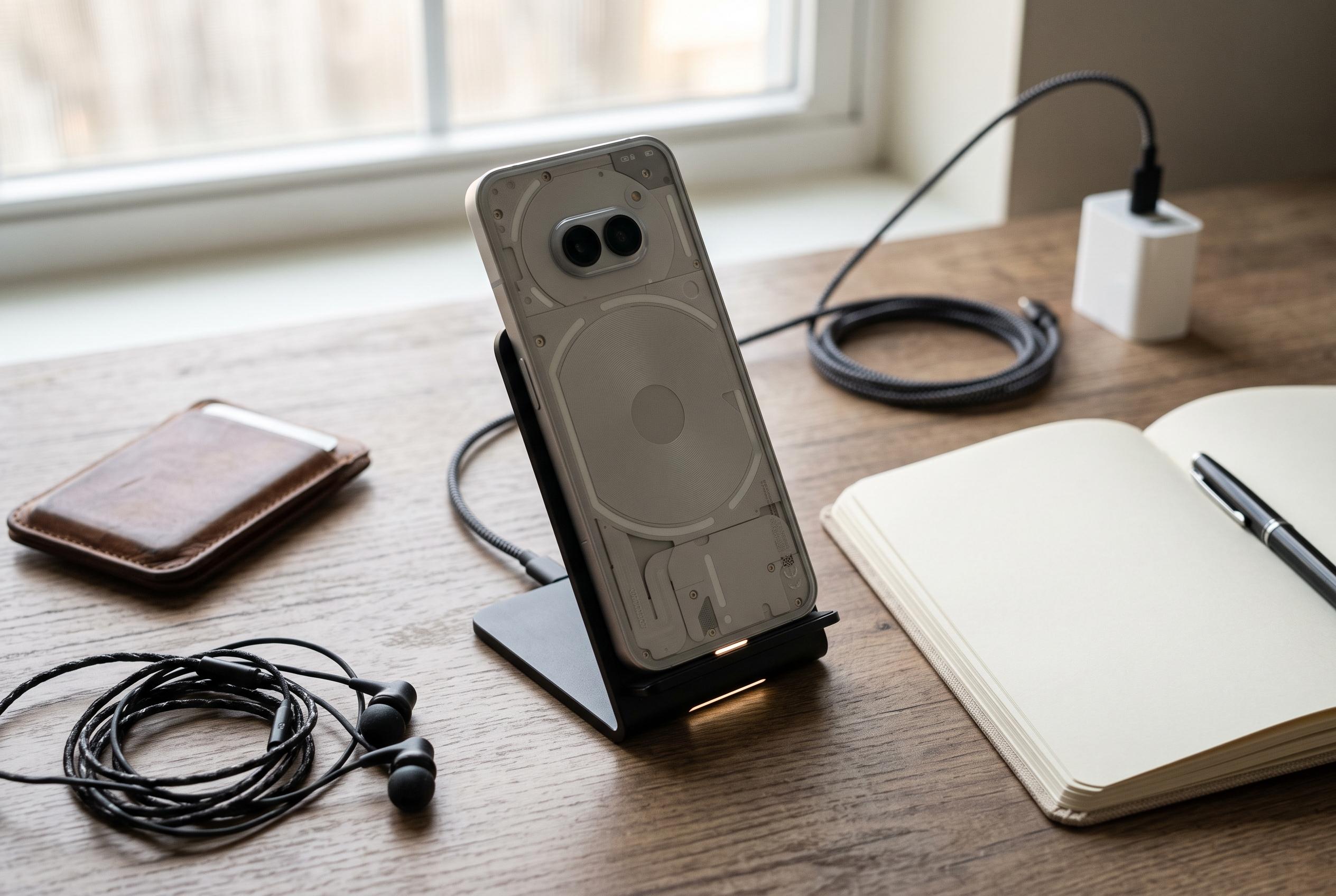

The Nothing Phone (4b) emerges as a refined budget option, balancing familiar design, impressive battery life, and advanced software features, though its camera capabilities and repairability remain modest due to its more conventional aesthetic.
Nothing’s latest budget handset is a more restrained follow-up to its earlier, more eccentric phones, but it still lands as a sensible option for buyers who want the brand’s software and design language without paying mid-range money. In Techgoondu’s review, the Phone (4b) is positioned as the company’s new value play, arriving after the absence of the CMF budget line this year and priced in Singapore at S$499.
The hardware specification is broadly competitive for the class. Reviewers cited a 6.77-inch OLED or AMOLED display with 120Hz refresh support, Qualcomm’s Snapdragon 6 Gen 4 chip, 8GB of memory and 128GB of storage, along with a 5,200mAh battery. The phone also carries IP64 protection, which means it is dust-tight and resistant to splashes rather than full submersion. PhoneArena and T3 both described it as a lower-cost model that keeps the essentials in place, even if some components are a step behind pricier rivals.
Design remains one of the more distinctive parts of the package, although the visual language is less adventurous than on earlier Nothing devices. The phone keeps the straight-edged frame and rounded display corners, while the rear now leans towards a cleaner, more conventional layout. Techgoondu noted that the camera housing, with its visible strip and compact shape, recalls current mainstream flagships more than the company’s earlier experimental approach. TechRadar also reported criticism from Fairphone that the rear screws suggest repairability without making it genuinely easy to open or service.
Software is still a major selling point. Android Central said Nothing is leaning heavily into a near-flagship experience at the interface level, with AI features such as voice transcription, translation tools and integrations with Google Gemini and ChatGPT. Nothing’s own Essential Space concept also remains part of that pitch, tying together screenshots, voice notes and reminders in a proprietary hub. The trade-off, as Techgoondu observed, is that much of that experience is locked into the Nothing ecosystem.
In day-to-day use, battery life appears to be the strongest reason to consider the device. Techgoondu measured more than 17 hours in a PCMark Work 3.0 battery test, and the phone’s sizeable cell should suit buyers who prioritise endurance over camera flexibility. Imaging is more mixed. The 50-megapixel main camera is described as solid for the price, while the 8-megapixel ultrawide lens shows softness and weaker low-light performance. That leaves the Phone (4b) as a straightforward recommendation for budget-conscious users who value stamina, software polish and design continuity more than photographic ambition.
Disclaimer: This content is intended for informational purposes only. Readers are advised to exercise their own judgement, conduct due diligence, or consult a qualified expert before acting on any information provided.