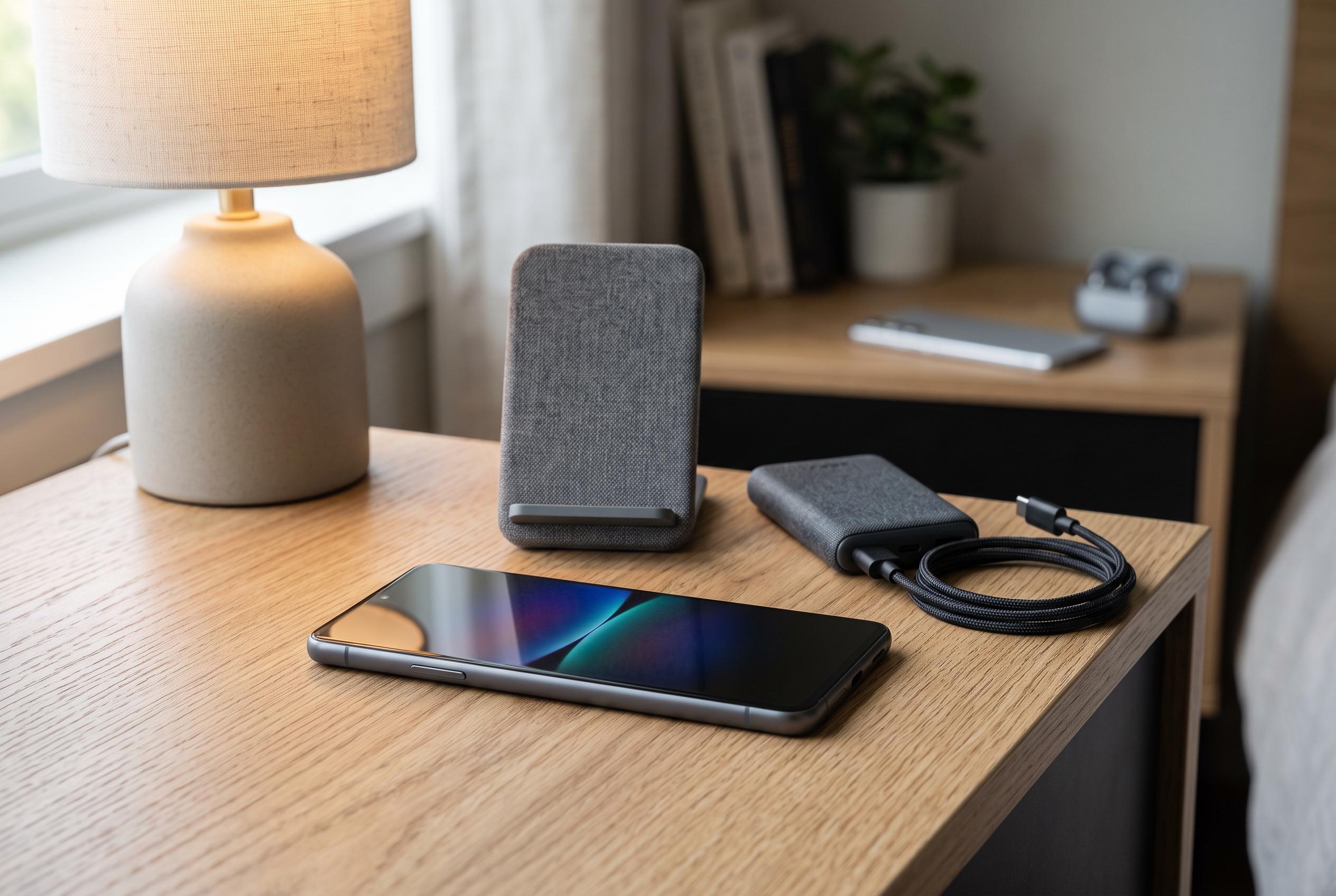

Nubia re-enters the French smartphone market with the Air Pro, a slim device offering a large AMOLED display and exceptional battery endurance at a mid-range price, but with compromises on performance and software support.
Nubia is attempting a return to the French smartphone market with a device that trades on one clear promise: ultra-thin hardware at a far lower price than the flagship slivers from Apple, Samsung and Motorola. The Nubia Air Pro sits at €449 in France, with a single configuration of 8GB of RAM and 512GB of storage, and is being sold through online retailers including Amazon and LDLC. That pricing places it much closer to mainstream mid-range phones than to the premium thin-phone segment it visually imitates.
At first glance, the strategy makes sense. The handset is extremely slim, with Phonandroid placing its thinnest point at around 6mm, while Notebookcheck measured it at 5.99mm. It is also relatively light at 172g, yet still includes materials such as aluminium framing, glass on the front and a polycarbonate rear panel. Nubia has also added IP68 protection, a horizontal rear camera island that spans the width of the phone, and a customisable side key. The retail package is unusually generous too, including a USB-C cable, a rigid protective case and a screen film already in the box.
The display is one of the Air Pro’s most convincing features. Nubia has fitted a 6.77-inch AMOLED panel with a 120Hz refresh rate, while Notebookcheck’s launch coverage described the screen as bright and listed a 144Hz specification. In either case, the panel is large and clearly designed for media consumption. The resolution is listed at 1224 x 2720 pixels, which is sharp enough for everyday use. Brightness is strong, with Nubia claiming up to 4,500 nits at peak in HDR conditions, and Phonandroid’s testing found the screen comfortable outdoors. Colour accuracy is more average, however, with a cool white point and a tendency towards over-saturated tones in the less restrained profile.
Internally, the Air Pro is not built to compete with premium slim phones on performance. Phonandroid tested a MediaTek Dimensity 7100, paired with 8GB of physical memory and 12GB of virtual RAM, and concluded that the device is not suited to demanding gaming, video editing or heavy photo work. That weakness is also reflected in the camera and video system. The main rear sensor is a 108MP unit, backed by a 2MP macro camera that adds little value, while the selfie camera is 32MP. The main camera can produce natural colours and decent dynamic range in good light, but focus speed and low-light consistency are only moderate. Video capture peaks at 2K at 30fps, although Phonandroid advised sticking to Full HD because stabilisation is absent and motion is unsettled.
Battery life is one area where the phone makes a more credible case for itself. Despite the slim frame, Nubia has fitted a 5,000mAh battery, and Phonandroid’s tests recorded 14 hours and 20 minutes of continuous use, which is ahead of the Samsung Galaxy S25 Edge and comfortably above the iPhone Air and Motorola Edge 70 in its comparison set. Charging is wired only, at up to 45W, but that is a practical trade-off if battery capacity is the priority. In testing, the phone reached just under half charge in 30 minutes and completed a full charge in under 75 minutes. Nubia’s MyOS 16 software, based on Android 16, adds several battery management tools, including charge limits and adaptive protection features.
That software layer is also where the phone’s ambitions become clearest. Nubia has leaned heavily into AI functions, context-aware widgets and themed assistants, alongside a sports mode that strips the interface down to selected apps and tools. Some of these ideas feel useful, while others are more decorative than essential. The bigger concern is long-term support: Nubia promises only two years of Android version updates and five years of security patches, which is modest against rivals in the same price band. That leaves the Air Pro in an awkward position. It is an attractive object with a big, bright screen and respectable endurance, but it is not especially fast, not especially refined in imaging, and not generous on software support. For buyers who want the look of a luxury thin phone without paying luxury money, it is interesting. For everyone else, more balanced mid-range alternatives are likely to make more sense.
Disclaimer: This content is intended for informational purposes only. Readers are advised to exercise their own judgement, conduct due diligence, or consult a qualified expert before acting on any information provided.