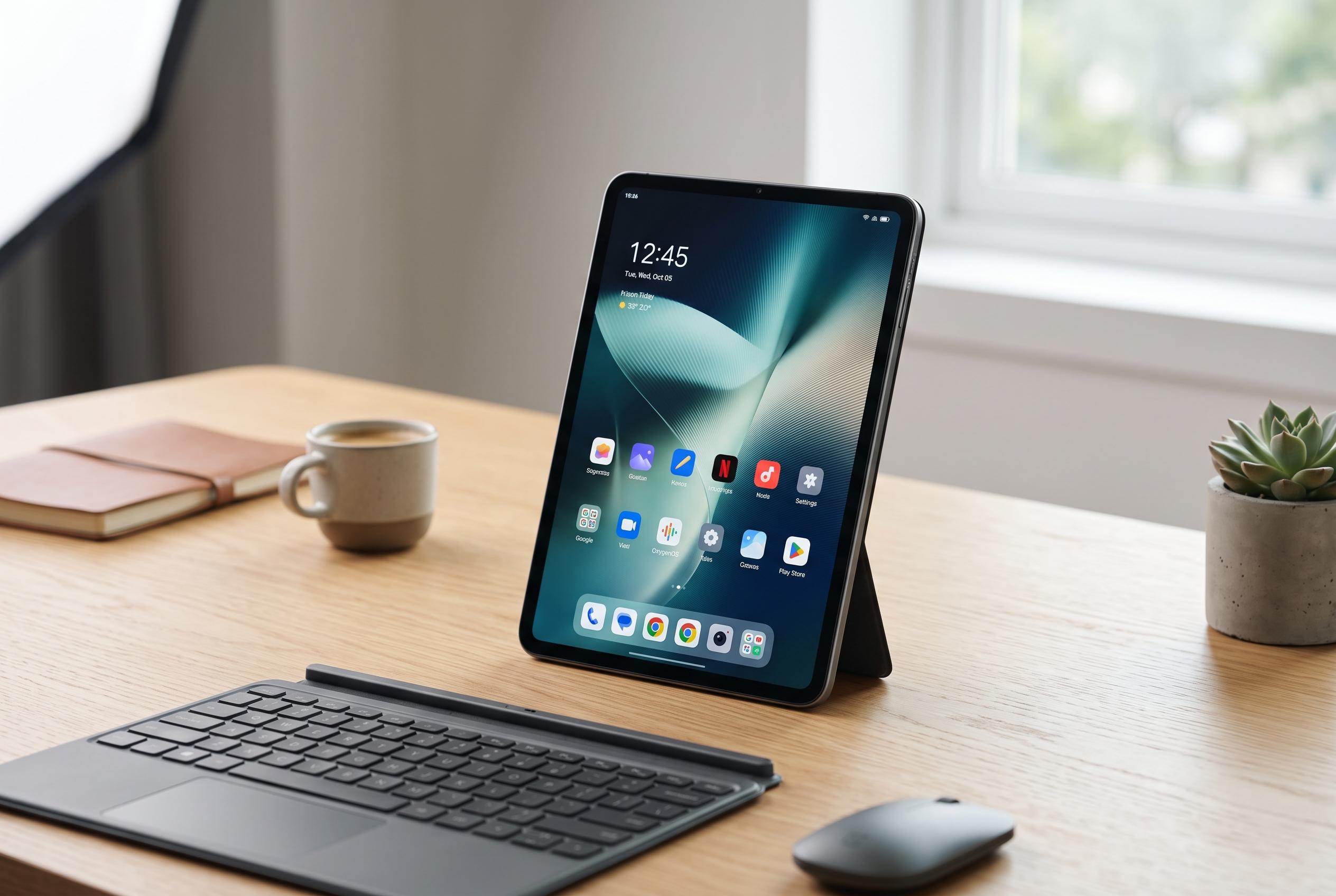

The OnePlus Pad 4 impresses with its high-end design and flagship performance, yet some compromises in software and features may influence user choices as it aims to challenge established rivals.
OnePlus has clearly aimed higher with the Pad 4 than it has with any of its earlier tablets. At €599 for the 256GB model, it lands in premium territory with a Snapdragon 8 Elite Gen 5 chip, a 13.2-inch 3.4K display, a 13,380mAh battery and an aluminium body that is just 5.94mm thick. On paper, it looks like the Android tablet OnePlus has been building towards for years. In practice, it is impressively close to the best of the class, but not quite the complete package.
The hardware is one of the strongest parts of the story. The slim unibody design feels far more expensive than the price suggests, and the 672g weight is easier to live with than the figures imply because the tablet is so thin. OnePlus offers the Pad 4 in two finishes, and its clean industrial look is matched by genuinely useful details, including magnetic stylus storage and fast charging. But some trade-offs remain. There is no cellular version, no microSD expansion and no fingerprint reader, while the IP42 rating is only modest protection against dust and light moisture.
The display is another area where OnePlus gets a lot right. The 13.2-inch IPS panel is sharp, bright and fast, with a 144Hz refresh rate that makes scrolling and app switching feel very smooth. Colour output is strong, and outdoor visibility is better than on the previous model. That said, it is still an LCD, so blacks are not as deep as they would be on an OLED rival. There is also a more serious issue for streaming fans: several reviews note that the tablet lacks Widevine L1 at launch, which means Netflix and Amazon Prime Video are capped at SD quality until a software fix arrives.
Performance is where the Pad 4 really separates itself from most Android tablets. The Snapdragon 8 Elite Gen 5 delivers top-tier speed, and benchmark results reported by sites including 91mobiles and PhoneArena place it ahead of several key rivals. More importantly, the tablet feels consistently quick in everyday use, from multitasking to heavy gaming. Cooling also appears to be well judged, with the large vapour chamber helping the tablet stay stable over long sessions. Android Central and Gadgets 360 both highlight that the Pad 4 handles demanding workloads with confidence, and that lines up with the broader picture: this is one of the fastest tablets Android has seen.
OxygenOS 16 is a mixed but promising part of the experience. It offers useful multitasking tools, cross-device features and a growing set of AI functions, while OnePlus has also pushed deeper integration with its own phones and accessories. For people already using OnePlus hardware, that ecosystem linking is a real advantage. The limits of Android on tablets remain, though. App optimisation is still uneven, some desktop-style workflows remain clumsy, and OnePlus’ promised software support of three major Android upgrades and six years of security patches is respectable rather than best in class, especially beside Samsung and Google.
Battery life is one of the Pad 4’s strongest practical wins. The large cell, combined with the efficiency of the new chip, gives it comfortably all-day endurance and often more than that. Charging is quick too, with 80W support making top-ups relatively painless. Add in Wi-Fi 7, Bluetooth 6.0 and a capable set of eight speakers, and the Pad 4 becomes a genuinely compelling productivity and entertainment tablet. The bigger question is whether its compromises matter to you. If you want the fastest Android tablet in this price range and you are happy to stay within the Wi-Fi-first, accessory-driven OnePlus approach, it makes a strong case. If streaming quality, mobile connectivity or polished tablet software matter more, rivals from Samsung and Xiaomi still have the edge.
Disclaimer: This content is intended for informational purposes only. Readers are advised to exercise their own judgement, conduct due diligence, or consult a qualified expert before acting on any information provided.