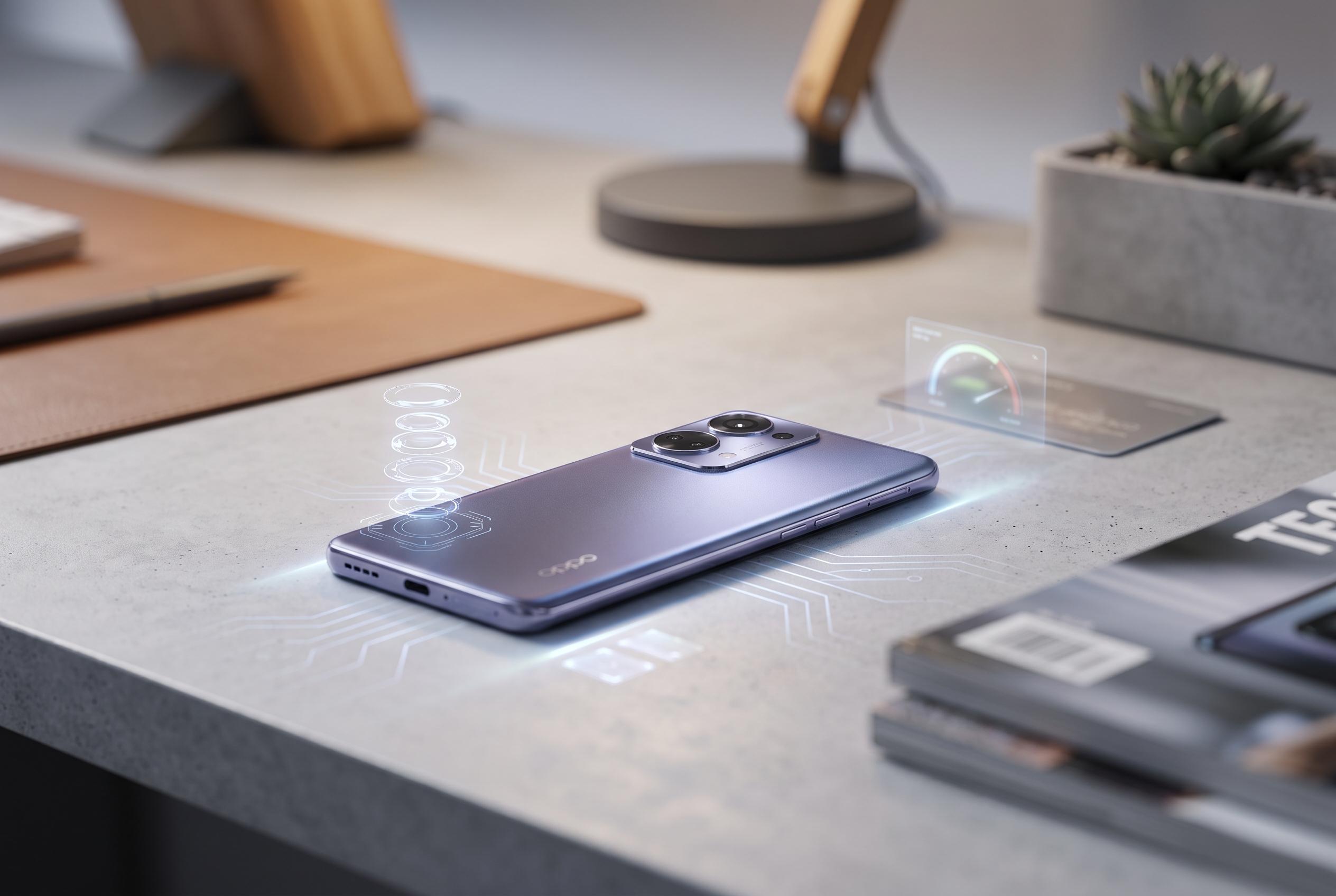

Oppo’s Reno 16 captivates with its striking aesthetics and AI-driven camera tools, but underwhelms with its mid-tier performance and limited hardware features, prompting questions over its value in the premium segment.
Oppo’s Reno 16 is the sort of phone that attracts attention before it is even switched on. India Today said the starry white version, with its shifting orbital motif and holographic finish, drew interest from almost everyone who handled it. That reaction matters because the handset is not trying to win buyers through raw specifications alone. It is pitching itself as a compact, premium-looking phone with a strong visual identity in a market where many rivals look broadly similar.
That design-led approach comes with a steep price. In India, the Reno 16 starts at Rs 61,999, placing it among the most expensive models in the Reno line-up. Oppo is also packing in an aerospace-grade aluminium frame and a rare combination of IP66, IP68 and IP69 protection, which should help reassure buyers who want style without giving up durability. El País reported that the Reno 16 launched in China with similar positioning, along with an emphasis on battery life, camera hardware and artificial intelligence features.
The compact form is one of the phone’s biggest practical strengths. With a 6.32-inch AMOLED display, 120Hz refresh rate and strong outdoor visibility, the Reno 16 is easier to live with than many large-screen flagships. Reviewers at Gizmochina and Notebookcheck both highlighted the same core appeal: a phone that feels smaller and lighter than most premium Android rivals, yet still carries a large 6,700mAh battery. In daily use, that battery appears to be a genuine advantage, with India Today reporting a full day of mixed activity and a recharge from the bundled 80W charger in about an hour.
Performance, however, is where the balance becomes less convincing. The Snapdragon 7 Gen 4 is competent for messaging, browsing, photography and general multitasking, but it sits below what many buyers might expect at this price. India Today said sustained gaming can push the handset into heat and throttling, while Notebookcheck’s summary of third-party reviews suggested the Reno 16 does not offer the strongest value in its segment. Oppo has also chosen UFS 3.1 storage rather than the faster UFS 4.0 or UFS 4.1 options now appearing in some similarly priced phones.
Camera performance is broadly strong, but not without omissions. The 50-megapixel main rear camera produces lively, detailed daylight shots, and the 50-megapixel front camera should please selfie users who want sharp results and natural skin tones. Video support extends to 4K at 60 frames per second with HDR, which adds flexibility for creators. Yet the lack of a dedicated telephoto lens is a clear compromise, particularly at this level. India Today noted that portrait processing can be slow and edge detection is not always precise, while Digital Camera World said Oppo is clearly targeting social media creators with AI tools for shooting and editing rather than relying on hardware alone.
That software push continues in ColorOS 16, which adds features such as AI Snap Key, AI Mind Space and photo-editing tools. The practical question is how much of that will matter to ordinary buyers versus enthusiasts. The company’s optional Bubble accessory, which offers a rear display preview for framing shots, underlines Oppo’s creator-focused ambitions, but at roughly Rs 12,000 it feels niche rather than essential.
Taken as a whole, the Reno 16 is a polished but uneven premium phone. It excels in design, portability, screen quality, battery life and everyday photography. It is less persuasive on sheer performance, storage speed and camera completeness. For buyers who value character and comfort, that may be enough. For those spending more than Rs 60,000, the missing telephoto camera and middling chipset are harder to overlook.
Disclaimer: This content is intended for informational purposes only. Readers are advised to exercise their own judgement, conduct due diligence, or consult a qualified expert before acting on any information provided.